The adventure in the footsteps of Sumer, Akkad, Assyria, Babylon, Persia, Parthia, Rome… continues!
The beginning of the story begins here: A journey through southeastern Turkey
Part two
October 25, 2020.
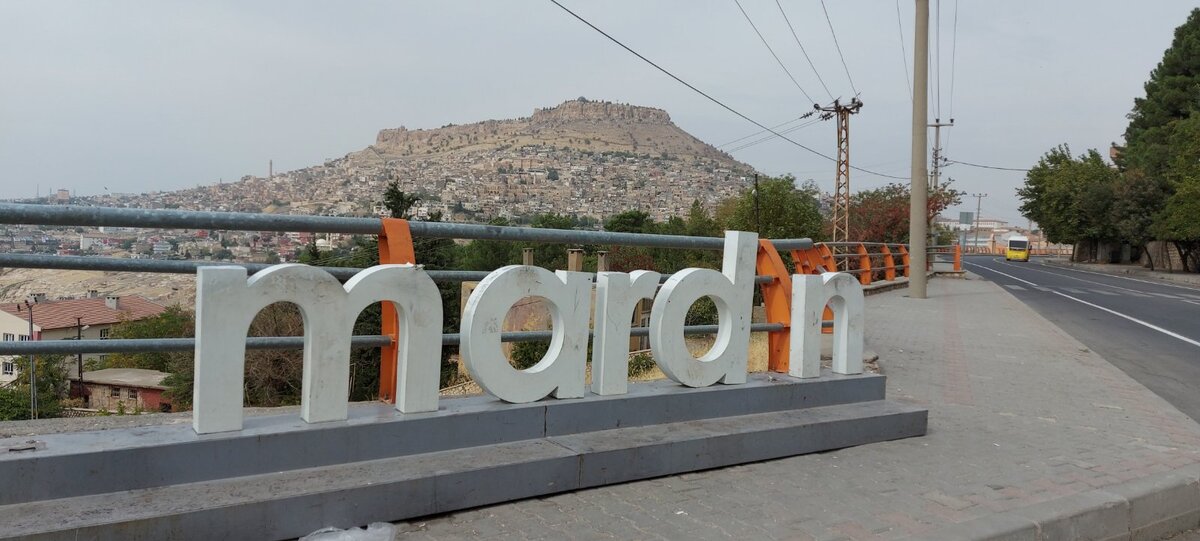
Mardin – the city of civilizations and religions
Today we are walking in Mardin since morning
Muxin tells us that the city is the cradle of civilization. On these lands, battles for supremacy were fought between Persians, Arabs, Byzantines, Romans and Turks.
Even today, the population is diverse. Kurds predominate, a large percentage are Assyrians, and there are almost no Turks.
The locals speak their dialects, and Turkish is used in official communication. The religions also coexist without conflict. Until 2012, the city had a population of 80 thousand people. After the start of the war in Syria, today there are already 150 thousand people along with the refugees.
Old Mardin – stone houses, narrow streets and arches
The new city is modern and is growing rapidly, but the old one is interesting to us.
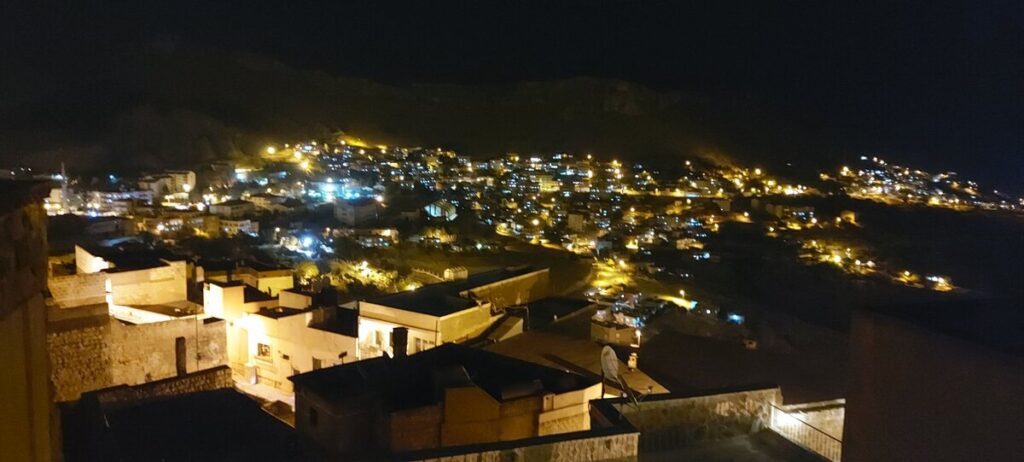
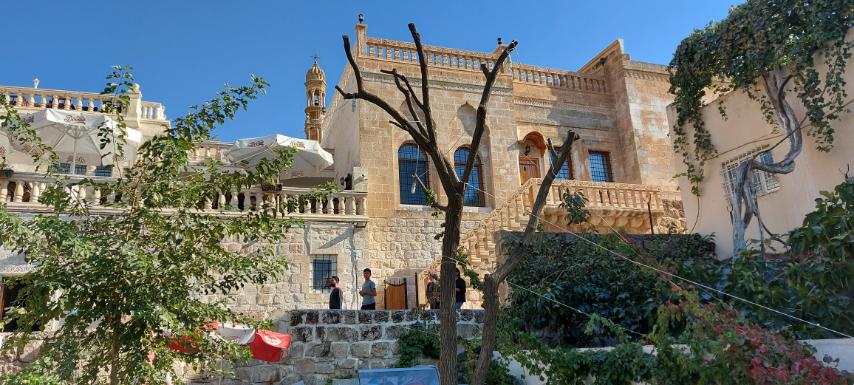
It was built amphitheatrically on a rocky hill.
At the top are the remains of an ancient fortress. At the foot of the rock, down like rectangular boxes, the houses, the mosques, the churches…
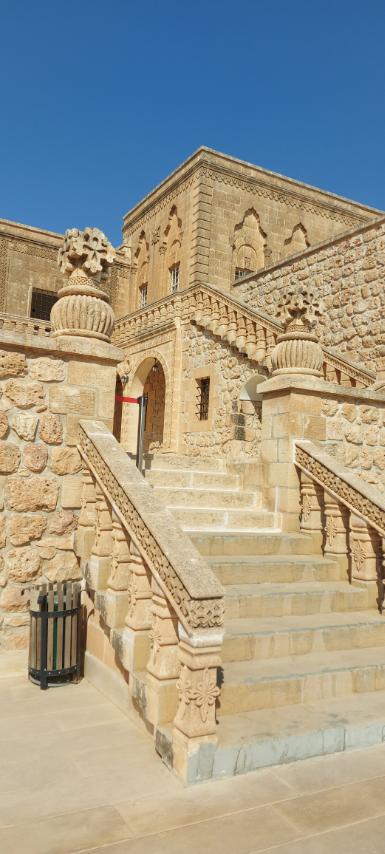
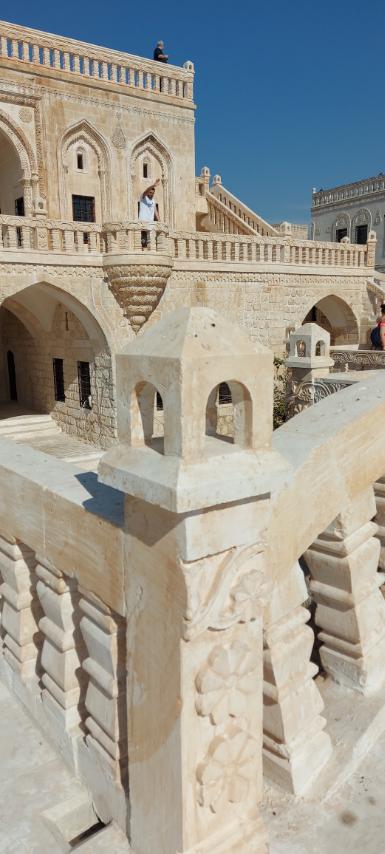
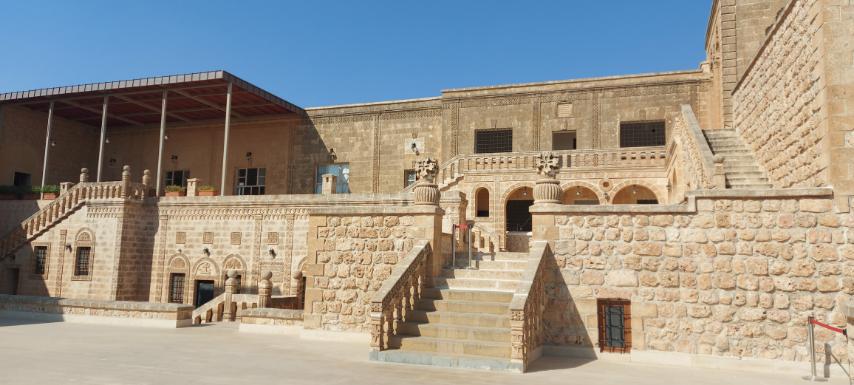
The buildings are stone-built, with flat roofs, numerous terraces and staircases, and only the minarets and domes protrude. They are decorated with oriental motifs and friezes with Greek ornamentation.
The city has been destroyed many times and rebuilt again. There are buildings that are 700 years old. The streets are narrow and steep, sometimes just staircases. Arches and tunnels are often found.
The atmosphere is incredible!
I feel in another time, in another era, in a fairy tale…
The mosques of Mardin and memories from childhood
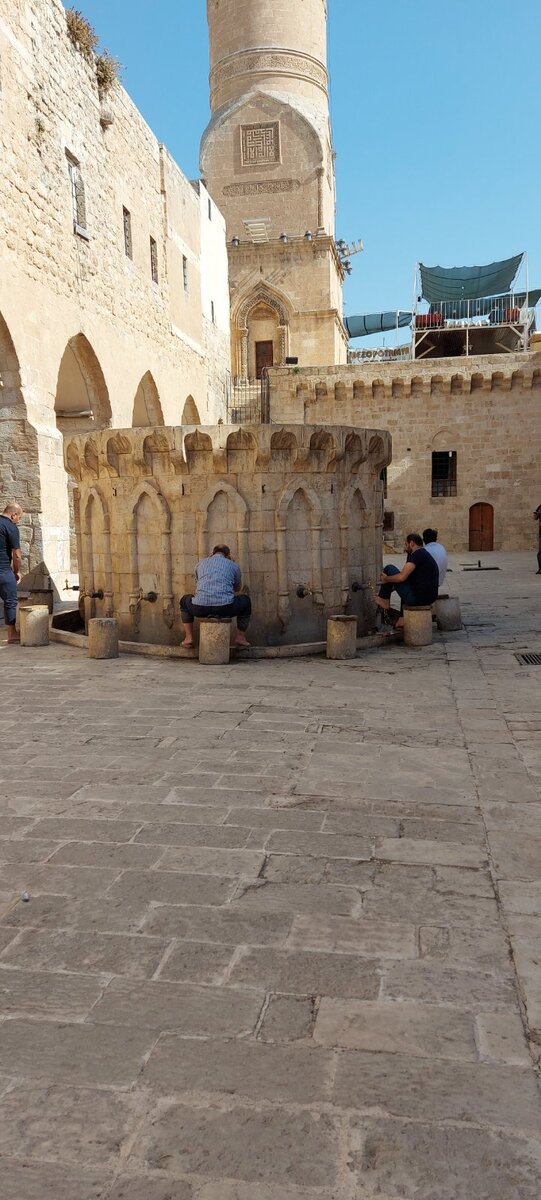
Our tour begins at the nearby mosque. It is the oldest. It was built in 1362. The courtyard is quiet. Our guide tells us about the madrasa in the mosque.
I am proud to know the meaning of the word. It means a religious school.
According to Muxin, until the 16th century, education in these schools also included secular sciences such as philosophy, mathematics, astronomy, and its quality was very high. After the 16th century, only religion was advocated, and the level of education declined; it became inapplicable outside religious circles.
Our next destination is also a mosque.
At the moment, from the high minaret, a strong, hoarse voice is heard calling the Muslim believers to prayer. There is a large fountain in the courtyard. Before entering the mosque, the believers wash all the exposed parts of their bodies.
Here by the fountain I see a clog. The young people hardly know that these are wooden slippers with a rough leather strap. They are a memory from my childhood.
In Lovech there was a Turkish bath, and my grandmother regularly took my skin there. In that bath, the aforementioned leeches were used.
But let's go back to the mosque. I'm just peeking inside so as not to disturb the worshippers. I like it better in the courtyard.
We are heading towards the next mosque.
It is the largest. Its minaret is very high and the most ornate in the area, with exquisite ornaments.
A fig tree grows in the middle of the yard.
Calm, quiet, beautiful…
We go inside; there’s nothing interesting there.
In the center of Mardin there is a beautiful Christian church. A graceful cross rises above the domes along with the minarets. Unfortunately, due to the pandemic, the church is closed.
The Mardin market – a colorful, aromatic and noisy place
We continue towards the local market.
A colorful, aromatic and noisy place.
What I didn't like about my previous trips to Turkey were the rude merchants. They yell at you, pull you by the arm, and cling to tourists like flies.
It's not like that here. The shops are full and attract you with their appearance. The shopkeepers are kind, but not intrusive. In general, the people here are different: more modest, quieter, and perhaps poorer, but with dignity and honor.
I dive into the market and finish writing for today.
Tomorrow again. 😀
October 26, 2020.
Christian Monasteries and Midden
There are three Christian monasteries in the vicinity of Mardin, but we managed to see only two of them.
The first we visit is Deir al-Zafaran, better known as the Saffron Monastery.
This name comes from the saffron, added to the building mixture used for the construction of the monastery.
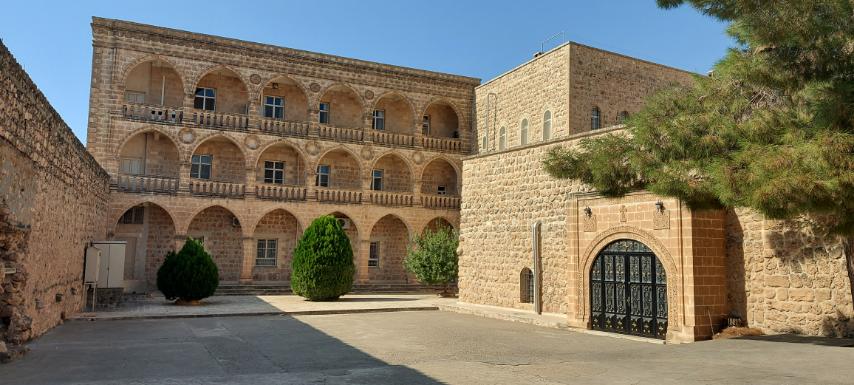
It was built by the Suryani, one of the oldest Christian communities, 1300 years ago. Currently, 60 monks live there. The building has undergone many changes and today only a part of it functions.
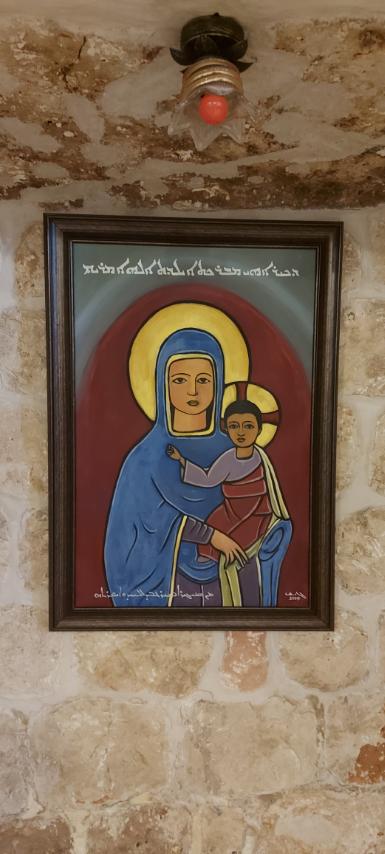
The icons are also interesting, supplemented with Arabic inscriptions.
I have always associated the Arabic hieroglyphs with Islam. Now I am expanding my horizons.
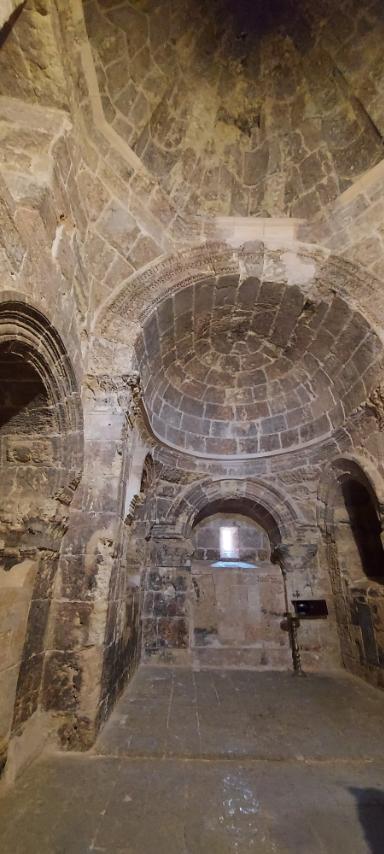
We descend into the basement, where Muksin shows us one of the oldest parts of the building. Here, the stone blocks are over a thousand years old. A method was used in which the stone blocks were cut at a certain angle and joined together. No glue is needed. And time has no effect on them.
We are heading to Midyat – a city similar to Mardin with beautiful old buildings in Arabic style. We stop 10 km from Mardin.
Here is the second monastery: More than Gabriel. It was founded by Saints Samuel and Simeon in 397 year. And this monastery has grown over the years, it has been destroyed and restored again.
One of the churches was completely covered with gold. Today, only stories are told about it… The church was burned down and destroyed. Its last restoration was in 1997.
The Turkish government is not particularly generous towards Christian churches. The restorations and maintenance are financed by donations from the Suriya community.
In Midden there are about 5 thousand people, but many of them have been living elsewhere for a long time and continue to send money.
The Mud – Stone Spiders, Filming Locations and Unexpected Action
We arrive in Midyat. Here are the houses where many romantic TV series were filmed.
In Bulgaria, the film „Return” is well known.
Tourists are required to pay a symbolic entrance fee. We enter and are transported to other times… to another culture… to another life.
The houses are like a maze of stairs, terraces, and corridors.
The decoration is unique!
Friezes of stone lace frame the walls, the sun pours its light and caresses our senses. We can't stop looking.
But part of Muxin's job is to take us to jewelry stores, nuts stores, and snack stores.
On the way we accidentally stumble upon the filming location of a new film. Apparently, tourists rarely come here during the pandemic. Because it turned out that we surprised the film's organizers; we got into frame and a new double shot has to be filmed.
We manage to take some quick photos of the artists.
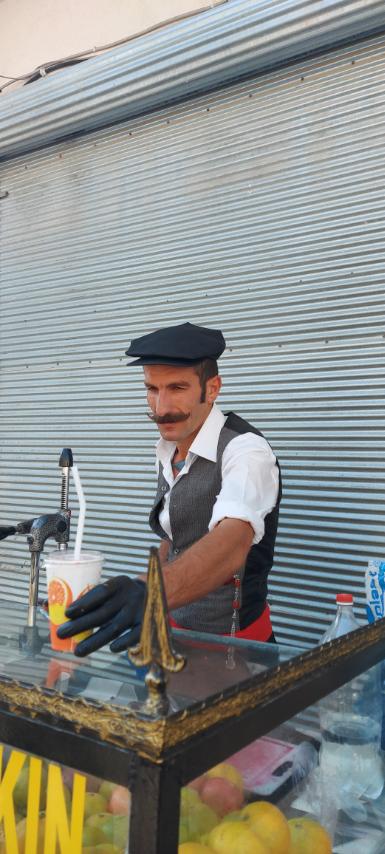
We meet in Midden, we drink pomegranate juice prepared on the street by the man with the best-shaped mustache.
A group of children come out of a house. The biggest one carries a rifle. I get chills.
This is not the calmest place on the planet. I walk after the children, try to take their pictures and wonder what will happen next. Our group is moving forward quickly, I catch up with them and outrun the rifle.
After a minute I hear a shot. The boy shoots at the birds. On the street…
There is action here, no doubt.
End of part two.
The adventure continues when our traveler writes it…
See more about the author Iskra Todorova here