Switzerland
Episode One
• There is a song by Lighthouse Family „Postcard from Heaven (Postcard from Heaven).
• There is a country whose landscapes I constantly want to call „postcards from paradise.“.
• And there is a time of year when it rained so much that it made the country look even greener, and its waterfalls even more impressive.
We are leaving slightly worried that the incessant rains in Switzerland will ruin the long-dreamed-of, albeit only one-week, tour of part of this beautiful land.
We are leaving slightly worried that the incessant rains in Switzerland will ruin the long-dreamed-of, albeit only one-week, tour of part of this beautiful land.
We are landing in Zurich, following a warning that a storm raged all night, and we see countless broken branches on the streets. We buy a ticket for all trains, public transport, boats, and cable cars, with the exception of the high-mountain ones.
We are heading to the capital of the confederation immediately. Bern for a quick tour. The weather is on our side and it’s hardly raining at all, but the river has overflowed in many places, and we can see water being pumped out of houses, streets, and stores.
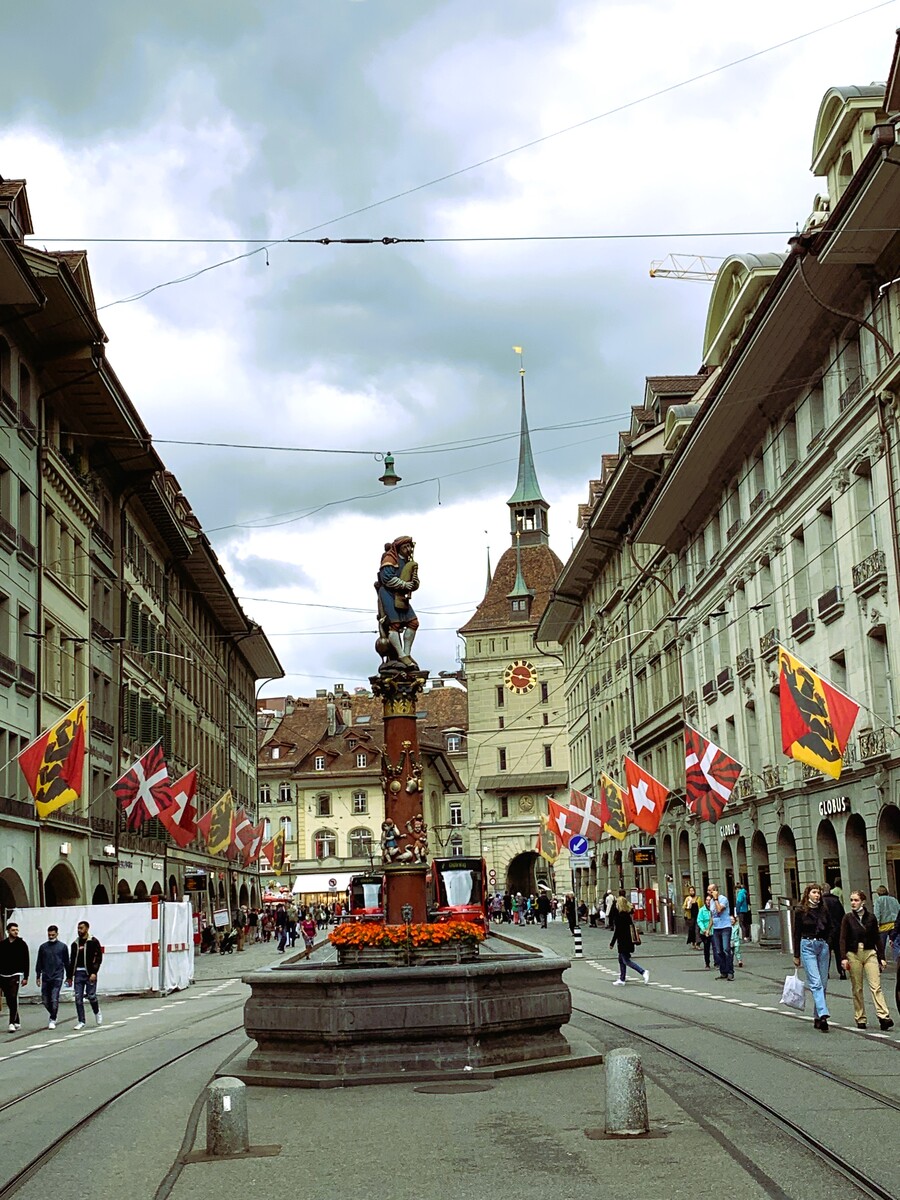
The Old Town is small but very charming, with countless little shops below street level, as well as beautiful fountains with columns and flags lining the main street.
We also see one of the city’s landmarks—the bear park, where two bears roam around the relatively small park. The city’s very name, they say, means „bear.“.
We're keeping an eye on the weather forecast and see that we'll be able to visit Lucerne and its surroundings as planned the next day.
Out of the many options from„around Lucerne“our choice falls on the highest open-air elevator in Europe. It is reached by boat across the lake. But recent heavy rainfall has filled the city's lake to the brim and boat trips are not allowed.
The Swiss, however, don't want to deprive us of our planned visit and pleasantly surprise us with a minibus that takes us to the impressive hotel Bürgenstock.
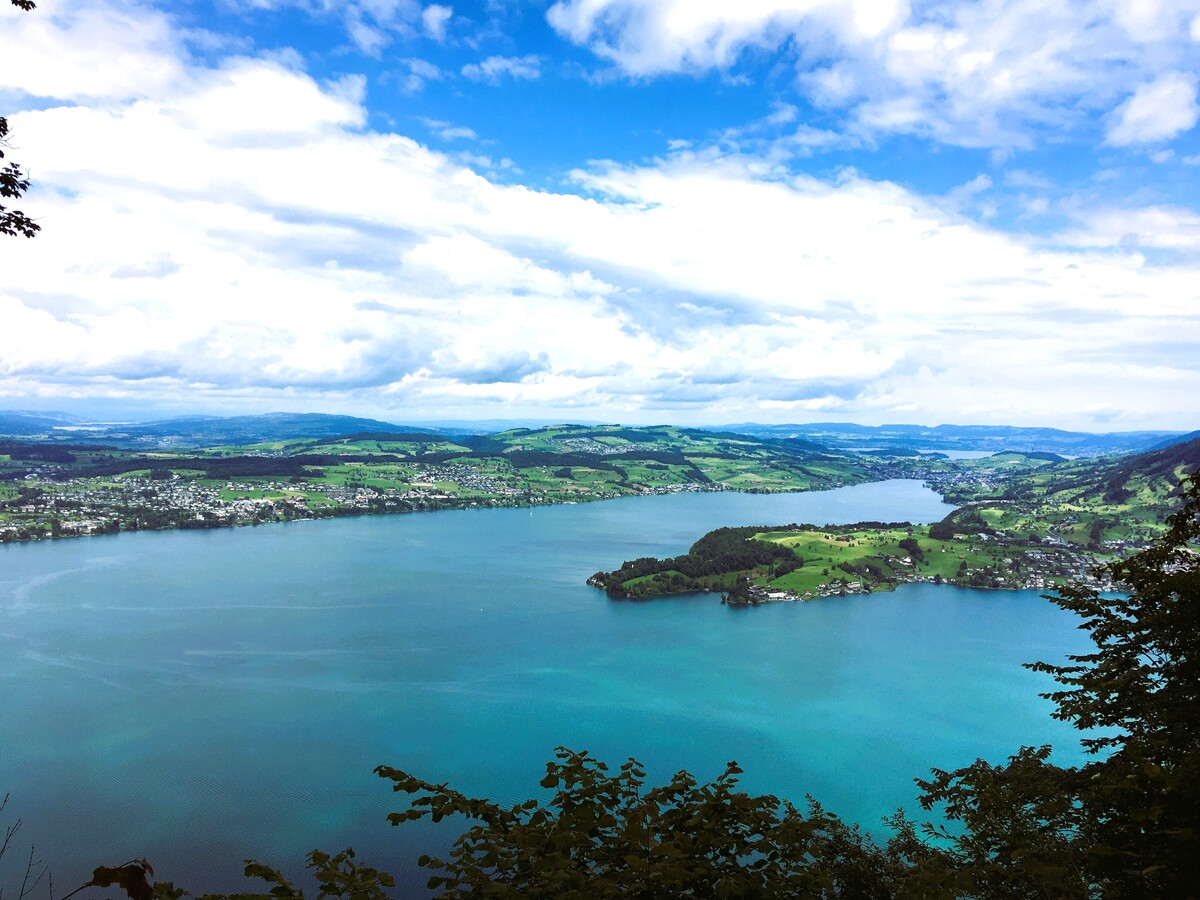
The road to the hotel offers postcard-perfect mountain views. And the hotel, as expected, is perched on a hill. The moment we step inside to ask for directions, a huge window opens up before us, revealing a breathtaking view that takes our breath away.
Later, out of curiosity, we check the room rates and quickly realize why the cars pulling up in front of the hotel are in the higher price range 😊
The path to the elevator is pleasant and offers views no worse than the one from the hotel. We enjoy every single one of them and try to keep them in our hearts.
There are hardly any people around, and a sense of tranquility reigns at every turn.
The elevator, built in 1905, takes us 153 meters up to the Bürgenstock Plateau in a matter of seconds. Once again, we enjoy the views of Lake Lucerne, the surrounding mountains, and the villages. However, time is running out, and we have to muster the strength to tear ourselves away from the panorama so we can take the elevator back down this time. Hammetschwand.
A few meters before we reached the hotel again, the rain made its presence felt once more. Still, we were lucky that it had just started raining and stopped before we got off the minibus in town.
Lucerne and the Rhine Falls
Back in Lucerne We walk along streets lined with all kinds of devices and machinery for pumping out the swollen river, and head onto the iconic covered bridge (the oldest preserved wooden bridge in Europe, dating from the 14th century), which fortunately is not underwater.
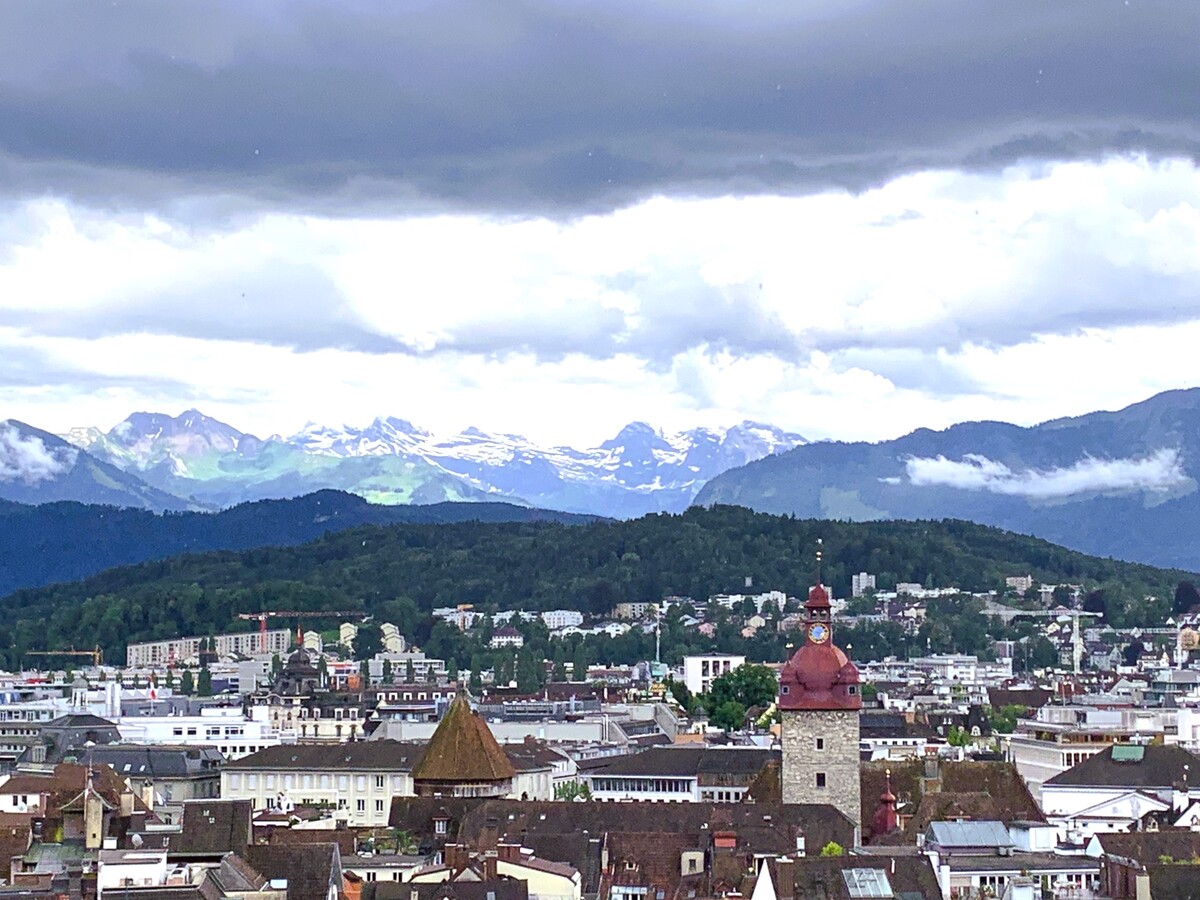
We explore the old town and climb up to the fortress walls, where we walk through various towers, the most interesting of which is the clock tower.
The view of the city and the lake is enchanting at every turn, and the city has quietly become one of our favorites.
We are leaving for Zurich and figure we have time to go to Rhine Falls before it gets dark.
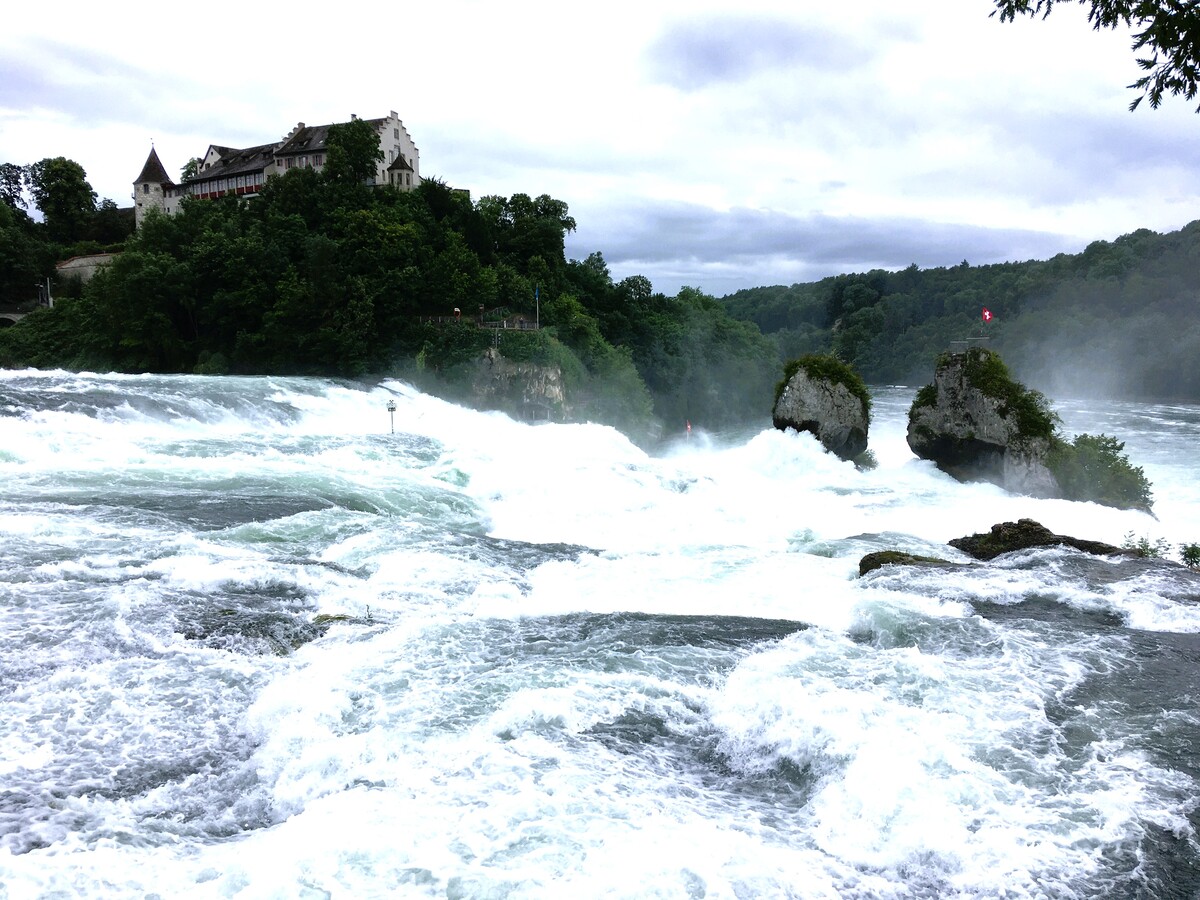
Along the way, the weather gets progressively worse and it's raining heavily when we get off at the station. But during those 1–2 minutes while taking the elevator down to the waterfalls, the rain has magically stopped and we can walk without umbrellas around the river and reach the waterfall, where the volume of falling water inspires fear, reverence, and awe.
We fall silent before the power of nature, which can sweep away everything in its path. I stand as if spellbound before this element.
Lugano—an „Italian“ day
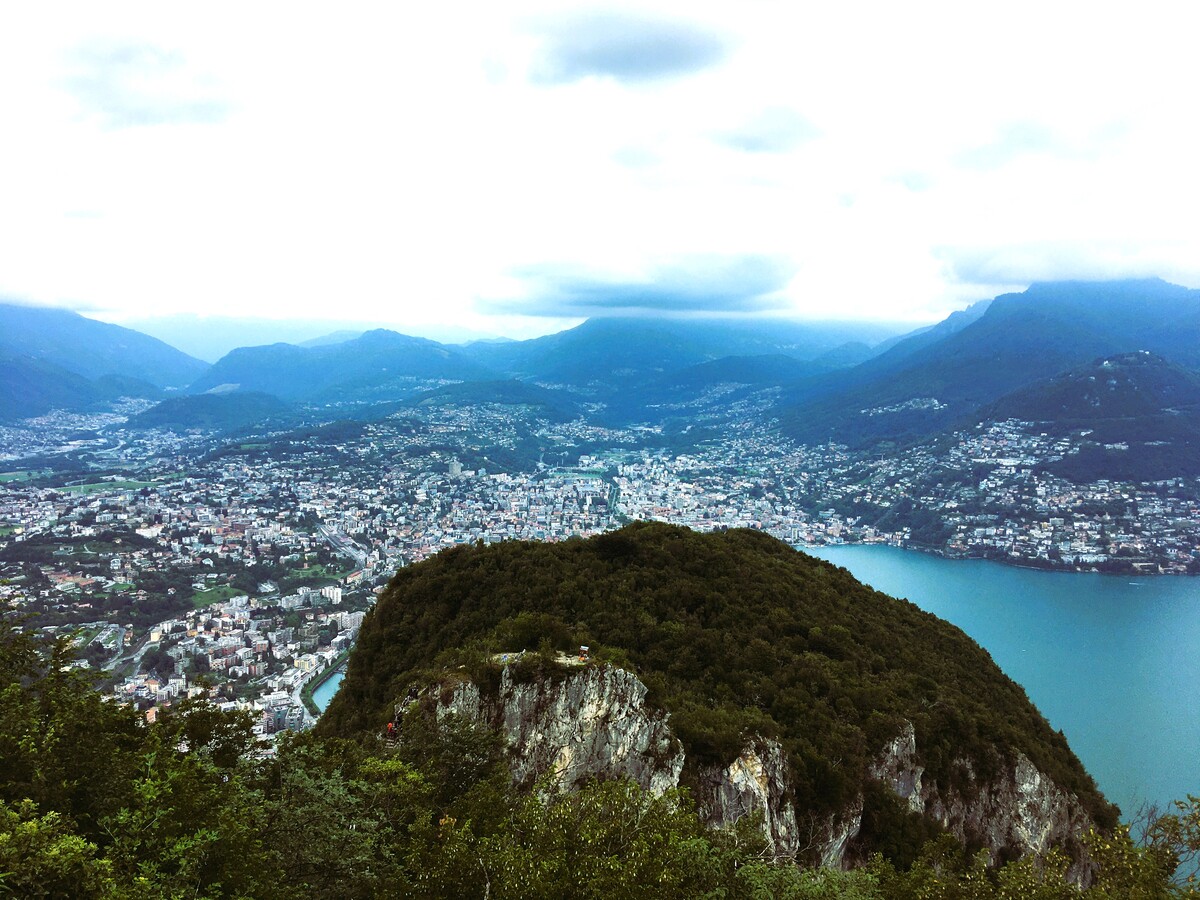
The forecast for the next day decides for us where we'll end up—it won't rain only in Lugano. So we’re heading there, and this time we’ll be traveling through the world’s longest railway tunnel—the Gotthard Tunnel.
My 57 kilometers are traveled by train in 20 minutes.
To me, it is also the tunnel of change, because before it, everything around us is gloomy and rainy, and when it ends, the sun is shining everywhere and the weather is wonderful for an „Italian“ day. The melody of Italian speech fills the air, the food is a true song for the palate, people speak an understandable language, and everything is wonderful.
Fortunately, the heavy rains apparently didn't reach the lake here, so we can take a boat ride.
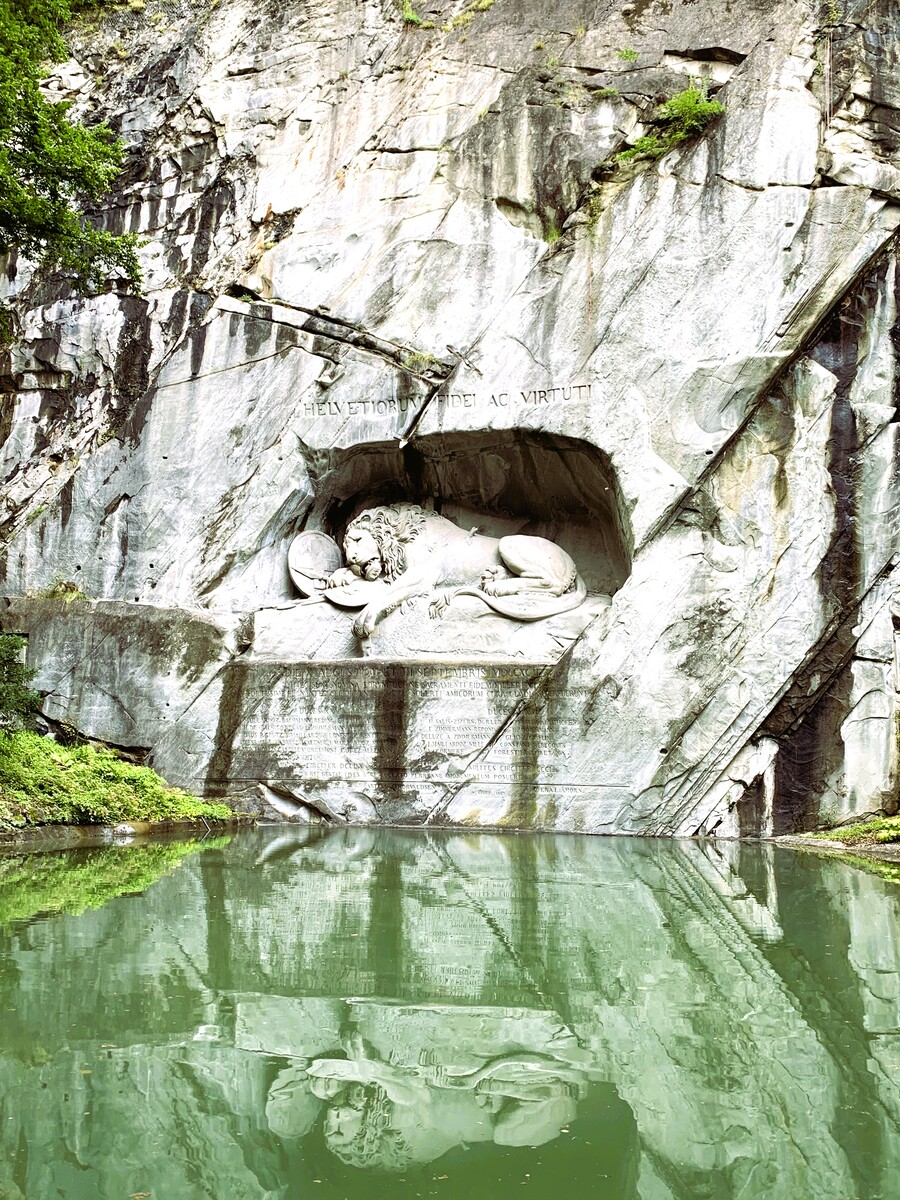
Then we take the cogwheel train up to one of the city’s hills (for the first and last time in Switzerland, the schedule is completely ignored 😊) and, for the umpteenth time, we marvel at the natural beauty. Back in town, we visit the impressive Lion Monument, as well as the narrow streets in the center.
Lauterbrunnen and Mürren
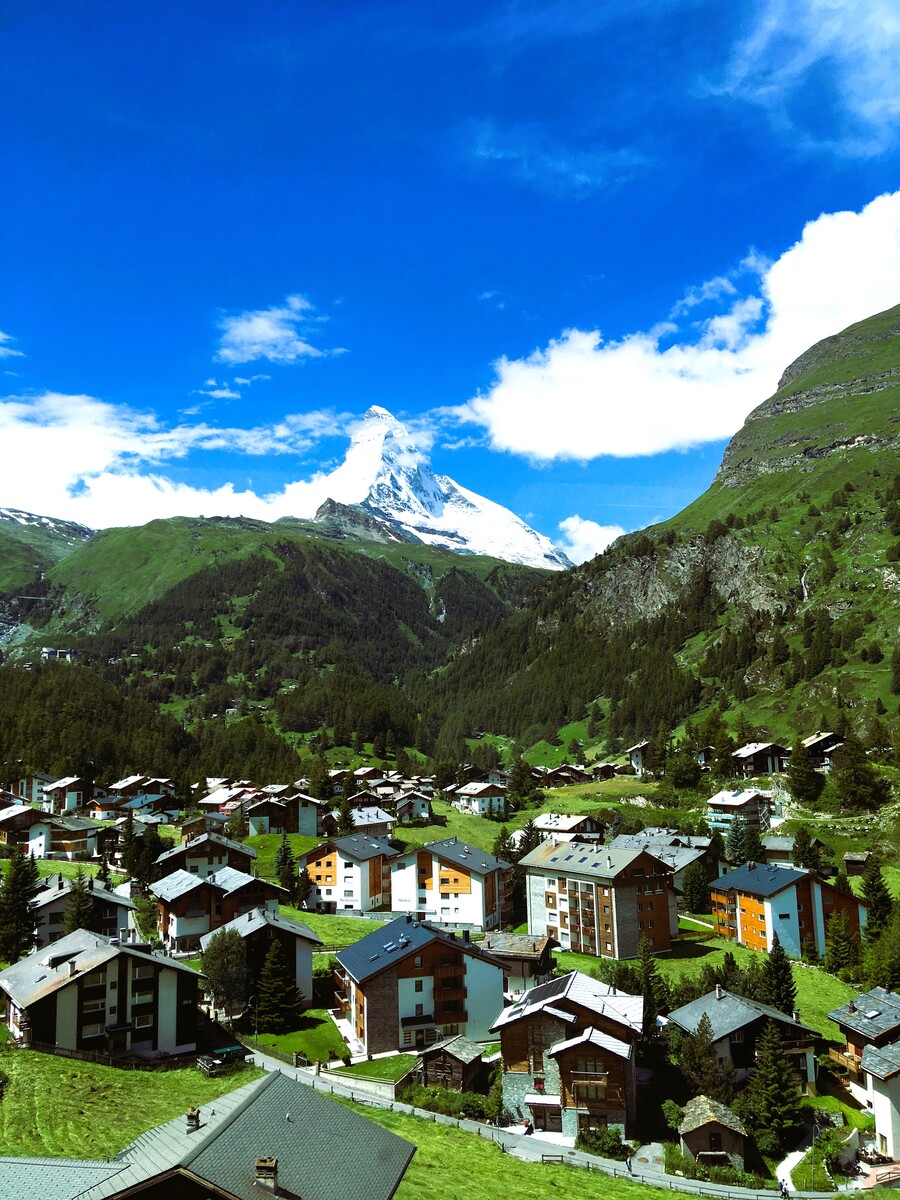
Even before we left, I've been checking the weather forecast for the Matterhorn and Jungfraujoch every morning and evening.
I have some concerns that we might not be lucky enough to see them. Still, the forecast for the weekend is relatively optimistic and we are heading towards the desired „Upper Land (Oberland).
We are changing three trains to get to Lauterbrunnen, which according to some guidebooks is the most beautiful village in Switzerland.
It is located in the valley of the same name, which is known for its 72 waterfalls and also for the fact that in places the height of the cliffs reaches 1 km.
From the station, we take a lift that carries us several hundred meters up, from where a tram-train awaits us, which in turn takes us to the quaint village Mürren, where we will spend the night in a room with a wonderful view of the opposite side of the mountain.
We enter the room and before us stretches only an impenetrable fog.
That's how it is in the mountain – surprises are part of everyday life 😊
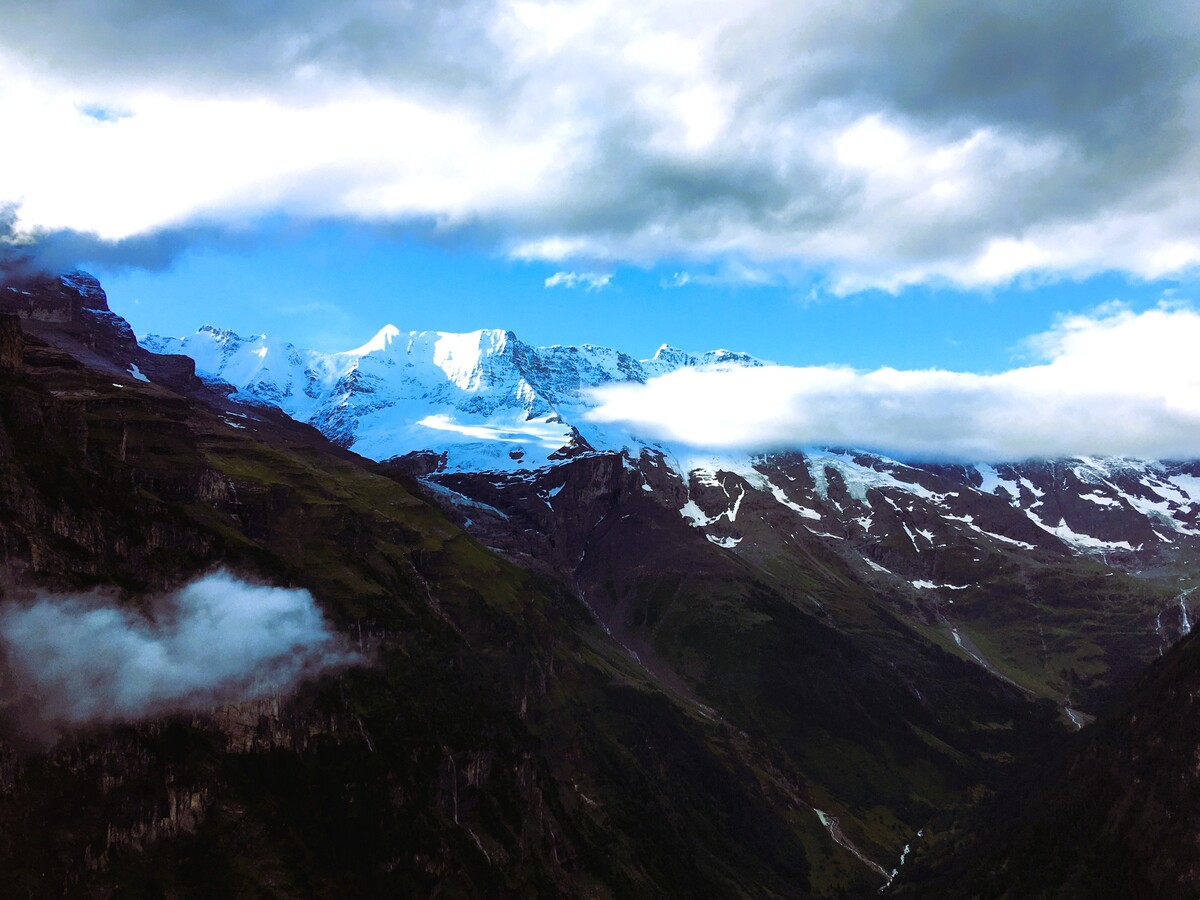
While we eat, the fog is kind enough to partially clear and the beauties of the Alps are revealed before us.
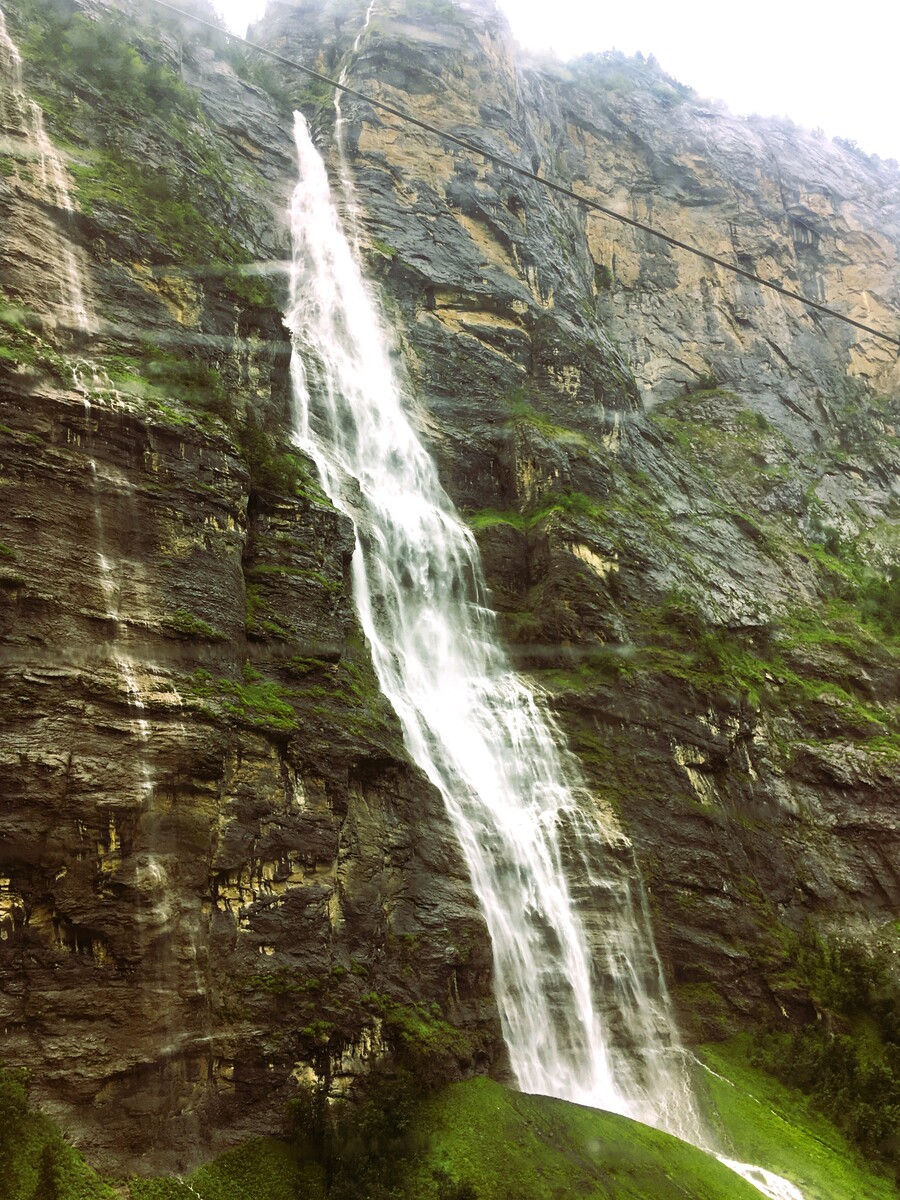
We take the lift at the other end of the village to go back down into the valley and walk to Trümmelbach Falls. Along the way, we see more than one waterfall tumbling from the edge of the high cliffs.
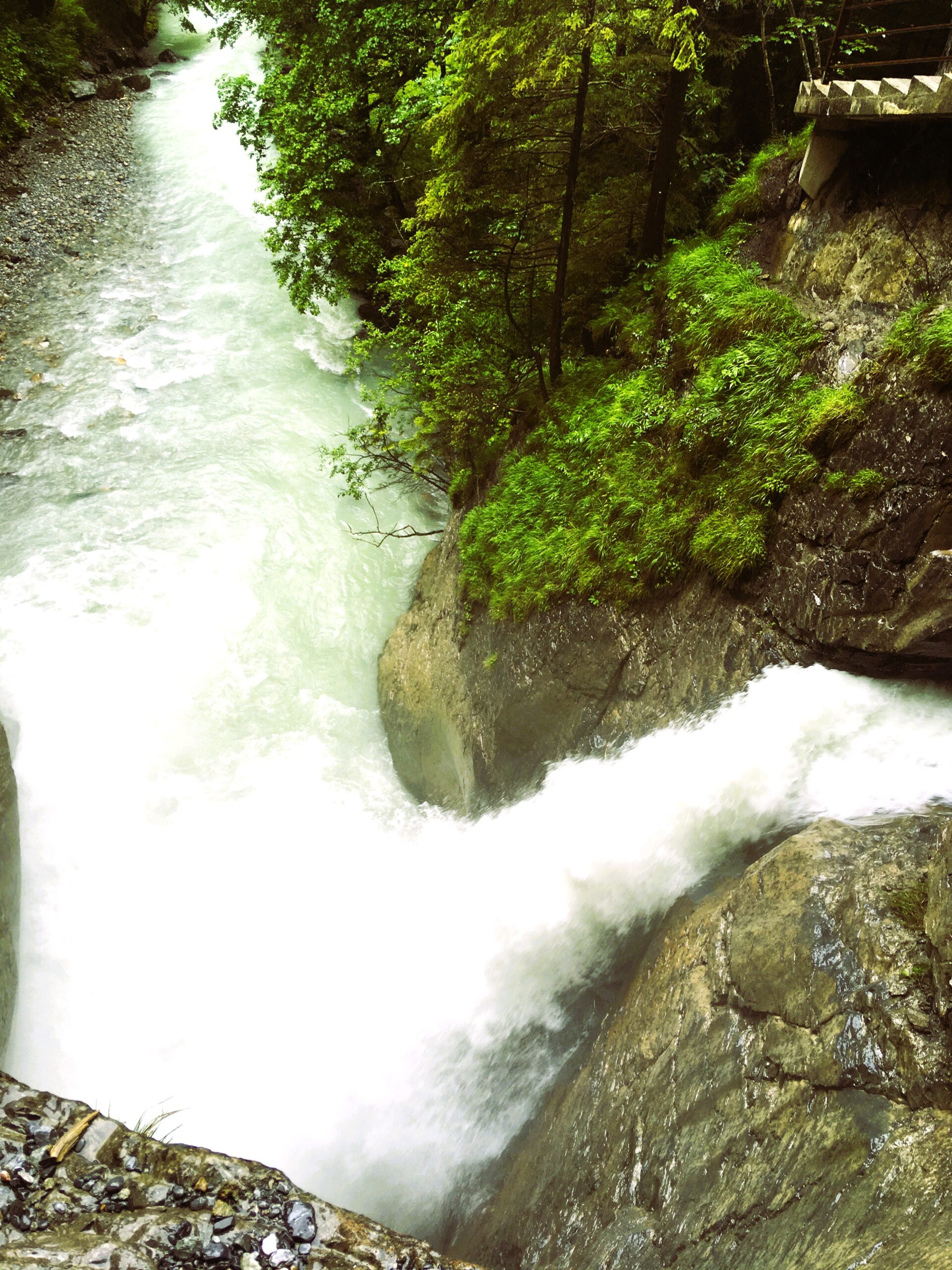
Trümmelbach Falls
forge their way into the very rocks. Ten platforms have been built into these rocks where this latest natural wonder can be observed.
The water falls with incredible force and in places we get quite wet. It is cold. But we do not hesitate to get as close as possible to enjoy this wild dance of the water. We come out into the warmth with hearts filled with awe at the power of the falling glacial water.
We continue along a pleasant path towards Lauterbrunnen, passing along the way perhaps the most famous waterfall in the valley – Schaubach (300 m high), which inspired Goethe to write the poem „Song of the Spirits over the Waters“. And according to some sources, it is this very valley that inspired J.R.R. Tolkien for „The Lord of the Rings“.
From Lauterbrunnen we take the cogwheel railway, which runs on the side of the valley opposite Mürren, and cross to the other side of the mountain to explore the mountain village of Wengen. Stunning views unfold before us once again, dotted with waterfalls, grazing cows, clouds, villages, and mountains.
And here, just like in Mürren, there are no cars. There are electric vehicles that usually carry tourists' luggage. Alpine chalets and hotels are at every step, and people are hardly to be found. Everything is so quiet and peaceful that it almost feels unreal. We gather our strength to tear ourselves away from the views and the tranquility, and return to Mürren, where both the views and the peace fill this village of a permanent population of about 400 people as well.
End of part one.
To be continued
See more about the author Katia Via here