Lima – the glamorous capital of Peru
It landed on a high desert coast, facing the Pacific Ocean. According to official statistics, its population numbers about 9 million people, but locals say there are 12 million if you include the poorest neighborhoods. There are places where you should not set foot…
So, after a very difficult flight (we had a health incident with one of the passengers and had to return to Spain to change planes, which extended the trip by hours), we finally land in Lima at 3:30 AM, 11:30 Bulgarian time.
At the airport, we are met by an increased police and military presence, dogs… Well, we are arriving in a country with a long history of drug trafficking and organized crime.
The transfer to the hotel is an interesting experience. Glitzy billboards and buildings alternate with structures in the „Faculté“ style. The early hour, and already there is movement of people—they seem to me poor and uninviting. Impressed little buses transport workers. Pedestrians are being measured.
Maria Sirakova, Our guide tells scary stories about crime in the more dangerous neighborhoods. „piranios“ – street youth gangs of two or three teenagers who can make a living off any European regardless of their physique in a very short time. Obviously, we won’t be able to get rid of it.
Regardless of the lack of sleep, the time difference, the fatigue, and the difficult flight experienced,
Lima captivates me – it’s another world.
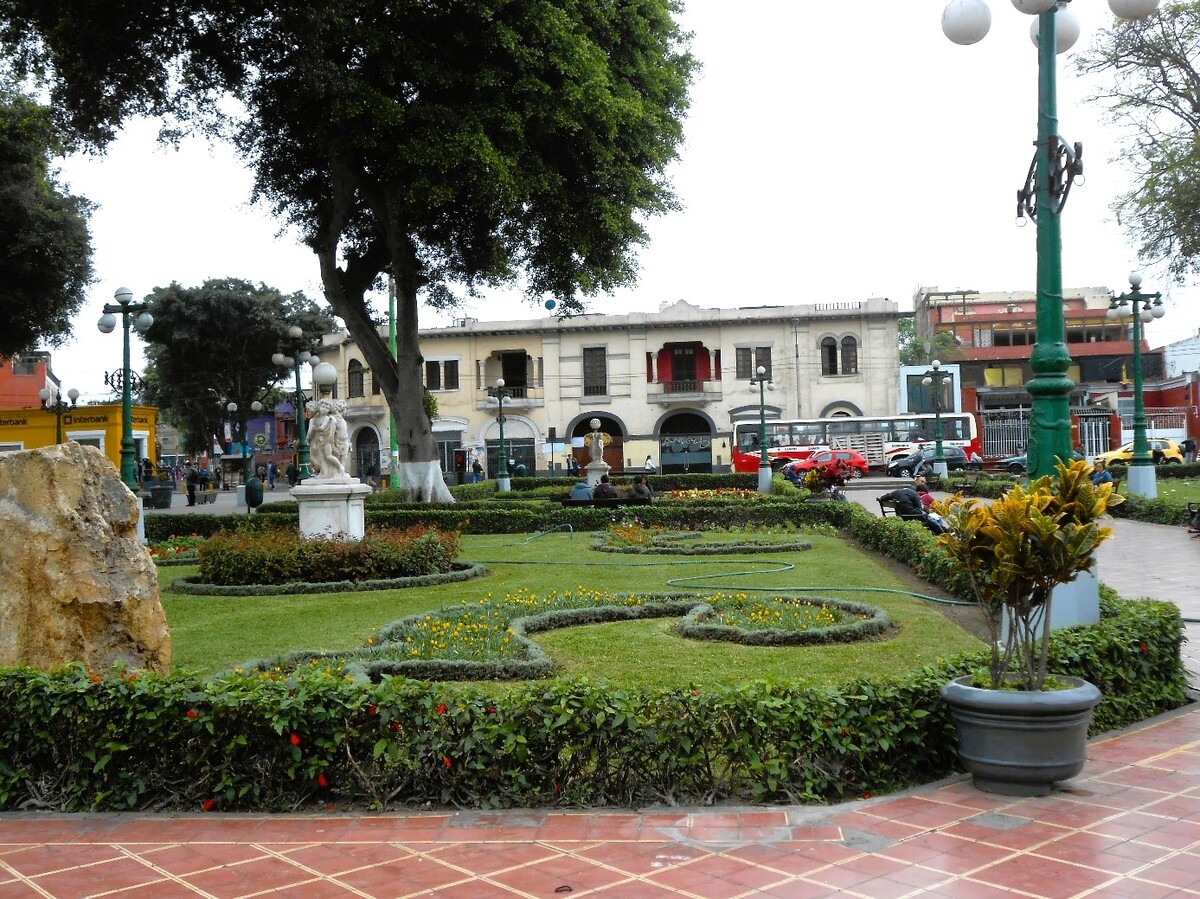
Spacious boulevards, a cult for greenery, a taste for flowers and cleanliness!
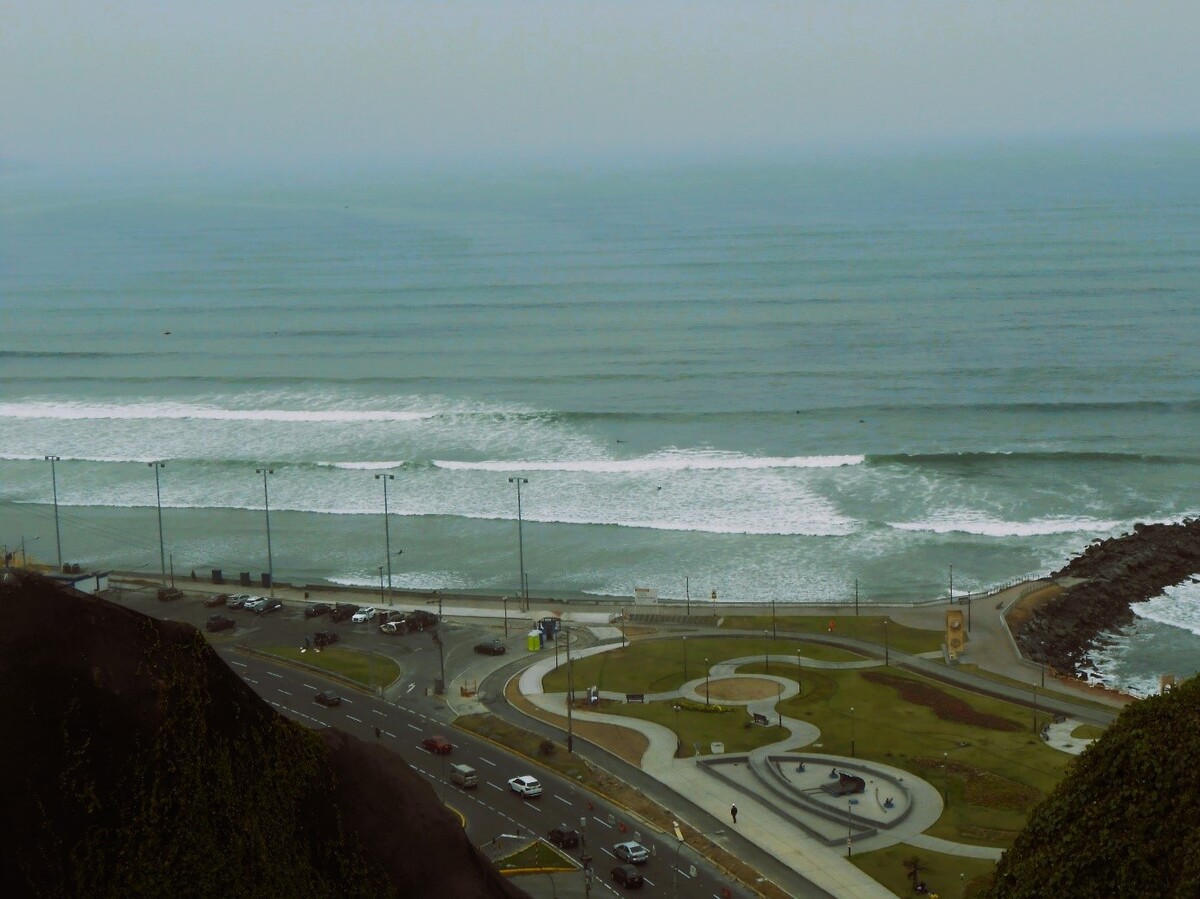
Lima – the city above the Pacific Ocean
For its almost 500-year history, Lima has much to show and offer for visitors. Besides the immense humidity – around 98%, and the wind that greets us, I am struck by the architectural eclecticism that is nevertheless beautiful. Retro buildings, stylish haishendis, and modern high-rise buildings alternate.
The construction is impressive and there is a sense of spaciousness everywhere. Peru is an earthquake zone and special engineering solutions are applied in modern construction to accommodate the high seismic activity. When you add to that the wonderful food and atmosphere, Lima wins me over unconditionally.
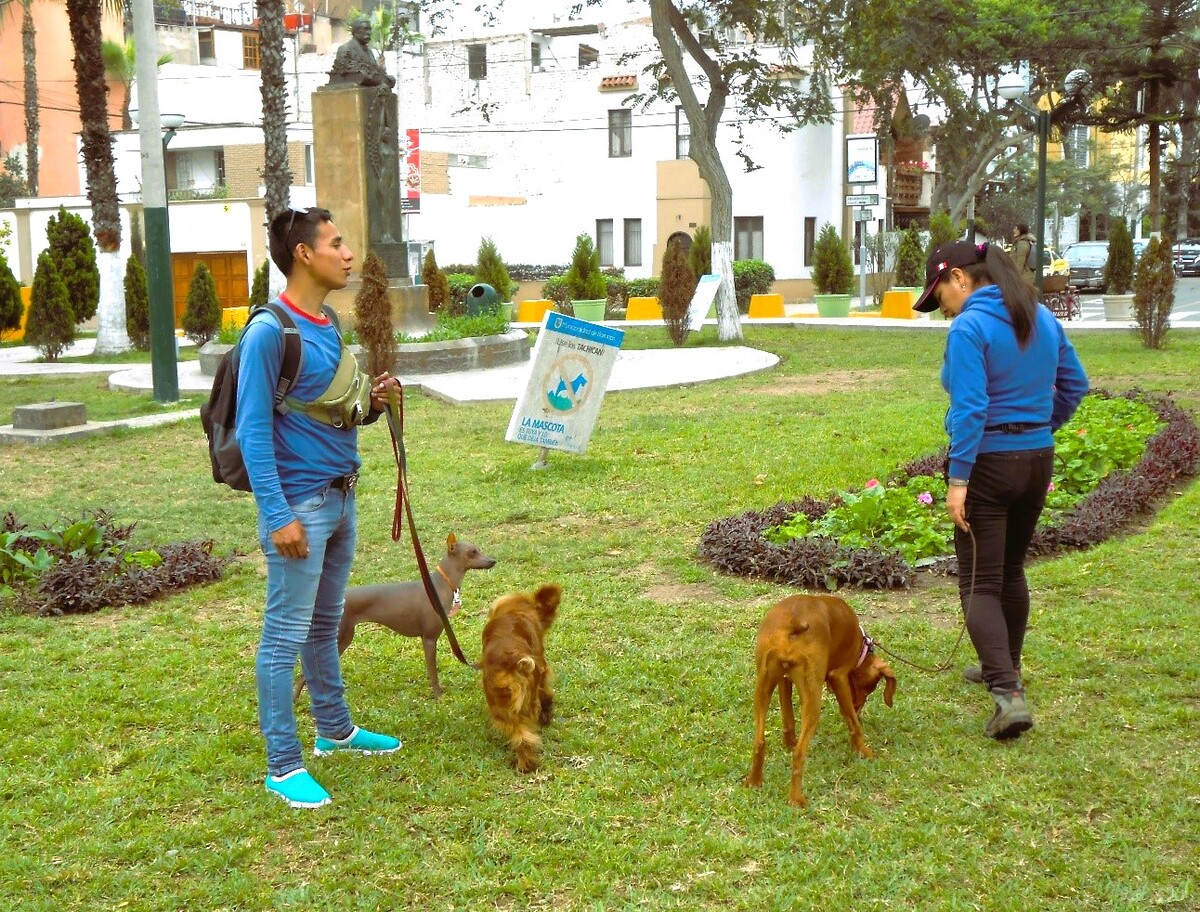
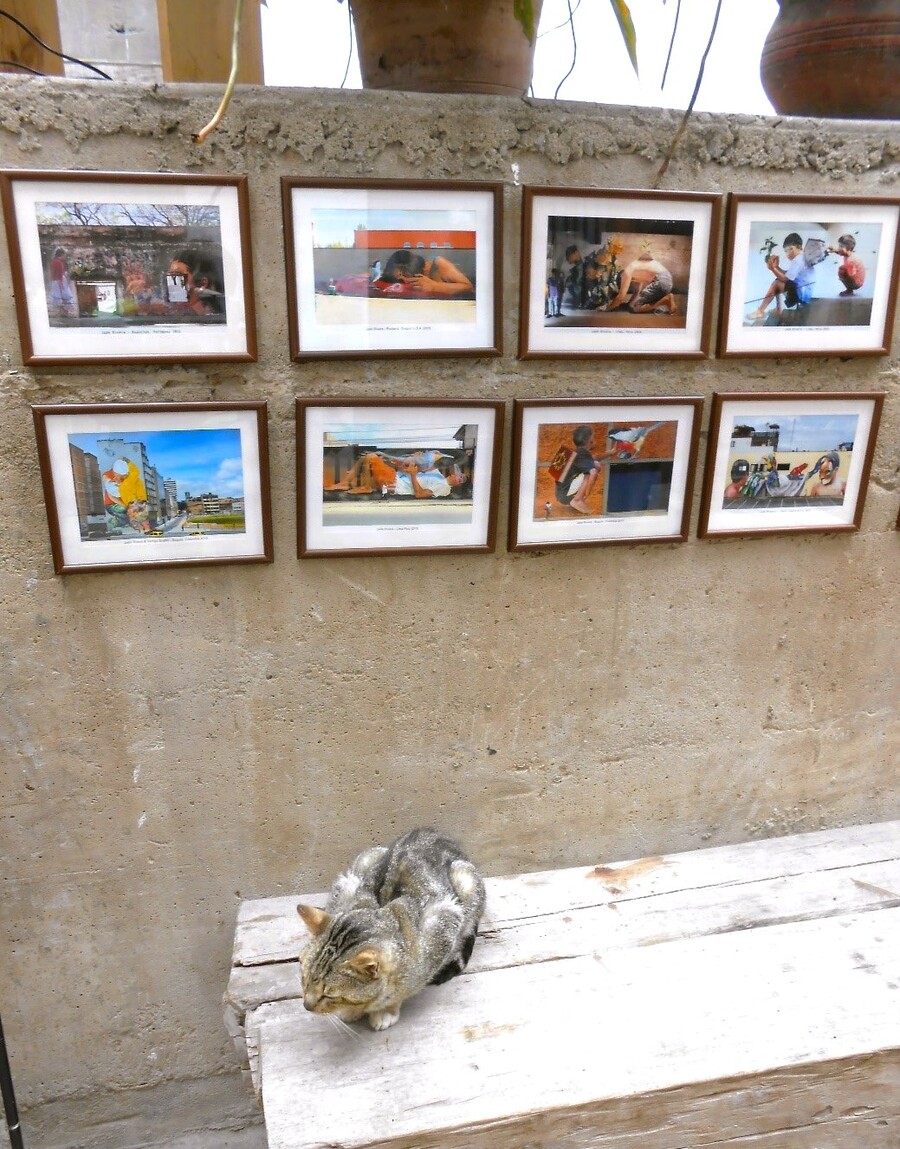
They love cats, and the dogs walk around „marlily“ dressed and with only their handlers. I also saw their Peruvian breed of hairless dog, resembling a ferret. I didn’t see any stray animals. Not even graffiti! (Regarding the last two, I have a personal war with the Sofia Municipality; therefore I pay special attention to them.)
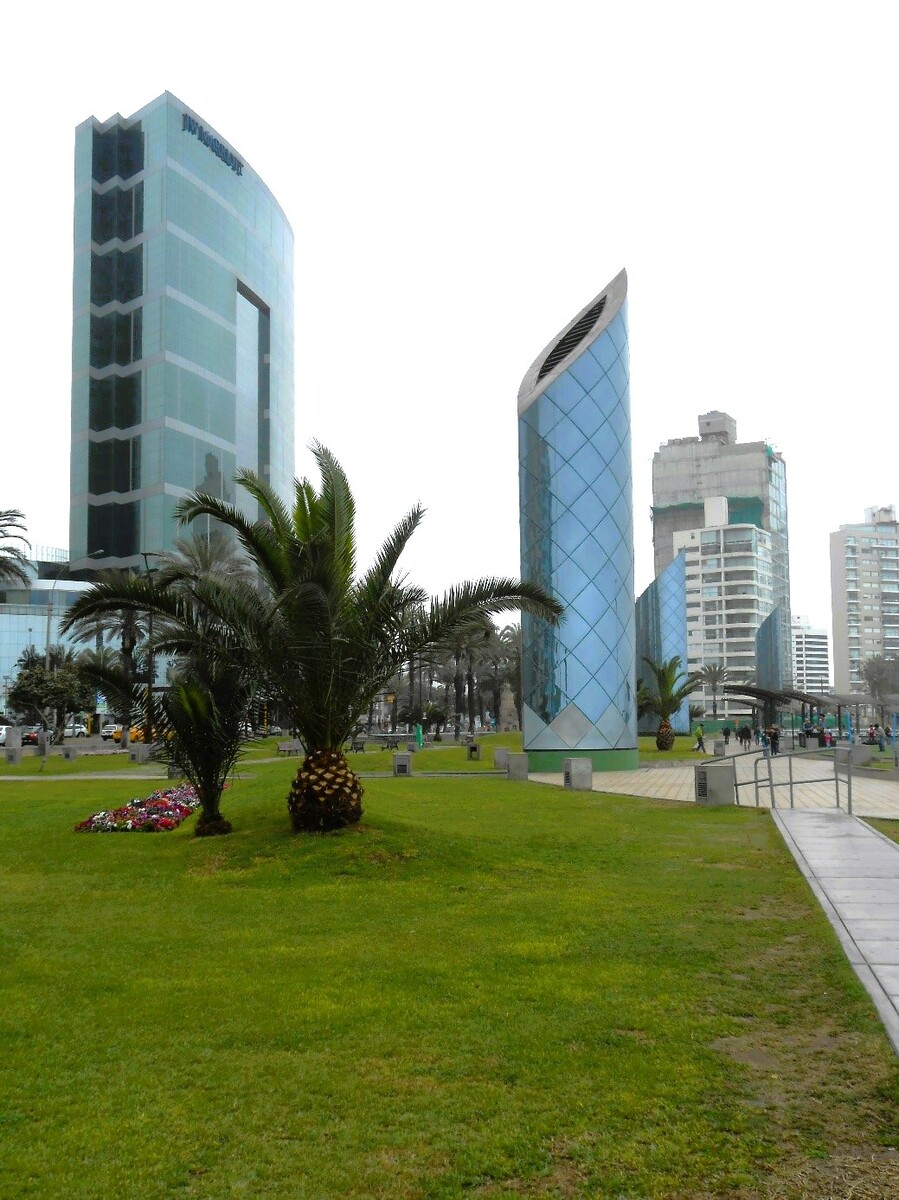
Miraflores It is a modern business center and a luxury neighborhood located directly above the coast of the Pacific Ocean.
It smells of the sea. There is a panoramic area that follows the coast above. Gardens and walking paths wind up the slopes of dramatic cliffs that plunge down, turning into a multi-lane road before reaching the black sand and the gray water. Above us we see surfers, like black dots skimming across the water. Above us, large birds soar, resembling condors. There is no sign of cormorants and gulls.
There is no sun. All day long it never appears. A kind of twilight in the middle of the day. Something in between water mist and fog, but due to the dry climate it more closely resembles condensation from the humid air.
The boulevards are wide, the type of the largest European boulevards, with a pedestrian zone in the center. Further on we will see narrower streets, but somehow, even measured in streets, the sense of this city is spacious.
The traffic is in the best traditions of the Third World: scooters, motorcycles, cars and buses are competing for the advantage among themselves. The advantage depends on the strength of the horn, and pedestrians play ping-pong with the cars, or vice versa. Here, at the driver’s advice, we do not cross the road until the cars have stopped completely.
As a summary, I would add that crossing all of Peru, I did not see any road accidents. Although they are not the best drivers, they apparently drive carefully according to their own style.
We reach the ocean. The coastal boulevard is landscaped with designer greenery. But it comes at a high price – everything is drip-irrigation because Lima is a desert city and water is a precious resource.
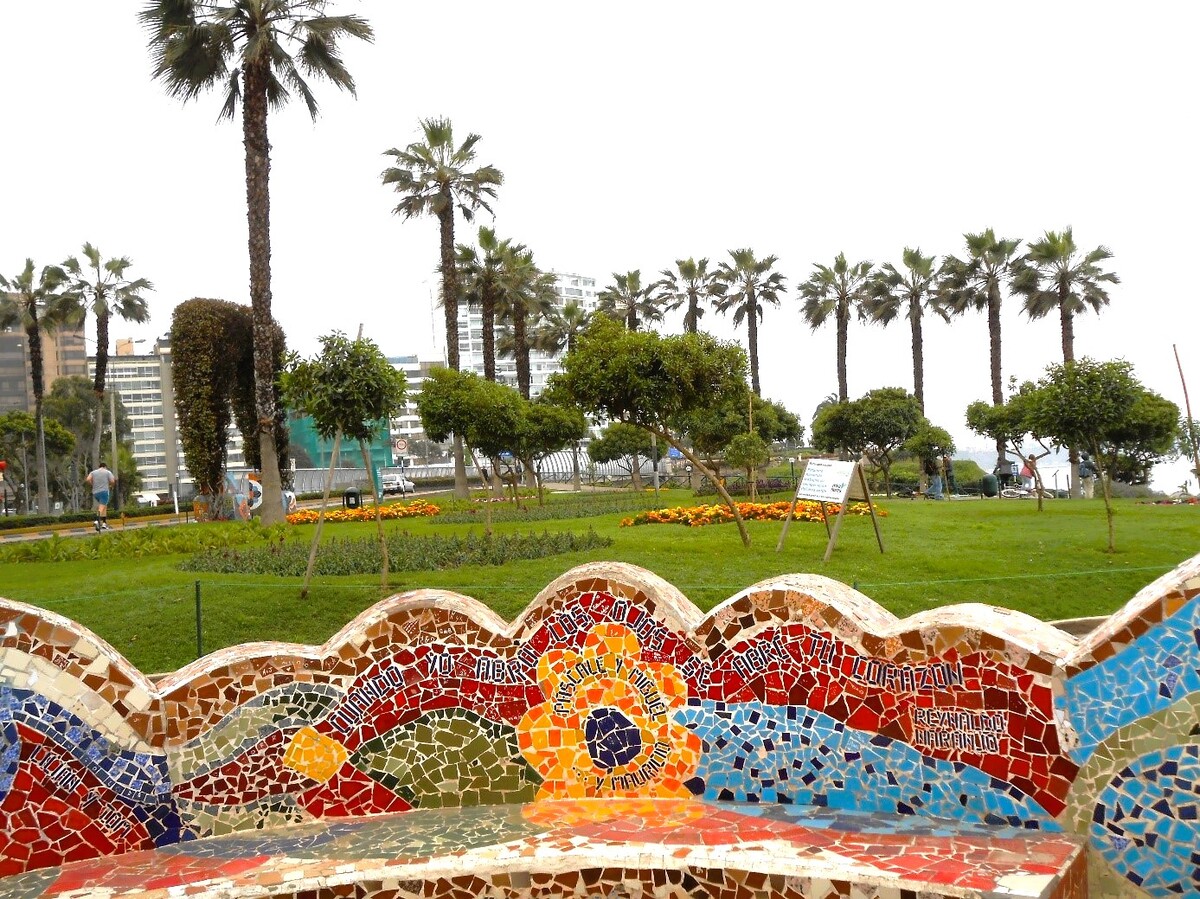
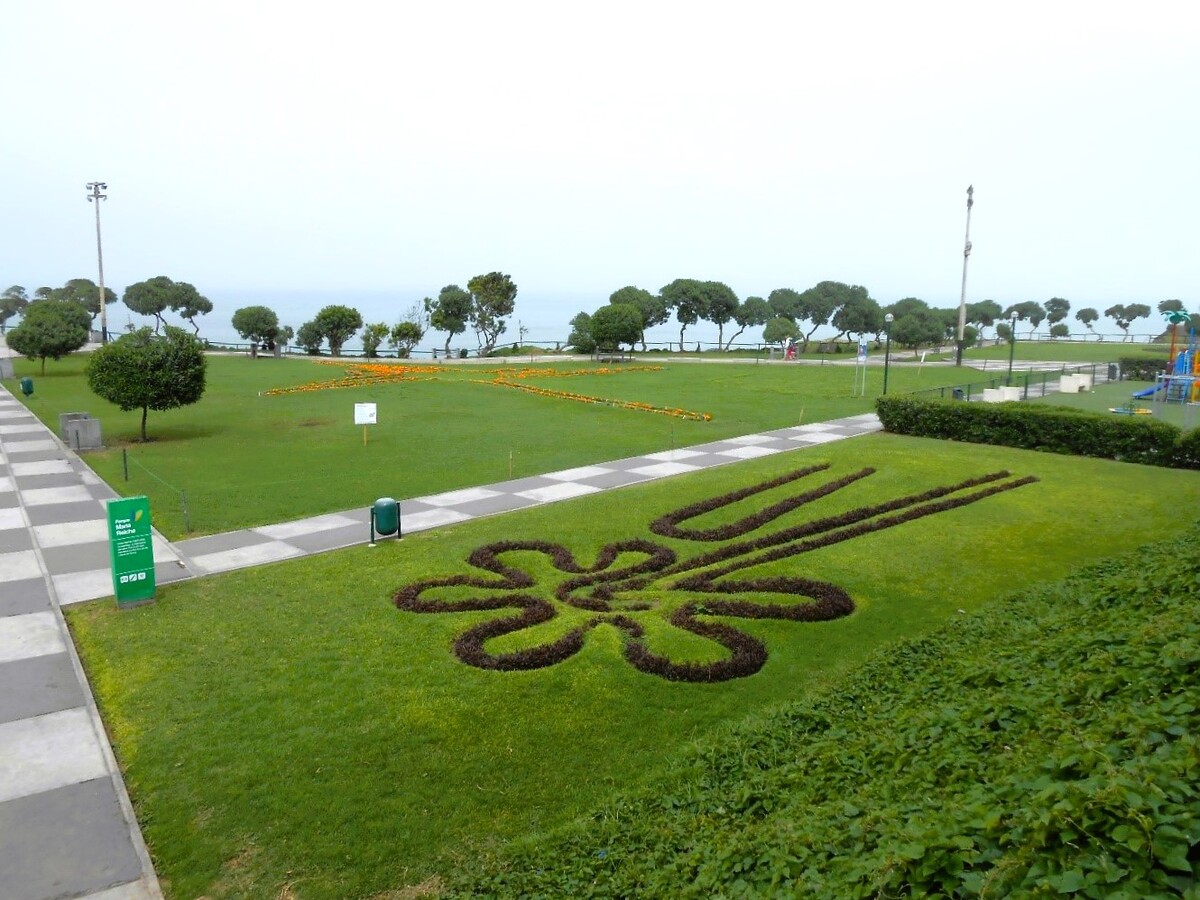
And since this neighborhood became my favorite, I returned a few days later. It is dedicated to Nasca, But the emblematic drawings have been recreated with flowers. It bears the name of the great German woman. Maria Raiche – astronomer and mathematician who dedicated her life to the study and preservation of the Nasca lines.
And one more thing – everywhere in Peru I noticed that the curtains in the buildings are the same. When I asked the other Maria, she explained that this is a requirement of the municipality. In the name of the common vision of the building, the residents are required to choose one type of curtain, and inside they can put whatever they want. I saw this even in the most remote towns, in the multi-story residential buildings…
Yes, our municipal officials have a lot to learn from the so-called „third world“: not from the graffiti and not from the design of every single building!
Baranco – the bohemian soul of Lima
To save time and get to Baranco faster, we take a bus. City transport!
The ticket is one thing, and every bus has a conductor – a person who, as soon as he approaches the stop, appears from the door and starts shouting where the bus is going. And if someone starts getting on, he starts inviting them with shouts.
The reason turns out to be a surprise to me – that’s how they explain to us that there are people in the city with low literacy, for whom these whistles are a way to recognize the bus they need. Peru is a country of inequalities: poor and rich. There are educated, successful people, but there are also those doomed to poverty and limited access to education. An infinitely wealthy, hereditary aristocracy that lives in an inaccessible world of mansions, gated communities and private clubs, owning the mines and the national wealth, and the ghettos.
The bus is a colorful experience. We are lucky to have live performers who, with the playing of a horn and other local instruments, invite us to donate some money.
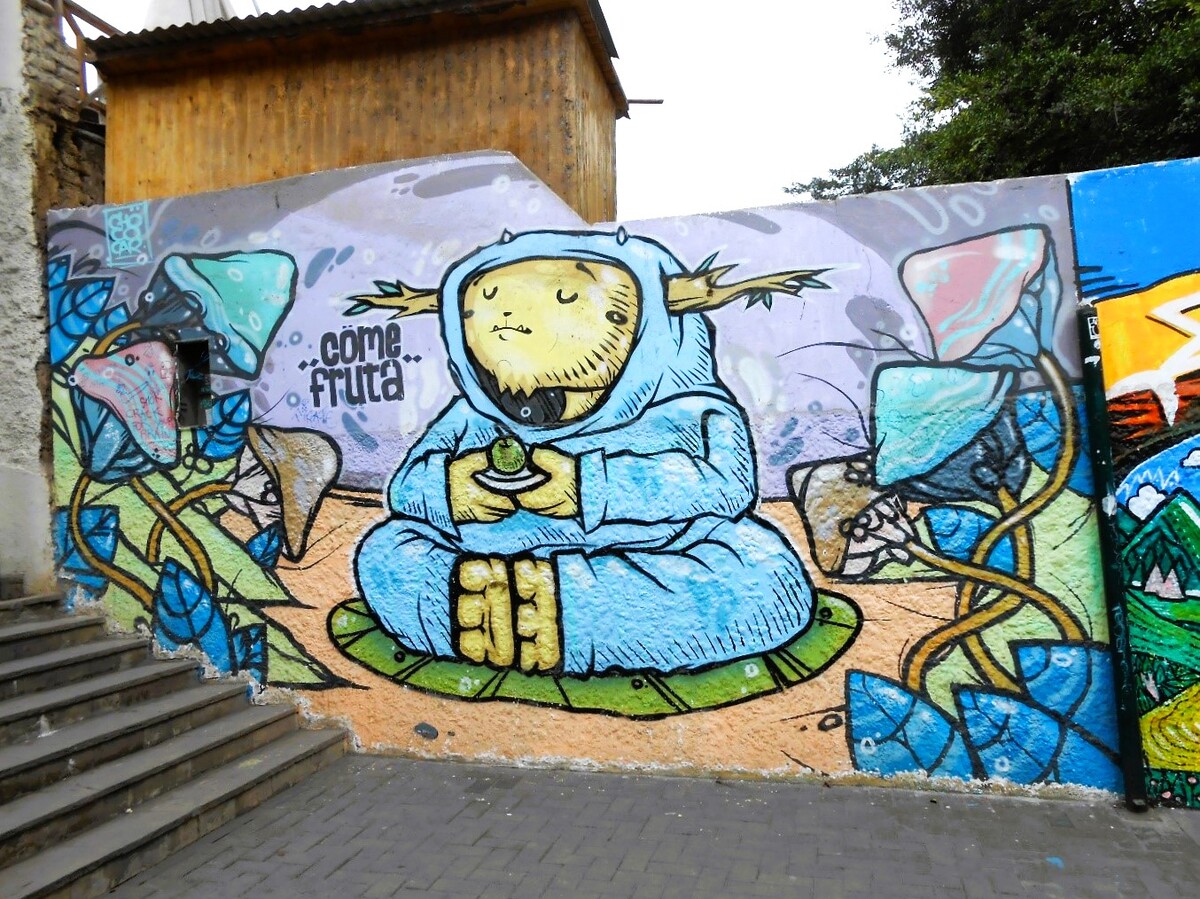
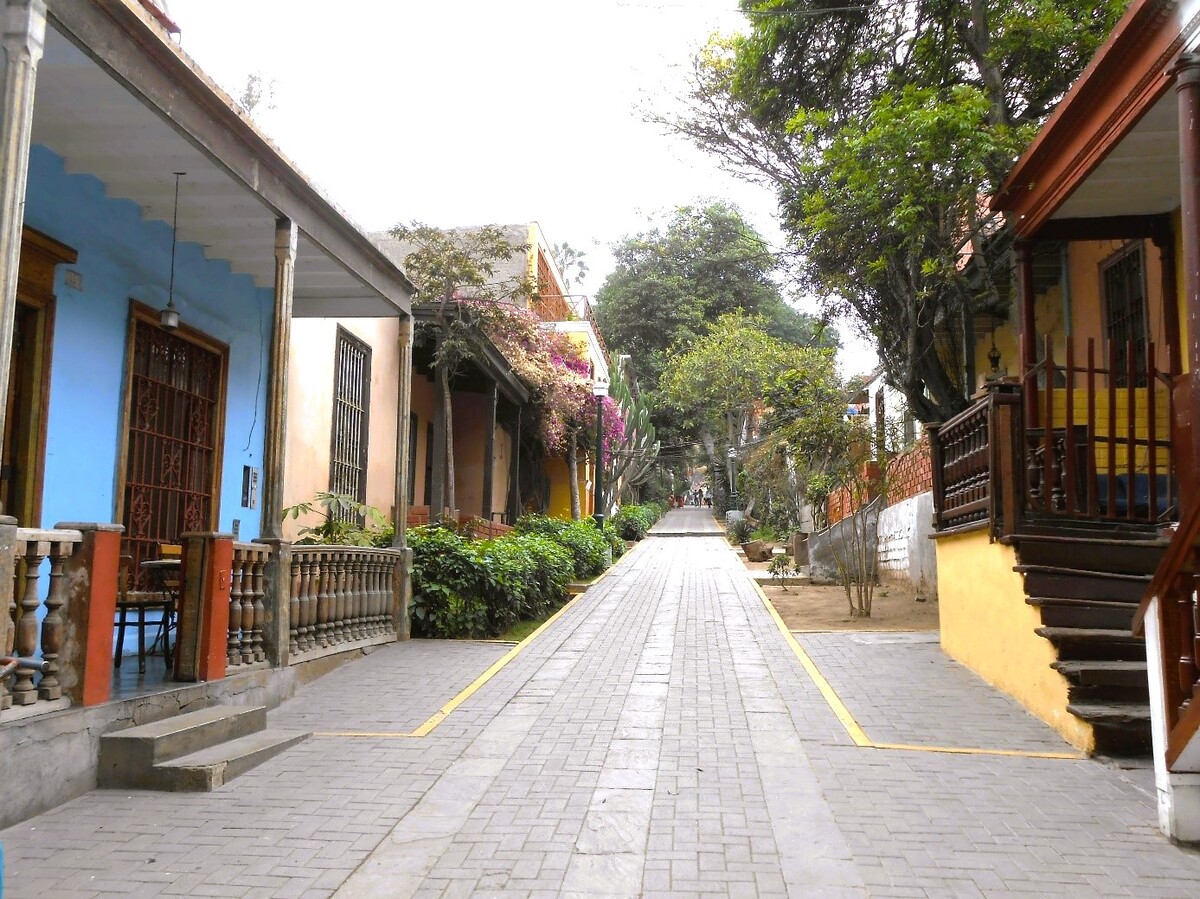
We are descending into Baranco – the bohemian neighborhood where the graffiti has special permission. An entire artistic street is painted with them, and the old two-story architecture with beautiful retro facades is being replaced by the impersonal skyscrapers built of mud by Miraflores.
I already like it here more now. Except for the strong urine smell that drifts in from here and there, Baranco, besides being beautiful, turns out to be a friendly, socially responsible neighborhood with high taxes and self-government.
This was the home of many writers and artists, including Mario Vargas Losa. I also don't miss visiting his house.
The first culinary meeting with Peru
After my first tasting in Peru, I am very impressed.
The food is unexpectedly delicious, the place is a neighborhood pub, and there’s a Bulgarian flag hanging on the ceiling (among many national and football flags, photos, and autographs of Maradona and all sorts of other things).
We taste different things, but everywhere in Peru, first they bring you a snack from the restaurant in small bowls – corn and beans. The corn has nothing to do with ours. Here, there are various local varieties, some with large grains that are roasted and served as a crispy snack.
Typical of the region is seviç – raw fish marinated in citrus juice and spices. In general, on the coast of the ocean, what a person can eat is fresh fish!
Here we are trying the chicha morada for the first time – a drink made from purple corn with a very fresh flavor, and the Inca Cola – a bright yellow, sweet carbonated drink, one of the symbols of Peru.
The portions are huge, the food is incredibly delicious. There is fish and octopus – whatever comes to mind. And everything is fresh, from the morning catch.
In general, the Peruvians eat very interestingly. Their breakfast is substantial, the lunch is the most important and most abundant part of the day, and at dinner they eat very little, usually soup.
Just as a marker – Peru is a culinary destination that covers three, according to others, four climatic zones: the coastal, high-mountain and riverine Amazon.
I was fortunate to try all three. Although I am extremely cautious about food, I found that, besides being fresh, it is delicious, diverse, and environmentally friendly, and it is always presented aesthetically!
The historical center – a legacy of heritage and tension
Our next stop is the center of Lima.
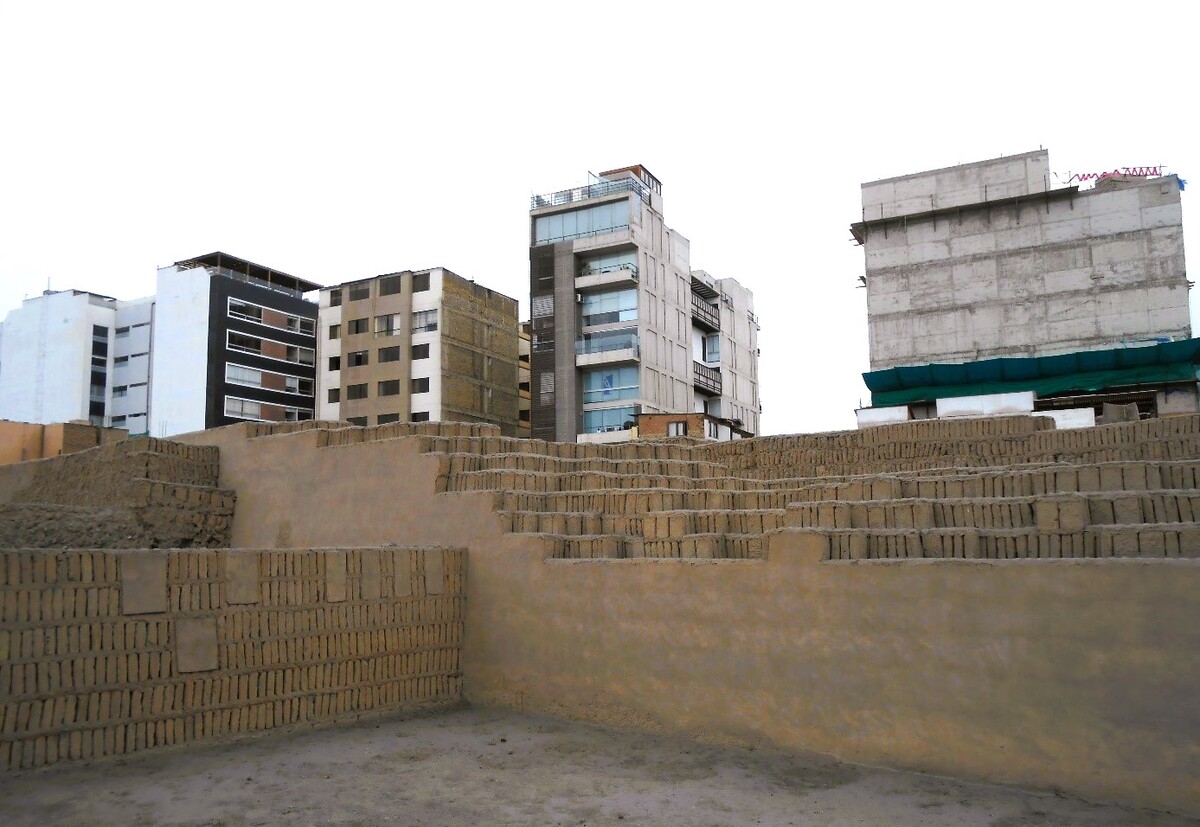
Meanwhile, we pass by the remains of huge ancient pyramids, built of brick using a technology similar to a library. Each handmade brick was laid vertically, like a book on a shelf of other bricks. This technology is characteristic of the ancient culture of Limyra and has left impressive architectural traces that have stood the test of time and earthquakes. This is the Limyra culture, about which I will write separately – a unique pre-Incan civilization.
A mandatory stop for curious people is the museum of The Central Reserve Bank in Peru (Museo Central – MUCEN), In this place, one encounters authentic ancient ceramics and gold in a passionate way. It turns out that the brooches and nose rings were quite fashionable back then. The ceramics with animal shapes and… sex scenes are exquisite and unconventional for the European eye! As it turns out, it’s something like the Kama Sutra in a local ancient interpretation.
We continue our walk through streets filled with heavy wooden gates and unique colonnaded balconies in a colonial and Baroque style.
And here we are in the central square, where the municipality, the presidential palace, the cathedral and the archbishop's palace are located.
Every Peruvian city is built on the principle of a square plaza surrounded by emblematic buildings. This is the model of Spanish urban planning, brought to the new lands to create order in the new territories. Therefore, every city has its Plaza de Armas – the square of arms. Yes! With a fountain and benches.
As we walk around, we notice an increased police presence – from road police and traffic control officers, through bicycle and motorcycle police officers, all the way to the gendarmerie, armed with automatic weapons and equipped with sticks and shields.
This is a common sight in the central part of the city, which is in almost immediate proximity to the poor neighborhoods (literally a bridge away). Peru has a bloody history of terrorism from its recent past, and this is evident in the number of police officers.
Soon we will find out that they are not only many, but also able to react extremely quickly in case of a problem.
We witness a protest by municipal employees for cleanliness that turns into minor riots and the use of tear gas. Within minutes, the police disperse the area and call in reinforcements. Water cannons arrive and the square is blocked off.
With some effort and not without some turmoil, our group managed to gather and leave the confined area. We reached the bridge behind the presidential palace, where armed soldiers prevented tourists from crossing to the other side, where the poor neighborhoods are located.
On the next square, in different corners, speakers with a temperamental patois are apparently delivering political speeches, while more police are again gathering…
Hurray! Our bus is coming to take us to Parque de la Reserva and the show of the fountains there.
I was stressed out from the impromptu rally and tear gas. Lima welcomed us well!
Parque de la Reserva – a spectacle of water, light and music
We arrive safely at the park. The tickets were bought a long time ago and there is a reason for that. The capacity is limited, even though the park is large with many fountains and installations.
It's quickly getting dark and everything glows in light. Water, glitter and music.
There is also a multimedia show – images are projected onto the water clouds formed by the fountain. For me, this performance is a novelty and a discovery.
It is as if on a giant screen of water splashes alternate scenes from the history of Peru, a jaguar on the run, hummingbirds, galloping horses, dances and music from the Andes.
UNIQUE SPECTACLE!
Perhaps with a camera on their head, a person could capture and visualize something from the experience, but the scale, colorfulness, and technique are impressive. There are families, students, and ubiquitous tourists all around us…
And so ends my first day in Lima. A city that greeted me with fatigue, tension, wind and tear gas, but managed to win me over with its architecture, greenery, ocean, food and its inimitable atmosphere.
And Peru still has a lot to show us!
See more for the author Maria Radeva here: