If you missed the first part, Albania: „The Land of Eagles“, here it is.
To walk around a few cities that I visited and my impressions of them.
Drach – the city of ancient history
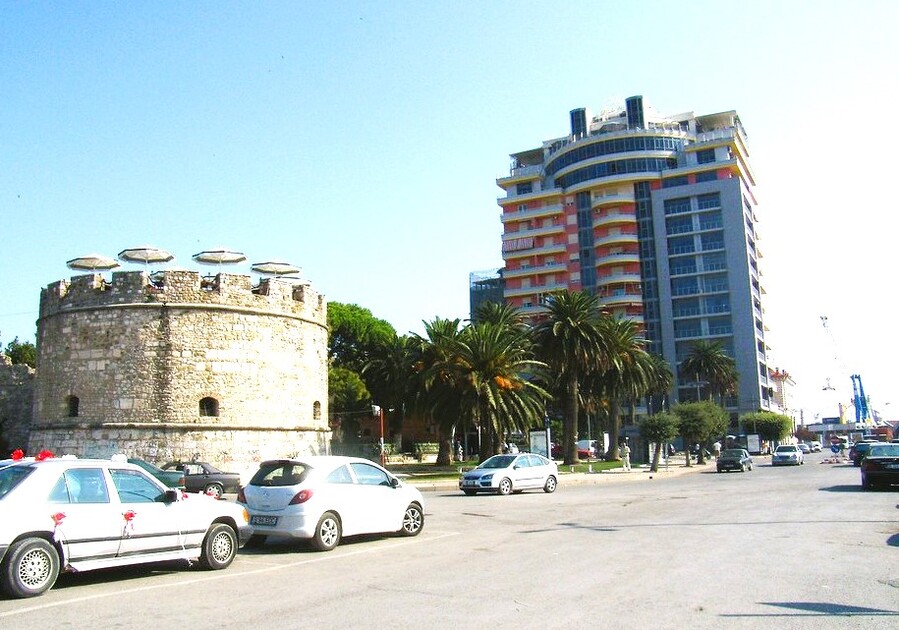
Drach – that is the name in Bulgarian – is the second largest city in Albania and has the largest port in the country.
Here you find the old and the new. Their architecture is extraordinary! As for the old building, two, three or four floors are added on top, as far as the foundations allow, and with a completely different type of architecture. The paved streets remind me of the Portuguese ones – a small cobblestone path, arranged closely, with painted patterns of colorful stones.
The history of Drach is truly remarkable. The city was founded by Greek colonists in the 7th century BC under the name of Epidamnos, and later became known as Dirahium. During the Roman era it was an important center of the Adriatic Sea. It is from here that the famous Roman road Via Egnatia begins, which connects the Adriatic coast with Thessaloniki and Constantinople. The Roman amphitheater built in the 2nd century is one of the largest in the Balkans.
Drach also has ties to Bulgarian history – the time of the kings Boris I the Confessor and Simeon the Great, and later with the dramatic events surrounding King Samuel. The city is also associated with the name of Angeloglosy – Saint John Kukuzel. According to his life story, he was born in Dirahion, today's Drach. Kukuzel is a real historical figure, renowned as a medieval church singer and composer, remembered for his exceptional voice and musical creativity.
Well, remember Dimitar Talev's novel – the trilogy about King Samuel! Because I had recently reread the books, I had the feeling that everything was familiar and close to me. And not quite. The image of Angeloglasi, described by the Bulgarian writer, also intruded.
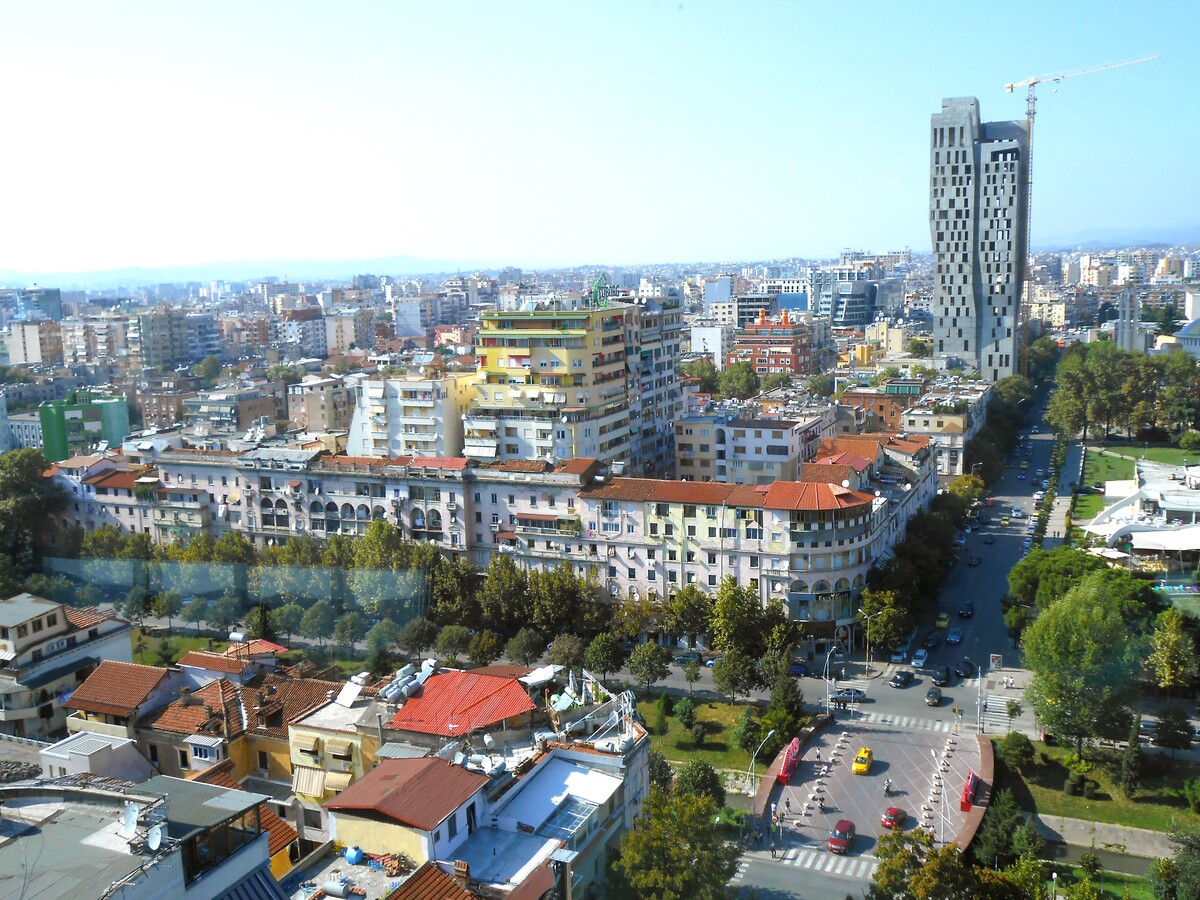
„I “sprinkled” the coastal promenade, the old town, and walked behind the fortress walls; I saw the Roman amphitheater and the Venetian tower.
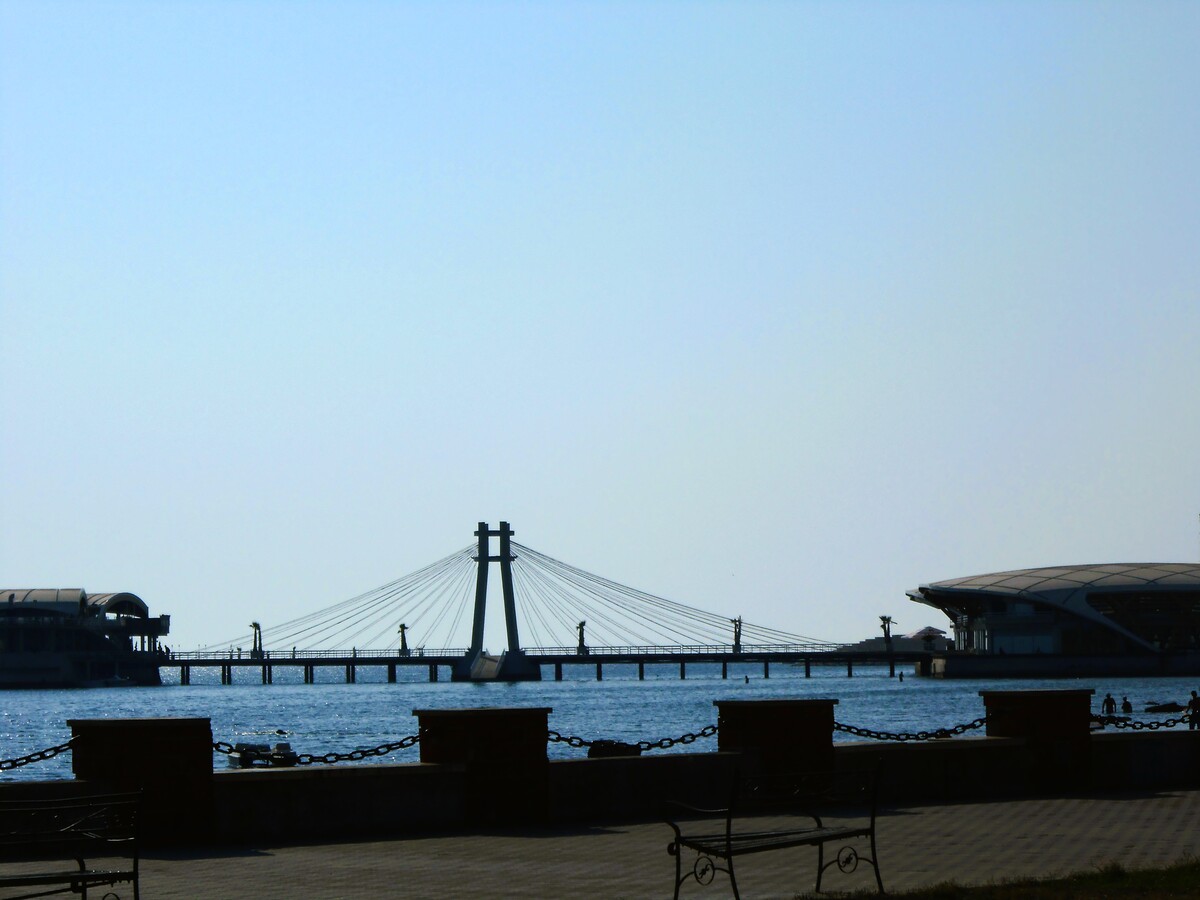
From the terrace of an attractive panoramic pastry shop, I stopped for a cup of excellent coffee and shared panoramic photos of the city and the sea.
Tirana – the colorful capital
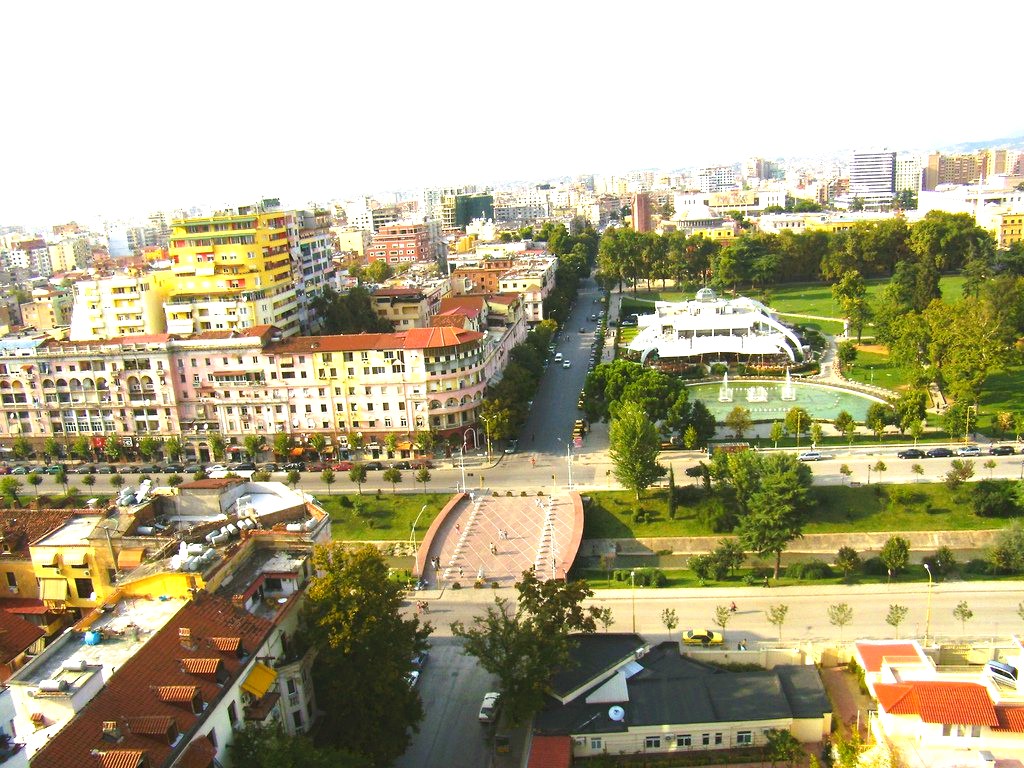
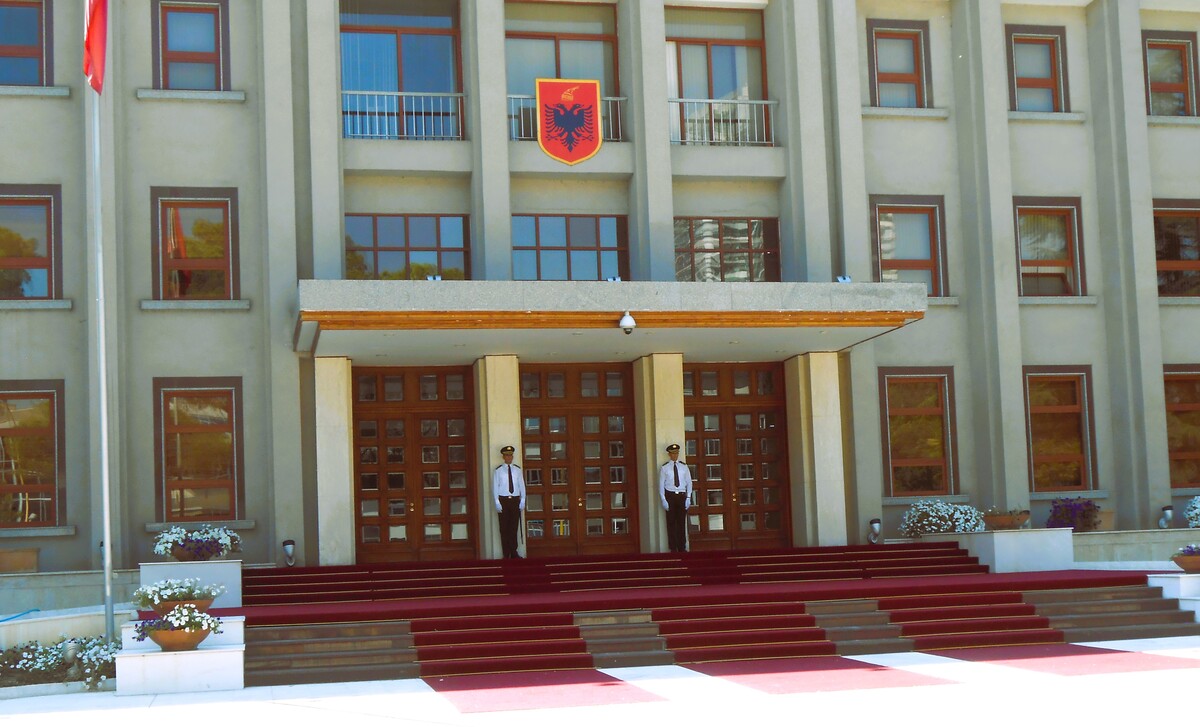
Tirana – it’s obvious that it’s the capital. Clean, tidy, the houses are in bright and saturated colors. Otherwise, the traffic is downright scary: there are no speed bumps, no one respects the priority, but the roads are perfect. They’re built with their own money! There’s no problem with parking – they have underground garages. They’re thinking ahead. Spacious streets, excellent sidewalks. I didn’t see any beggars.
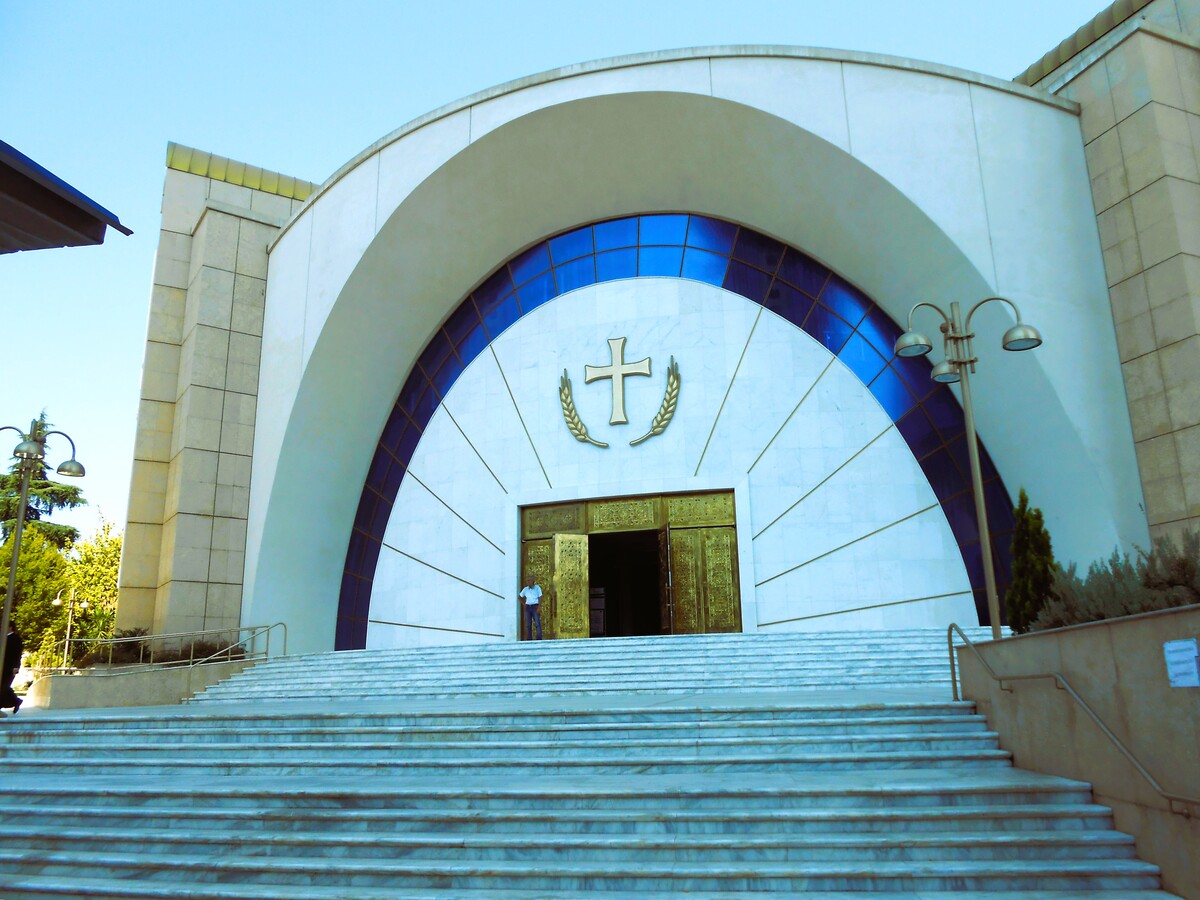
Naturally, we visited Skenderbeg Square with the monument to the national hero of Albania, the Palace of Culture, the opera, the Etem Bey mosque from the end of the XVIII and the beginning of the XIX century, the Parliament, the University, the monument to Mother Teresa and the newly built Eastern Orthodox Cathedral of the Resurrection of Christ – incredible modern architecture. The cathedral was completed in 2012 and is among the most impressive Orthodox churches in the Balkans.
Skenderbeg Square also deserves attention. Its current appearance is the result of extensive renovation, and the pavement is made of natural stones delivered from different parts of Albania. Thus, the square itself becomes a kind of mosaic of the country.
We drank great coffee at the top of one of the tallest buildings in the city, in a restaurant with a revolving top floor. From there, the panoramic photos of the city are taken. It is framed by high blue-green mountains. Beautiful!
And I started to like the eclectic nature of every building that was completed… In Tirana, the old and the new don’t just coexist, but sometimes they even compete for your attention.
Kruja – the city of Skenderbeg
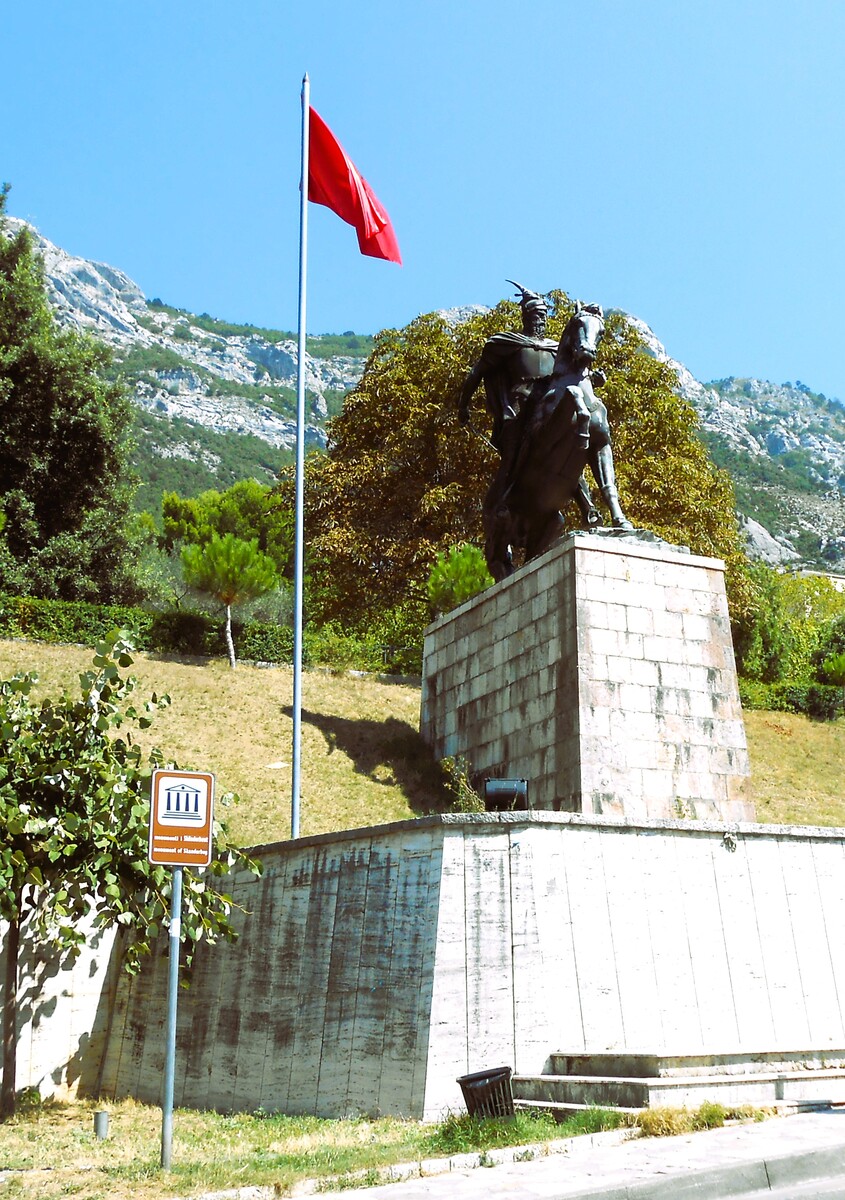
The old capital, the city of Kruja – the birthplace of Albania’s national hero Skanderbeg.
A walk through the old bazaar, where we can choose beautiful and characteristic souvenirs for the country. From the craft street I bought original earrings and a bracelet. They advertise them as Albanian silver. They don’t have any silver at all, but they’re somehow naturally tarnished and haven’t changed since then. I thought they were some kind of fake. Heavy and impressive. But you know: if you shop there, they’ll respect you!
The bazaar has retained its ancient appearance and offers not only jewelry but also traditional products made of copper, wood, textiles, and carpets. Here, craftsmanship is part of the city’s atmosphere.
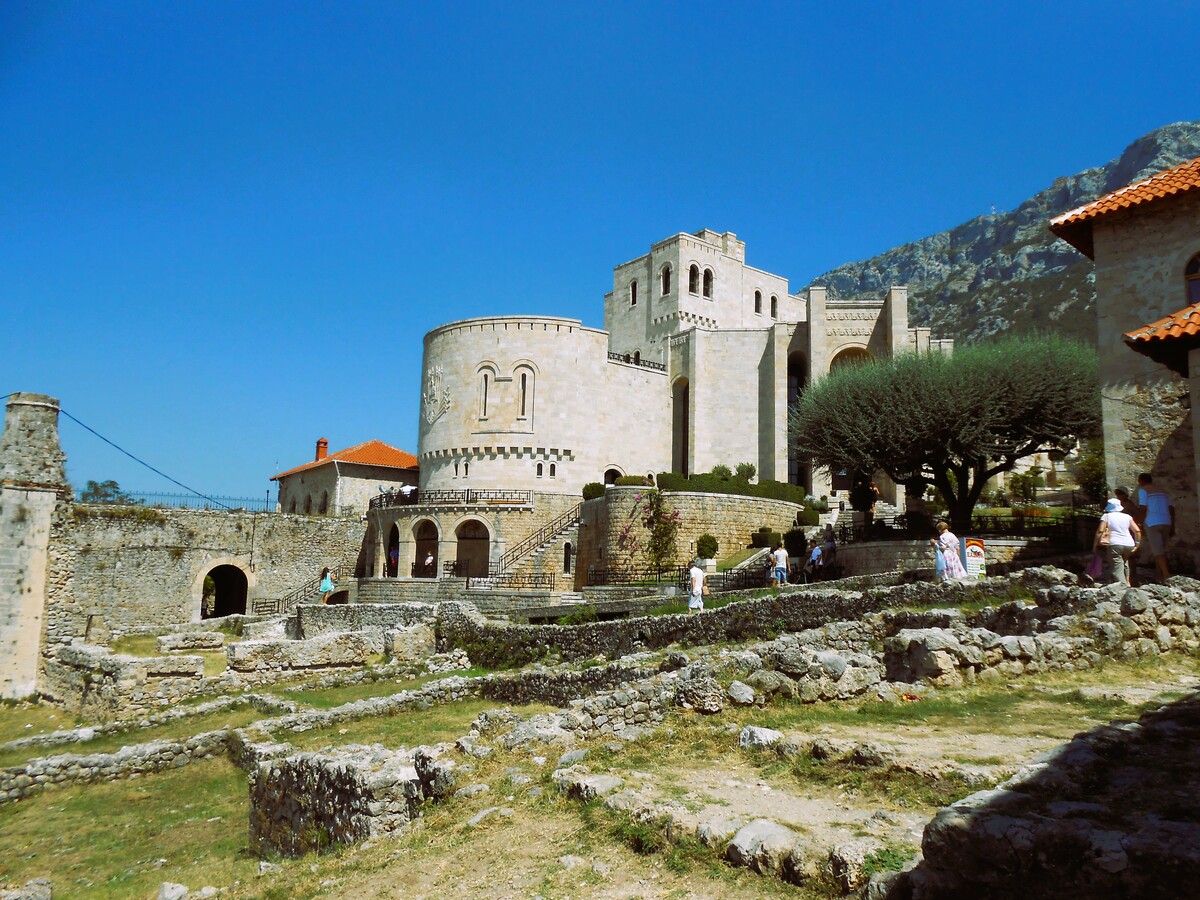
The picturesque street led us to the historical fortress from which Skenderbeg defended his homeland from the Ottomans for more than 20 years. Today, the museums dedicated to him and to the traditional way of life of Albania are also located in the fortress complex.
And the cognac bears their name – „Skenderbeg“, and it is very good. Actually, the drink is brandy, not cognac, because „cognac“ is a protected name for a drink produced in the French region of Cognac. Overall, Skenderbeg is extremely delicious and has its reasons.
Berat – the city of the thousand windows
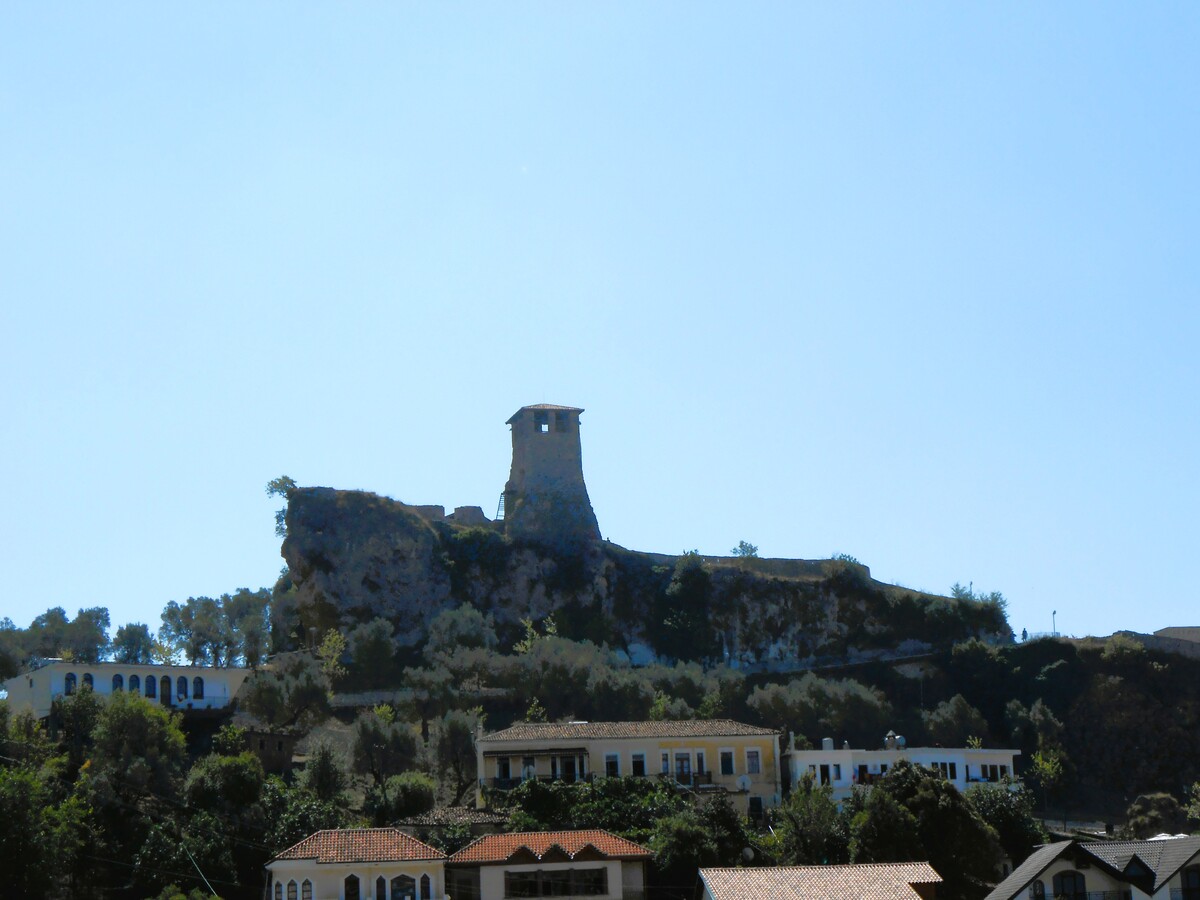
Bechar (UNESCO) – „The City of a Thousand Windows“, an ancient town with characteristic architecture, beautifully situated on a hill surrounded by the Usus River.
It reminds me a lot of Veliko Tarnovo. Almost the same architecture and sparkling greenish-blue river water. Doesn’t it look like Osam?! I don’t know why I haven’t taken a photo…?!
Bechar is among the oldest urban centers in Albania. The history of the fortified settlement on the hill is traced back at least to the 4th century BC. The city was included in the UNESCO World Heritage List in 2005 along with Girahokastra for its remarkably preserved architecture and the evidence of the coexistence of different cultures and religions over the centuries.
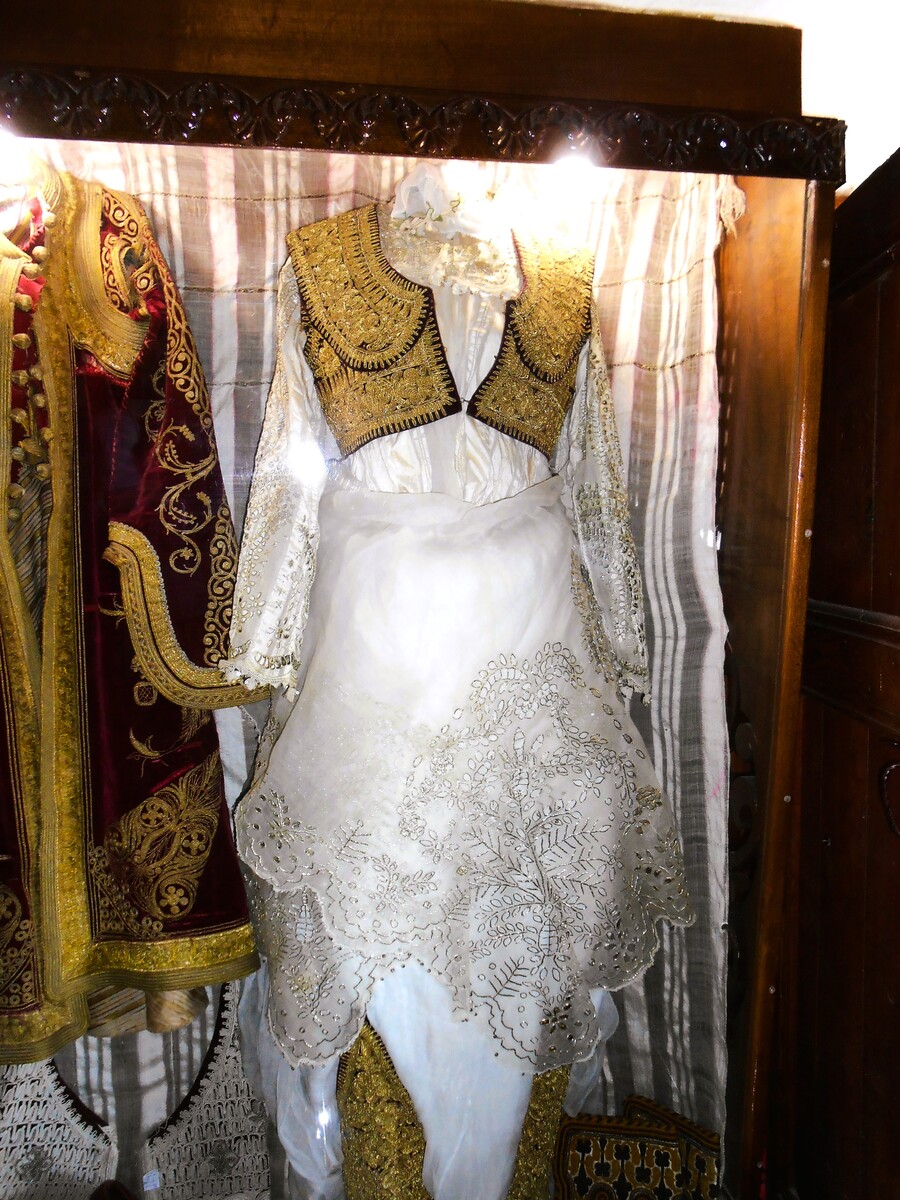
At the ethnographic museum I learned that the Albanians came from the Noah’s Ark, from the Caucasus. This is an interesting legend that apparently is kept in the local tradition. And indeed, there may be something in these distant connections, because their dances are very close to the Caucasian peoples.
And their language is ancient, Indo-European, but with its own branch. Maybe it is an Illyrian language? It is not completely clear from which exact Paleo-Balkanic language it originated. The connection with the Illyrian language is one of the leading hypotheses, but due to the few preserved linguistic monuments it cannot be proven conclusively. The Albanian language is influenced by many other languages – Latin, Greek, Turkish, Italian and Slavic.
In Berat, relics associated with St. Gorazd and St. Angelarius – disciples of the holy brothers Cyril and Methodius – are preserved. According to local church tradition, they are associated with the Christian history of the city. Berat was also known by the Slavic name of Belgrad, or Belgrade.
These relics are kept in the unique local church, where today the „Onufri“ National Iconographic Museum is located. Besides the works of the renowned iconographer Onufri, you can also see extremely interesting icons, including the Virgin Mary with the Child depicted with the child in her right hand instead of the usual left hand. The museum also houses two invaluable manuscripts – the Beratinus Codex Purpureus from the 6th century and the Anthimi Codex Aureus from the 9th century. They are included in the UNESCO Memory of the World program because of their exceptional value as a world cultural heritage.
In Berat, relics associated with St. Gorazd and St. Angelarius – disciples of the holy brothers Cyril and Methodius – are preserved. According to local church tradition, they are associated with the Christian history of the city. Berat was also known by the Slavic name of Belograd.
These relics are kept in the unique local church, where today the National Iconographic Museum „Onufry“ is located. Besides the works of the famous iconographer Onufry, you can also see extremely interesting icons, among which the Virgin Mary with the Child, depicted with the child in her right hand instead of the usually depicted left one. And one of the most unusual details is the eggs from the emu bird, which are said to have protected the wooden altar from ants and other insects.
Ardenitsa – the monastery with a Bulgarian trace
Not far away, in Ardenitsa, there is the male Orthodox monastery „The Nativity of the Virgin“, which still maintains its spiritual atmosphere today.
The monastery was founded in 1282 by the order of the Byzantine Emperor Andronikos II Palaiologos, and not in the 13th–14th centuries on a church from the time of Tsar Boris I. One of the most interesting historical facts associated with it is that it was here in 1451 that Albania’s national hero Skanderbeg was married.
Even today, the place carries the spirit of the centuries-old history of the Balkans, in which the Bulgarian, Byzantine and Albanian histories often intertwine.
Albanian cuisine – the taste of real food
And last but not least, let's mention the food. It is incredibly delicious because it is authentic.
While traveling, I watched how the steep slopes of the mountains were meticulously processed and turned into terraces. With a donkey and occasionally a horse. An extremely hardworking people. Their land produces fruits and vegetables, at least two or three harvests a year. Everything is organic, as is fashionable to say. Even their flour.
What I didn’t eat! Starting with their stuffed buns, banquettes, pastries, sweets, meat and fish, of course. In the places where we ate, I hardly saw pork. The butter and milk are fantastic. I wanted to bring home at least a few kilograms of products.
A plate of calamari, mini octopuses and shrimp is cheaper than in Greece. In Albania you can also try traditional Balkan dishes like musaka, djubarsarma or various heads… There are also specialties like tavë kosi – lamb meat with rice, soaked in yogurt and baked in the oven.
The pizzas and spaghetti are made just like in Italy, as their chefs often learned to cook them in the neighboring country. The espresso is strong and aromatic. Besides tiramisu for dessert, you can also eat juicy fresh fruits, treleche – a similar to a meringue dessert with a glaze, sweetened with three types of milk and cream, or caramel cream.
Their beer turned out to be excellent too! Just like the wine and the rakia.
And after all that eating, I haven't gained a single gram! That's what food is called. Like from the old days.
People – the best memory
The Albanians themselves are not full-time workers. They are small, agile, dark-haired and hardworking. They are warm and well-intentioned. Men usually only engage in trade. They have many children – at least three or four – and they love and care for them with love.
I saw and felt such things.
These are my personal impressions of the people I met during the trip. And they are part of my memory of the country no less than the cities, the mountains and the sea.
Albania after the earthquake
I think about this country… What happened after the earthquake?! Especially with this construction… Have they recovered? The damage was huge and we were worried after hearing the sad news.
On November 26, 2019, Albania was shaken by a strong earthquake with a magnitude of 6.3. 51 people died, over 900 were injured, and about 17,000 people were temporarily left without a home. 11 municipalities were affected, with the most affected areas being Drach and Tirana.
After the disaster, a large-scale recovery program began with the support of the European Union, the United Nations, the World Bank, and other international partners. New housing and schools were being built, public buildings and cultural sites were being repaired. The recovery was a long process, not something that could be completed in a few months.
Albania – a beautiful country with a proud people
That is how I saw and described Albania: a beautiful mountainous country with a proud people!
See more for the author Maria Radeva here