Goat herds in Central Macedonia
They preserve traces of a Thracian fortress, a ruling residence and sanctuaries amidst impressive megalithic structures. In the final fifth part of the series„Srednogorie Secrets“Atanas Krestev heads to this mysterious place to complete the story of the mountain Thracians.
(The final, fifth part of the Middle Mountain Mysteries)
And chronologically they are arranged according to the tourist’s itinerary:
Part One: Mysteries of St. Nedelya. Koprivshtitsa: Archaeology of the Spirit
Second part: Koprivshtitsa – Archaeology of the Spirit 2
Third part: Bogdan Peak, a gift from the god Bog in Central Bosnia
Part IV: The Thracians: Priests, Warriors and Coup Leaders
In case you want to feel the rhythm and logic of the narrative… and to enjoy the beautiful poetic language of the author. Atanas Krastev.
Towards Kozhi Gramadi
I am retracing my steps back to the mountain that was inhabited literally to its peaks, in order to complete the circle with the mysterious settlements of the mountain Thracians.
Not long ago, on one of the highest of them – Alexitsa A sacred sanctuary has been discovered. At the saddle between it and Mount Kozzi Gramadi there are remains of a market, and a fortress was built on Kozzi Gramadi, around which there is another abundance of sacred sites and an impressive, apparently royal residence, the only one of its kind discovered so far.
Shortly after the mound „Monastery“, Where another wonderful temple has been revealed and accessible to visitors, I head left and up.
About twenty kilometers of dusty Kolari road north to the Kozhi Gramadi peak offers an experience for extreme off-road enthusiasts, and for their companions – straight hair, a racing heart and high blood pressure.
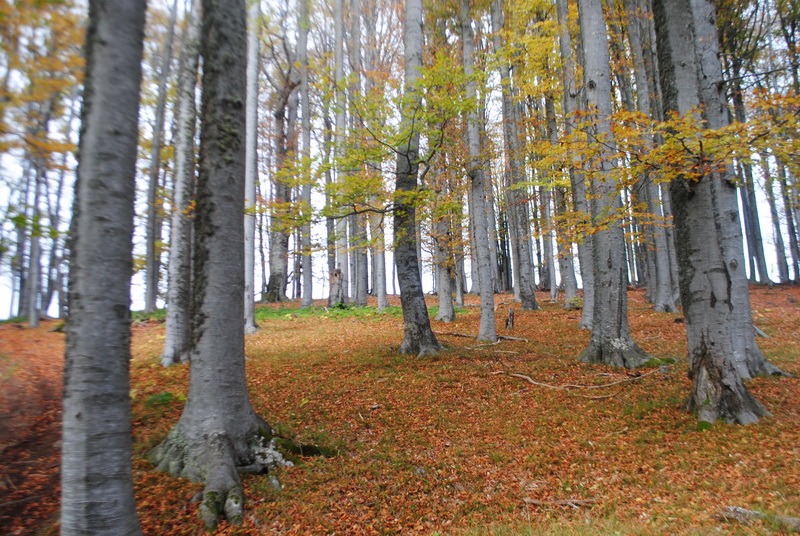
For the cool-blooded, the slow ascent up the south-facing, oak-covered slope reveals the magical splendor of the mountain, whose surface is dotted with numerous beautifully illogical megalithic formations formed by the elements.
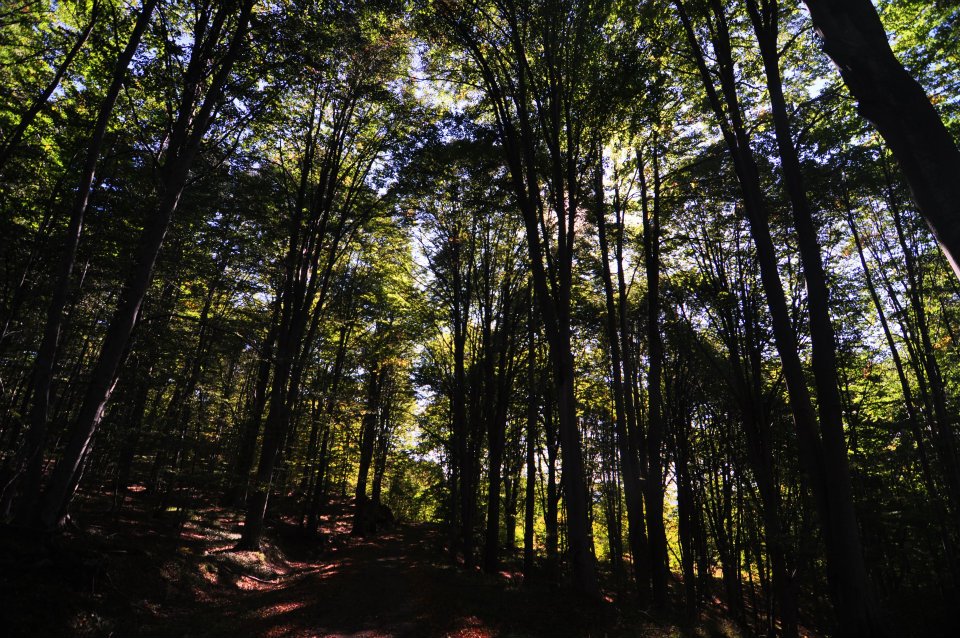
The megalithic landscape of Kozis Gramadi
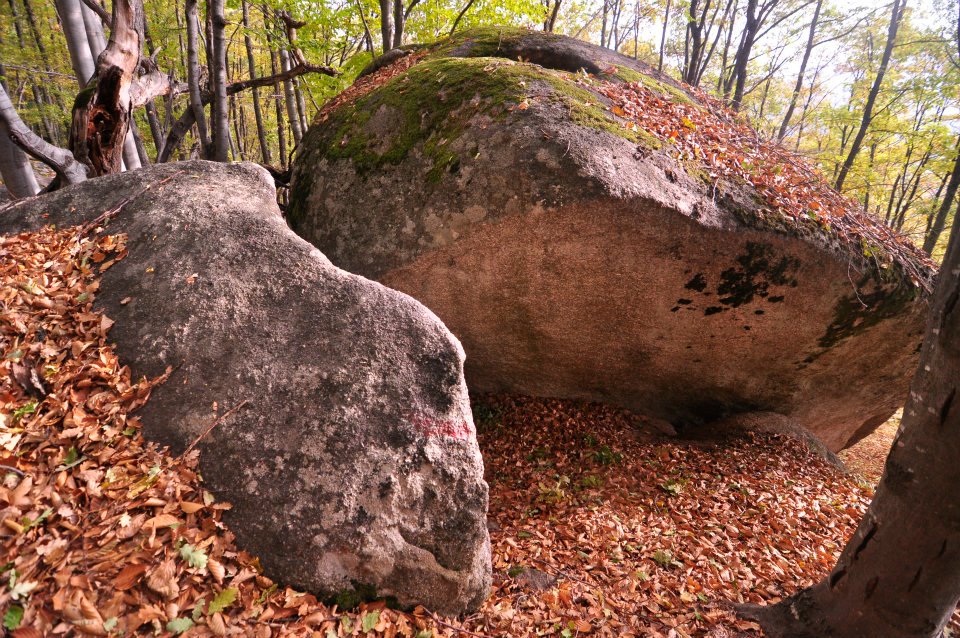
The light-colored seas, scattered almost everywhere, radiate the mesmerizing effect of statues of Henry Moore.
The enormous boulders, stuck in the most whimsical shapes and combinations, meet the welcoming gaze, caress it gently and fill it with their warm weight.
You can feel how the unbiased Thracian fell in love with this wonderful landscape to the point of obsession and, with his knees bent, he humbly settled here, regardless of the hardships of mountain life; he spontaneously enlivened the beauty and the good power of the place and naturally accepted it as his home. God, which He He also offered hospitality to the man for a common home.
This direct, simple natural connection of the Thracian with God It may seem naive to some, but to me it seems incredibly beautiful to transform the mountain, the earth, and all of creation into a living temple to which one can devote oneself with love as its happy priest and worshiper.
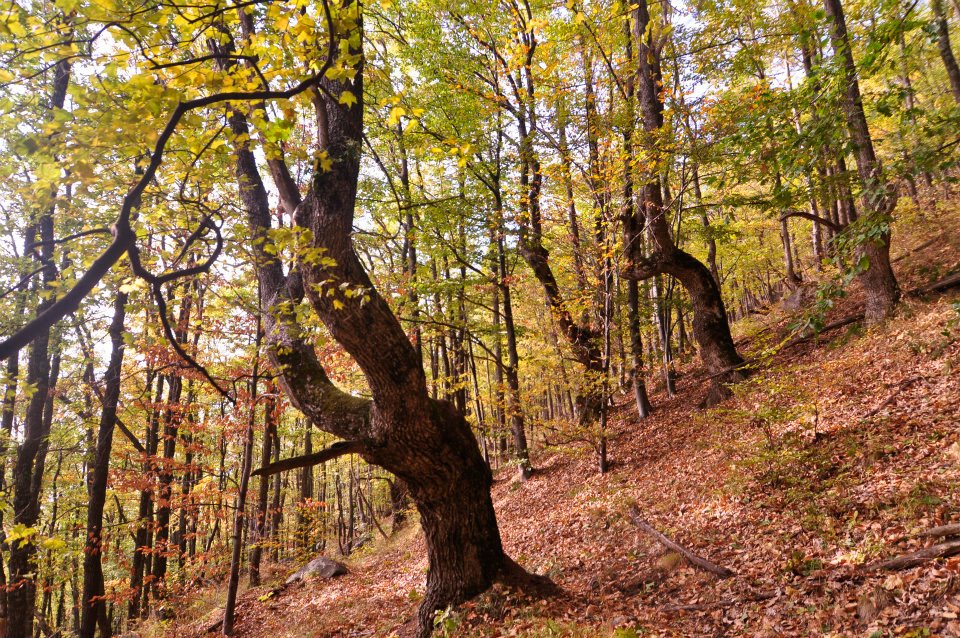
The Thracian residence under Kozis Gramadi
The ruins of the residence under Kozim Gramezi have been cleared and displayed by archaeologists.
And the little that remains of it reveals a sophisticated taste and high constructional craftsmanship. The friezes carved on the periphery of each of the enormous stone blocks give the massive walls a sense of lightness and refinement.
The surviving arch vault, framed by reddish stone, stands elegantly against the grey-beige background. A significant portion of the ruler’s ceremonial hall has been preserved – four rows of stone blocks from the four walls. On a raised platform to the north, opposite the main entrance from the south, was located the throne, from where the mountain lord could observe his courtiers and guests from a high vantage point, the slopes and the entire plain at the foot – a wonderful view for any lover of unlimited power.
The residence consists of many buildings, once surrounded by a fortress wall. It had its own sanctuary, residential and agricultural buildings.
The architecture and luxury of the residence
The construction shows a diverse and quite modern architecture for its time. The sense of beauty, fairy tale, and supernatural fairy tale in the Tylileni forests is indescribable. Once again I am convinced that true pleasure requires a lot of preparation. We feel especially satisfied when we achieve complete comfort in hard-to-reach and unusual places – on airplanes, yachts, in deserts, on uninhabited islands and uninhabited islands.
The incredible luxury here, in the heart of the wild forest, and the legendary taste of the Thracians for healthy feasts and other extreme entertainment make me recognize them as champions of hedonism.
I walk around for a long time.
I can't tear myself away from the place that attracts me.
The clock eventually leads me under a convoy towards the car.
Fenera Chalet and the views of Central Macedonia
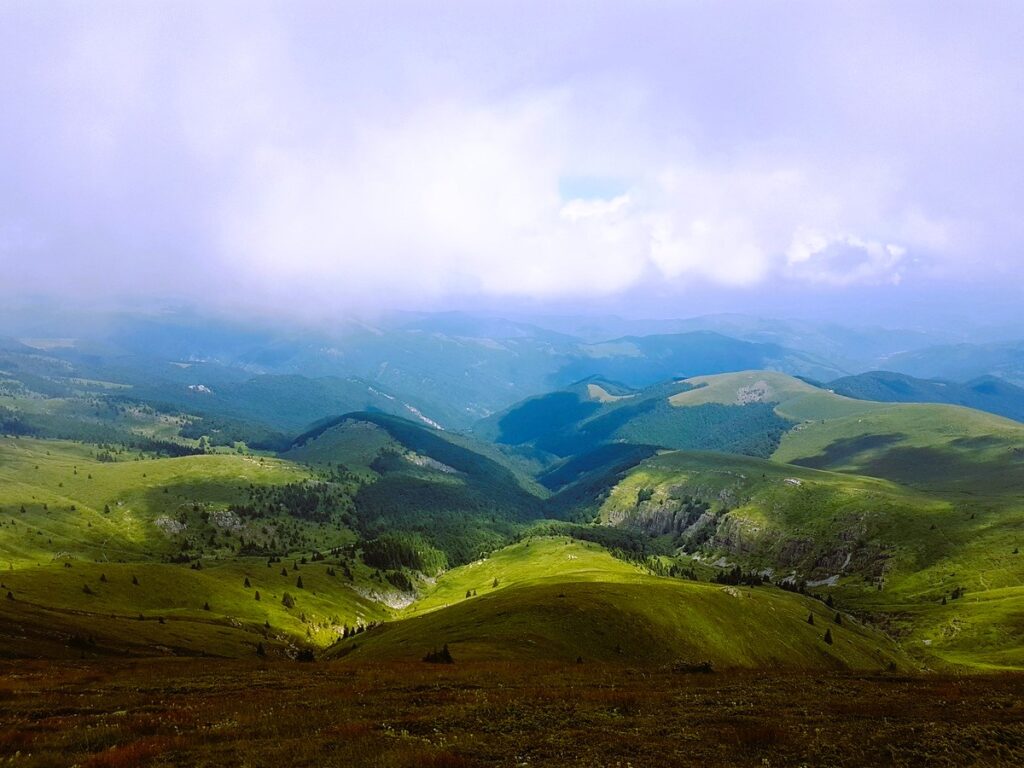
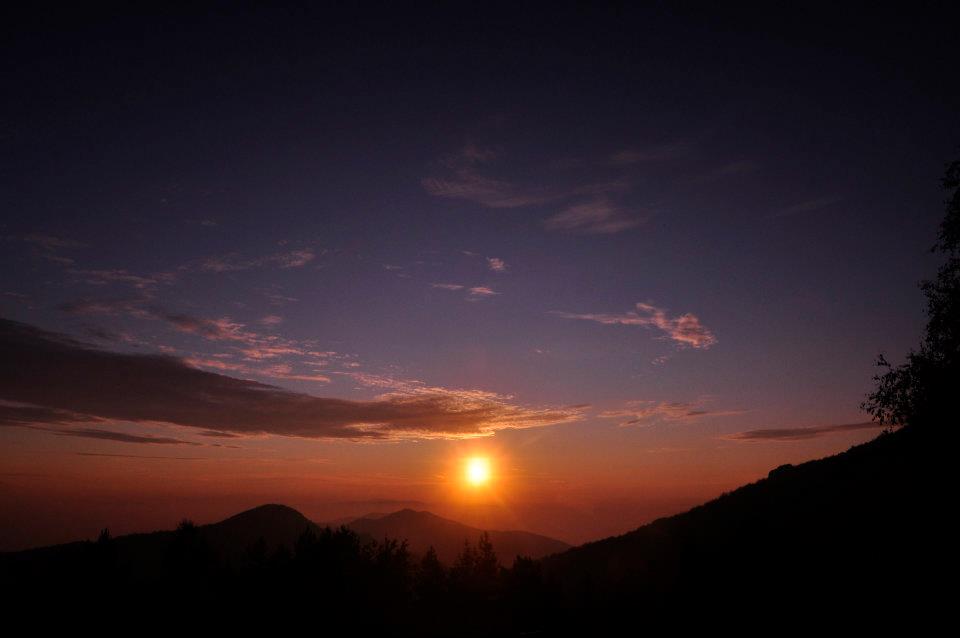
I take a break in front of Fenera Hut, Hidden in the foothills of Asenitsa, not far from the once bustling Thracian settlement. I warm myself with the aromatic herbal tea and enjoy the series of distant and gradually shrinking peaks that descend towards the horizon, like a caravan on the eastern slope.
From the left to the northeast Botev peak It invariably oversees the world under its control and seemingly generously promises to divert some tourists towards it.
Goat herds and the memory of the Thracians
After so many impressions of a mountain that was bustling centuries ago, I feel surrounded by the shadows of the past. I try to imagine its living owners—what they looked like, how they dressed, how they spoke, what they enjoyed. It turns out that we carry fifty percent of the Thracians’ genes, that they are actually our significant ancestral roots, neglected because of ideological expediency and simply ignorance.
Perhaps my imagination paints them more significant, free, happy, and beautiful than they were in reality. It is possible, but I do not engage in analyses. I feel the need for such a beautiful image to dispel the doubts and disappointments caused by the weight of our urban ties and the confused world today. It is somewhere far down in the invisible villages from here, lost in its own vanity, obsessed with its artificial body. From Kozí Gramadi it looks like what it is – small, insignificant, and weak. Here I forget about it for a while, and because of the inevitable return down below, it becomes distorted in my mind. I once again embark on reflections and longings for freedom. That of the Thracians, of the Renaissance, and of ours.
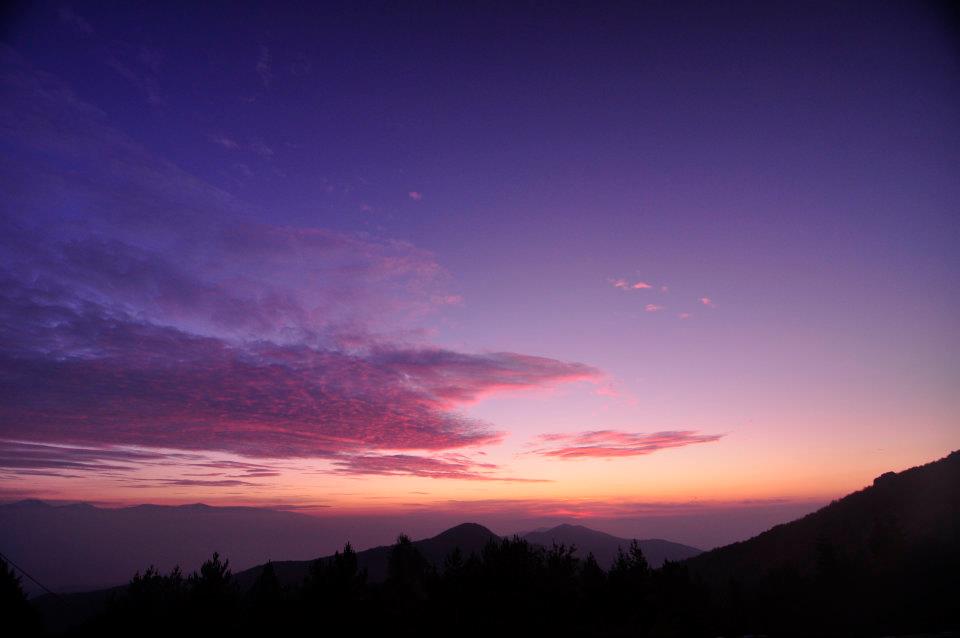
Above the lonely, deserted mountain, darkness descends and a cold, biting wind howls through the forest. I must go.
I take my load off the tourist crowds, the discoveries and the trills, I breathe deeply to recharge with the pure air and with the hope of returning to that freedom that the mountain, given by God, mysteriously promises to bring me back.
Edge!
Additional information about the Thracian residence of Kozis Gramadi can be found in The official tourist portal of the Municipality of Hisarya.
Even from Atanas Krestev – read: Easter in Gabrovo