Story from 2015, part II
If you missed the first part of the adventure called Myanmar – a story in pictures
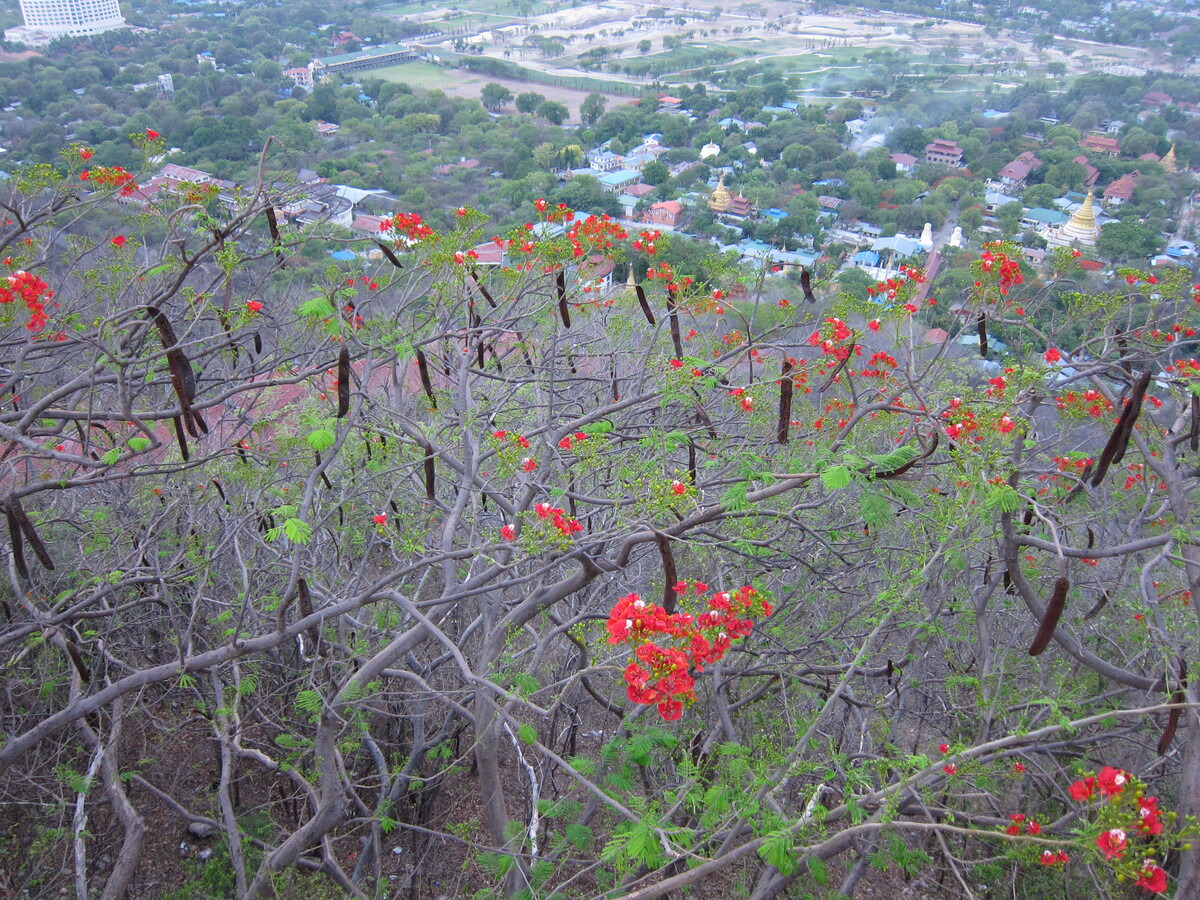
The Fire Tree
The fire tree is known for its wide crown and impressive red-orange colors. When it blooms profusely, it seems to be engulfed in flames—hence its popular name. The species Delonix regia comes from MadagascarIt is found in many tropical and subtropical regions of the world today.
Small temple
The temples in Myanmar vary in size and architecture. Some are large complexes, while others are modest shrines located among villages or ancient religious sites.
It is important to distinguish between a temple and a stupa: a temple usually has an interior space for worship, while a stupa is a monumental, often massive structure associated with Buddhist religious practice.
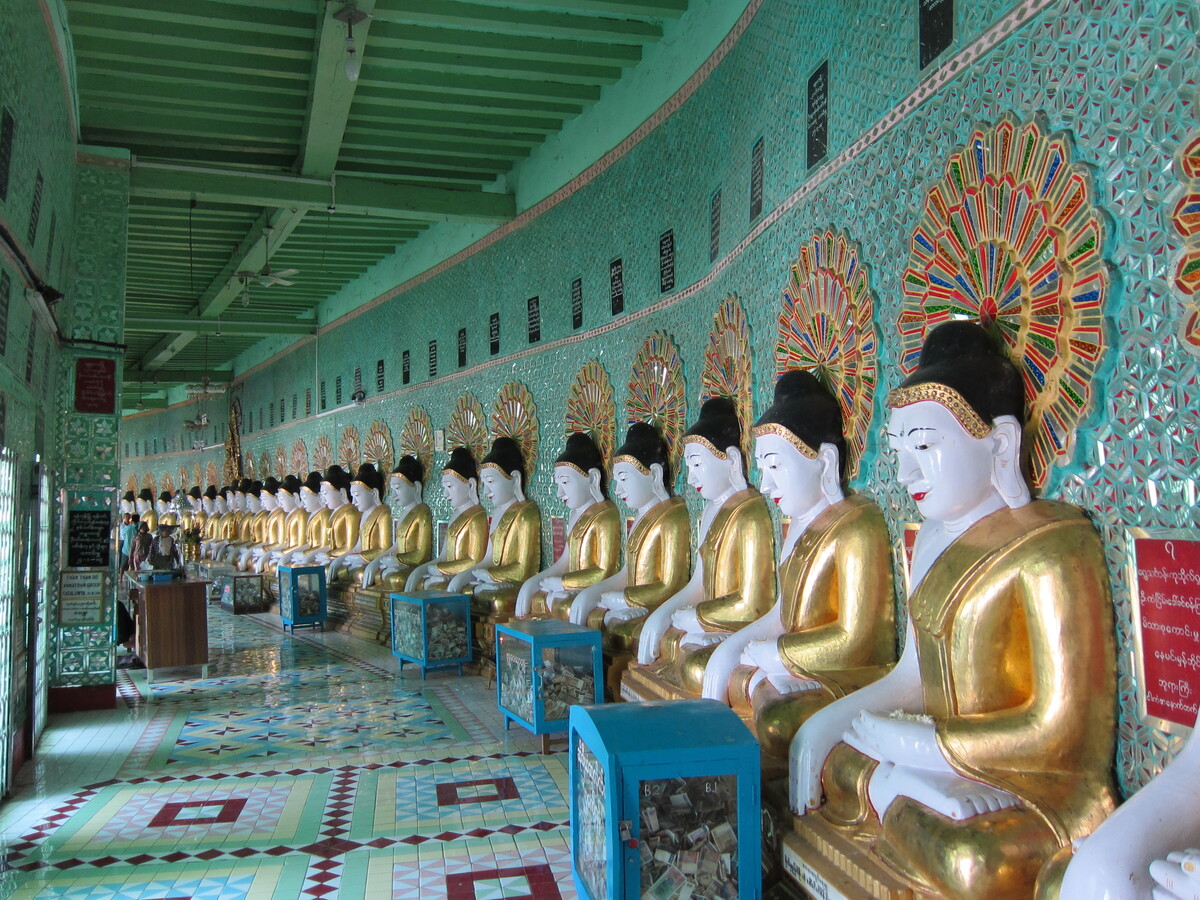
Baghan and its 3000 stupas and temples
Bagan It is one of the most remarkable historical sites in Myanmar. In the 11th–13th centuries it was the capital of a powerful kingdom and an important center of Buddhist culture. Today, the archaeological landscape includes thousands of temples, stupas, monasteries, murals, and sculptures.
UNESCO describes 3595 preserved monuments in the World Heritage site.
The number in the title of Katia Via: about 3000 stupas and temples conveys the scale of this place. Bagan is not just an open-air museum: religious traditions continue to be part of the lives of local communities.
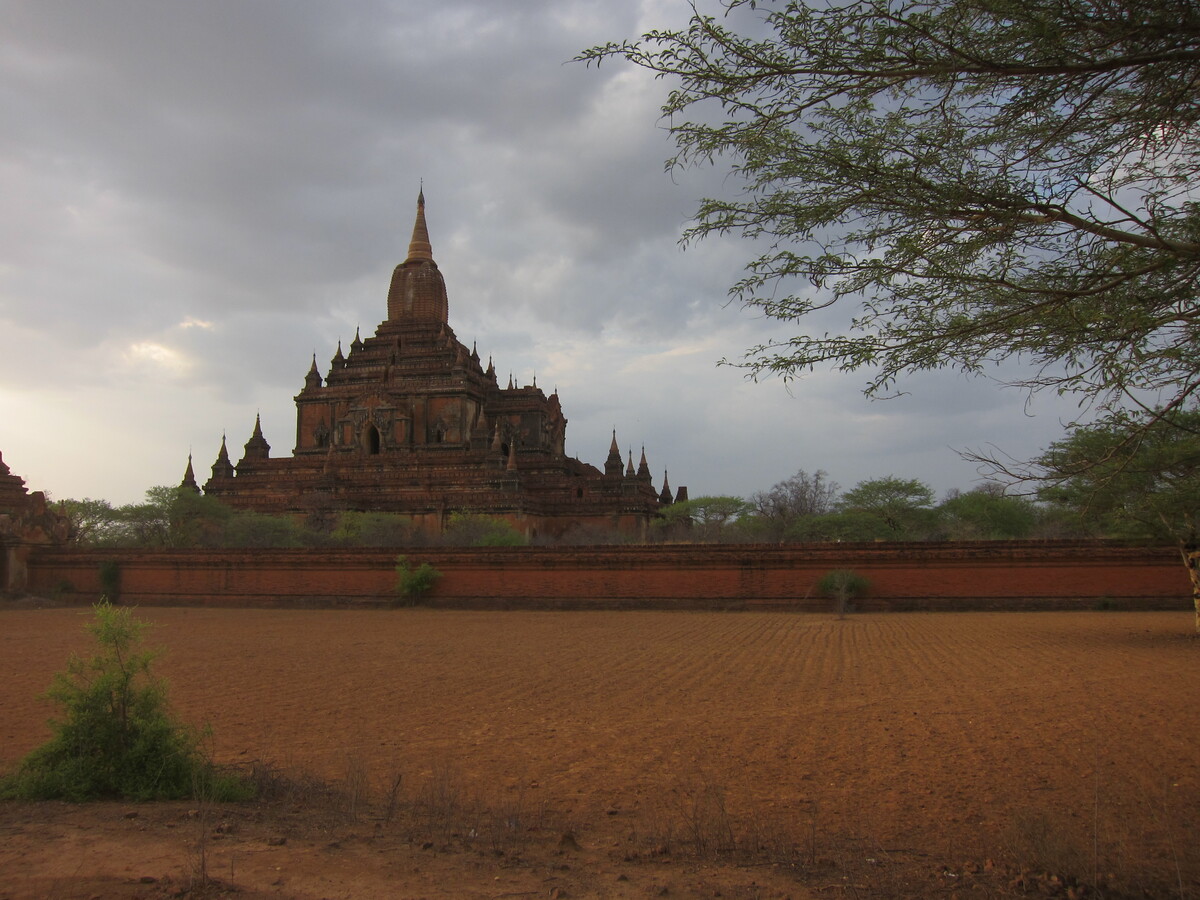
Can for collecting donations for the temple
Donations to temples and monasteries are part of Buddhist practice in Myanmar. They can support the monastic community, religious ceremonies, and the maintenance of sacred sites. In Buddhism, giving is also associated with accumulating merit—good deeds performed with the intention of well-being and spiritual development.
The huge donation court is a striking example of how religious tradition is present in everyday life, not only in large ceremonies.
The people in Myanmar and the tanaka
Tanak It is a traditional paste prepared by grinding bark from certain trees with a little water on a stone plate. In Myanmar it is used as a cosmetic and skin care product, and the characteristic bright patterns on the cheeks and forehead are a recognizable part of the local culture. The paste can be applied in the form of circles, leaves, or other decorative shapes. The tradition is passed down from generation to generation and is documented in the country’s cultural heritage as well.
Tanka is often associated with sun protection, but it should not be presented as an equivalent substitute for modern sun protection.
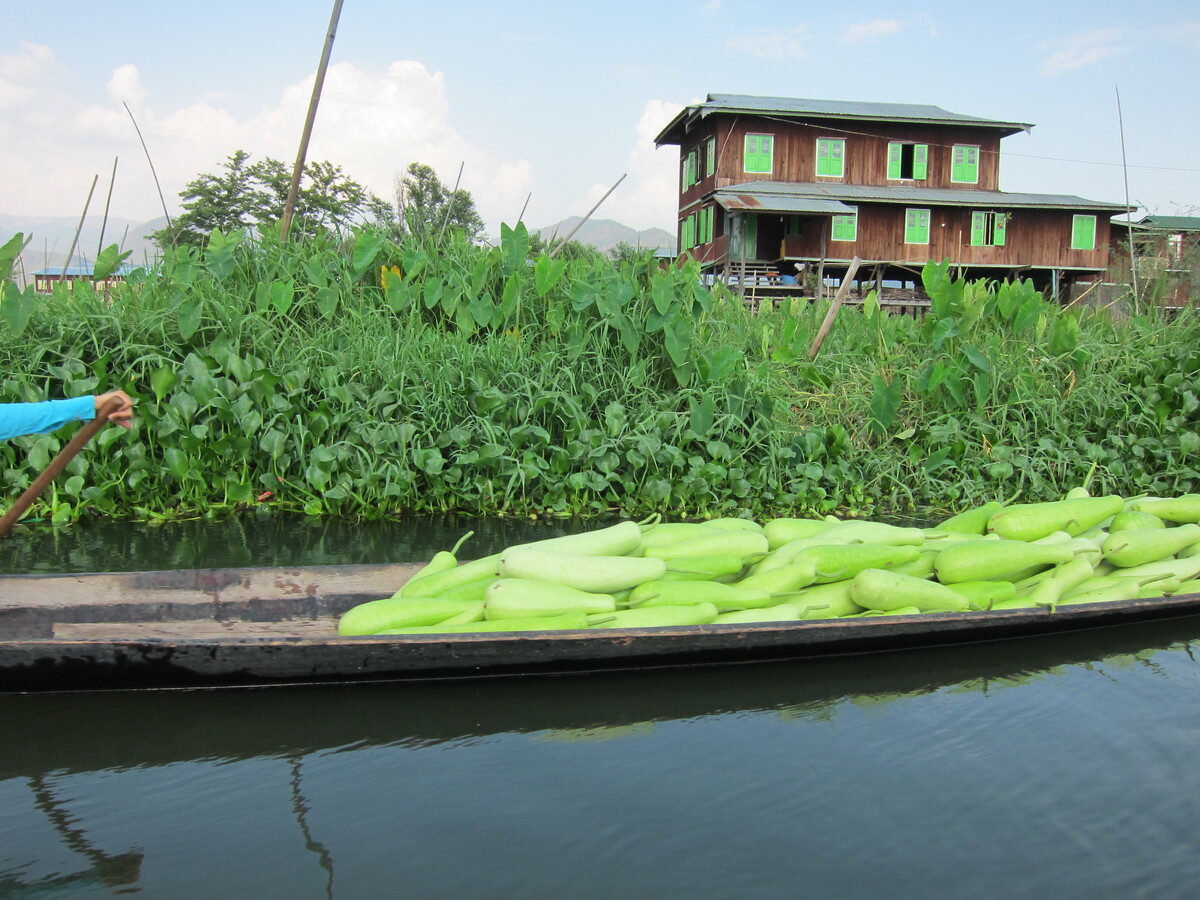
Inle Lake, pumpkin gardens
Inle Lake It is known for its floating gardens and agricultural practices adapted to life on water. Fertile areas are created in the shallows where various vegetables are grown. Thus, the aquatic environment becomes not only part of the landscape but also a source of livelihood for local communities.
Stems of a lotus plant
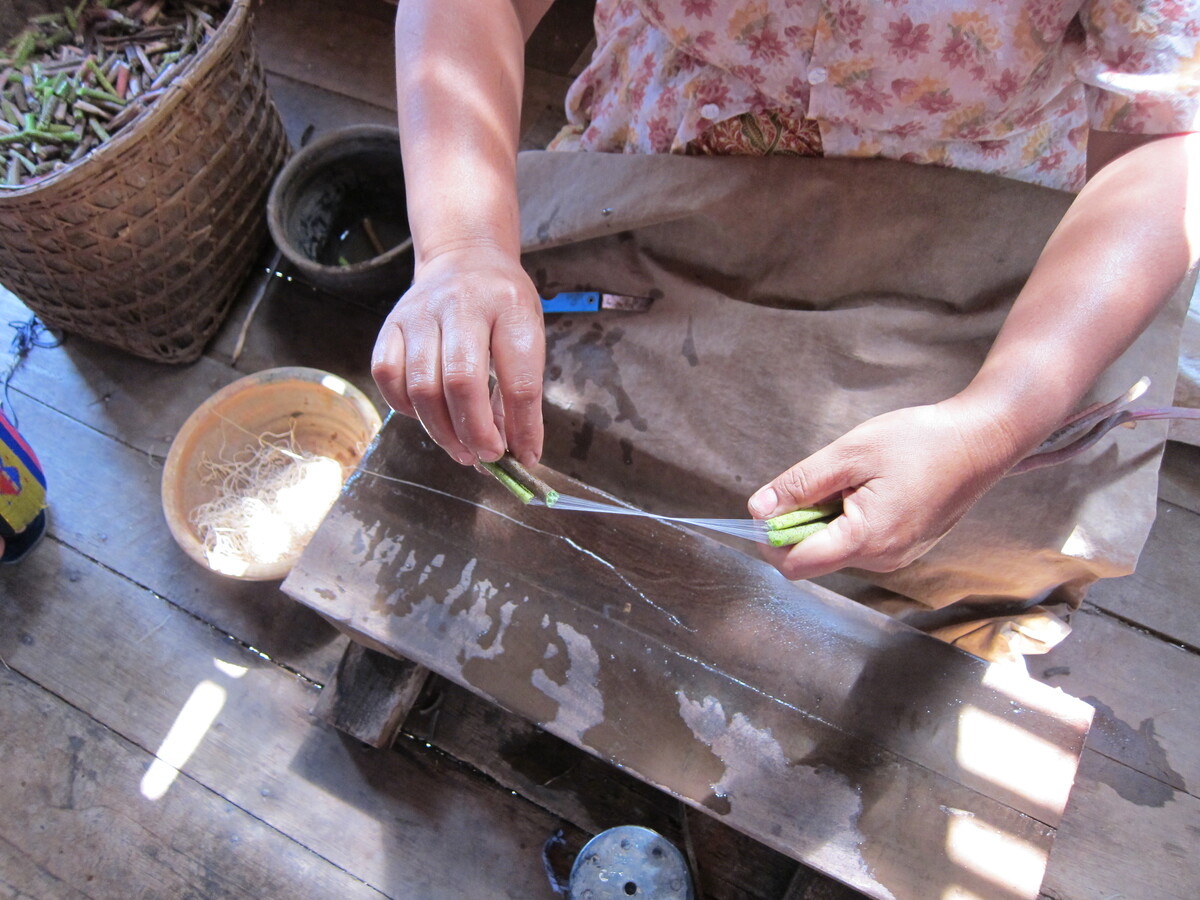
This is one of the most unusual crafts in the area of Lake Inle. Fine fibers are extracted from the lotus stems, which the artisans collect and wind by hand to obtain a thread for weaving. The work is slow and requires great patience: the stems are processed one by one, and the fibers must be joined before they dry.
The tradition of lotus weaving in the region dates back about a century. According to local stories, it began with a woman who discovered how to use the fibers from the stems to create a fabric intended for a Buddhist monk. Today, lotus products are valued precisely because of the laborious manual process. In some production processes, thousands of stems are needed to make just a small piece of cloth.
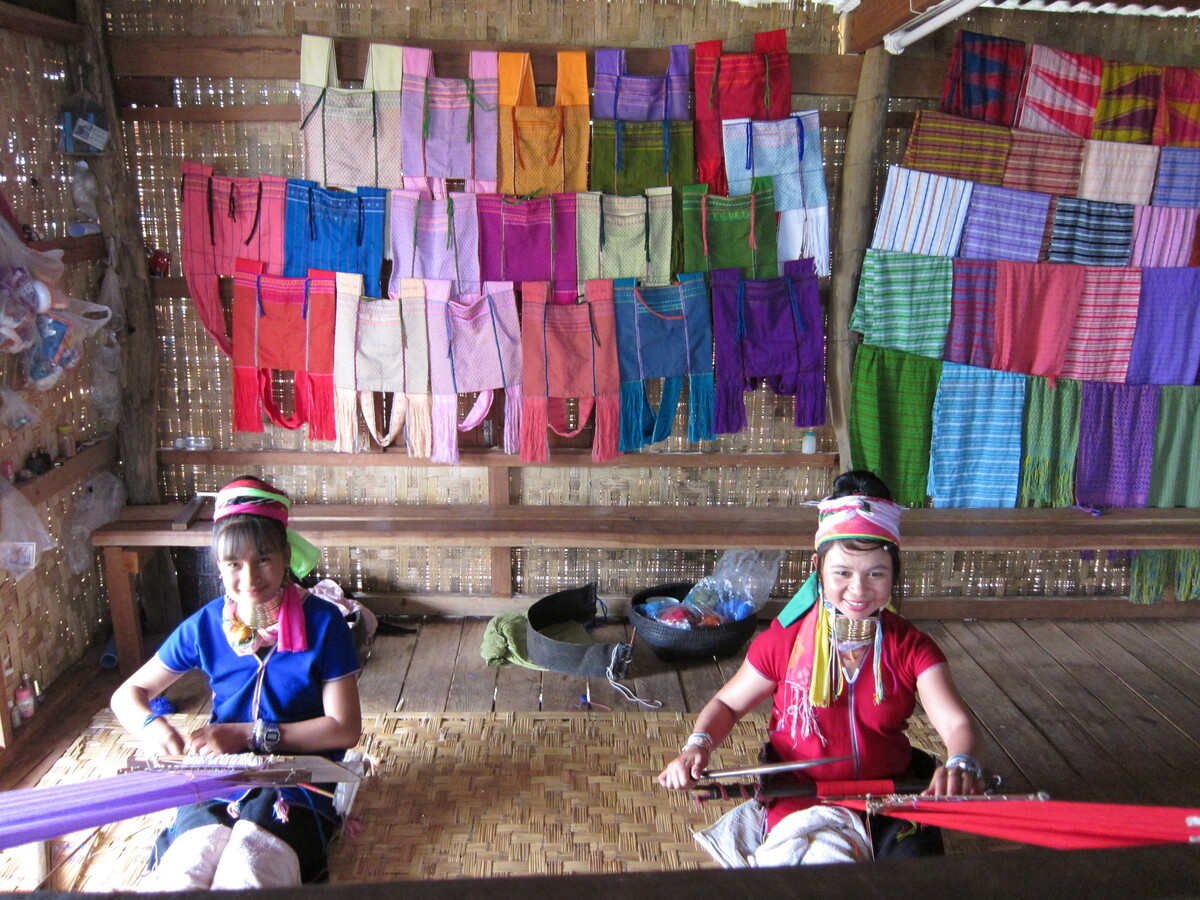
Girls with metal headbands on their necks
The women, known among tourists as „giraffe women“, belong to communities of Kayan. Some girls wear spiral-shaped brass necklaces from an early age. Over time, they create the impression of an elongated neck, but anatomically the effect is mostly related to the pressure on the collarbones and the upper part of the thoracic spine, rather than the usual elongation of the cervical vertebrae.
The custom has various personal and cultural meanings, and the explanations for its origin are not unambiguous. Therefore, it is more accurate to speak of tradition and cultural identity, rather than repeating sensational versions of why the headbands are worn.
Shwe In Daing, architectural complex
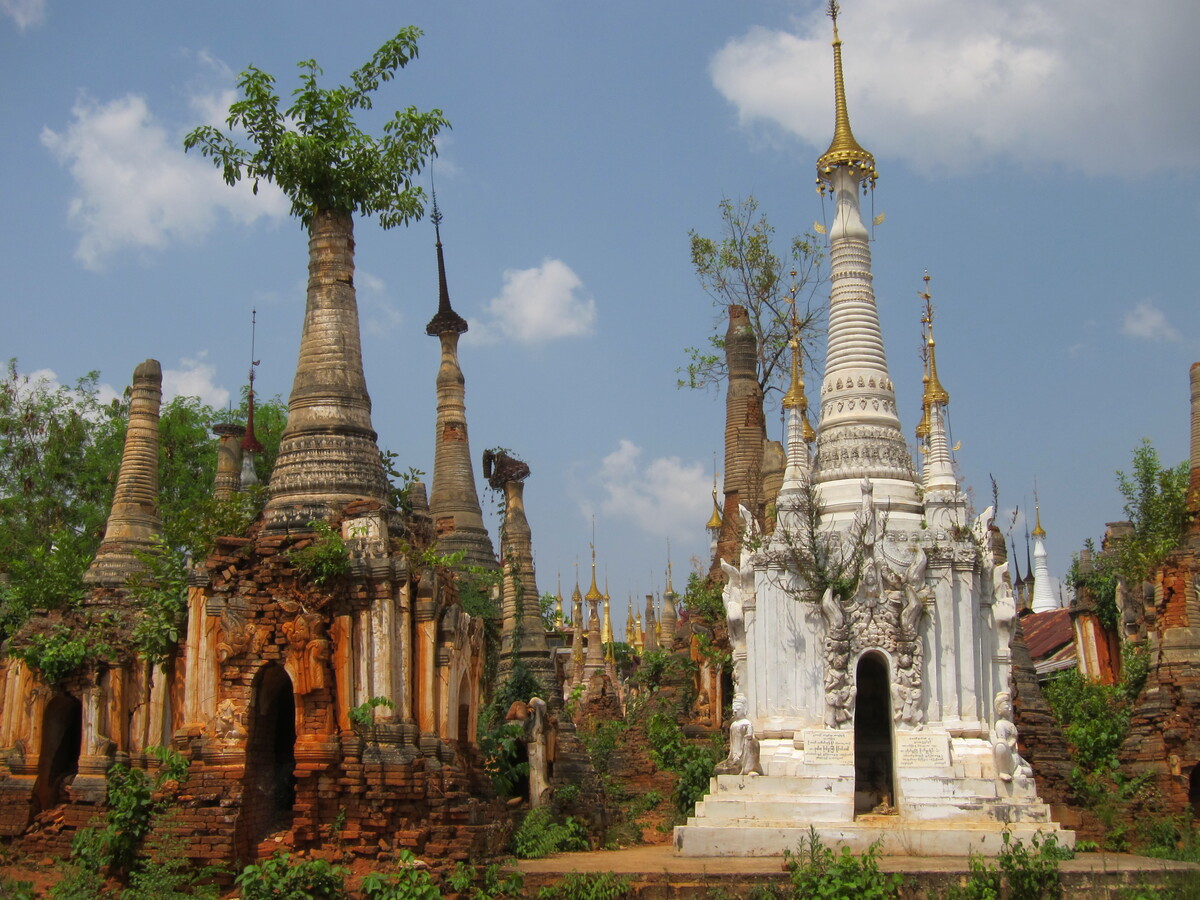
Shwe In Din It is a Buddhist complex near Lake Inle, known for its many stupas. Some have been restored and decorated, others bear the marks of time—worn surfaces, darkened brickwork, and vegetation. Together, they create the impression of a place where history has accumulated layer upon layer.
Katia describes the bells on the tops of the stupas that move with the wind. In Buddhist architecture, such small elements are not just decoration but add sound to the experience of the sacred space.
Shwe In Din
Shwe In Din It is a place that is worth exploring slowly. The steps are different in shape and condition, and their proximity creates a kind of stone labyrinth.
Tradition links some of these religious monuments to distant royal times, although the individual legends about the foundation of the complex should not be taken as proven history.
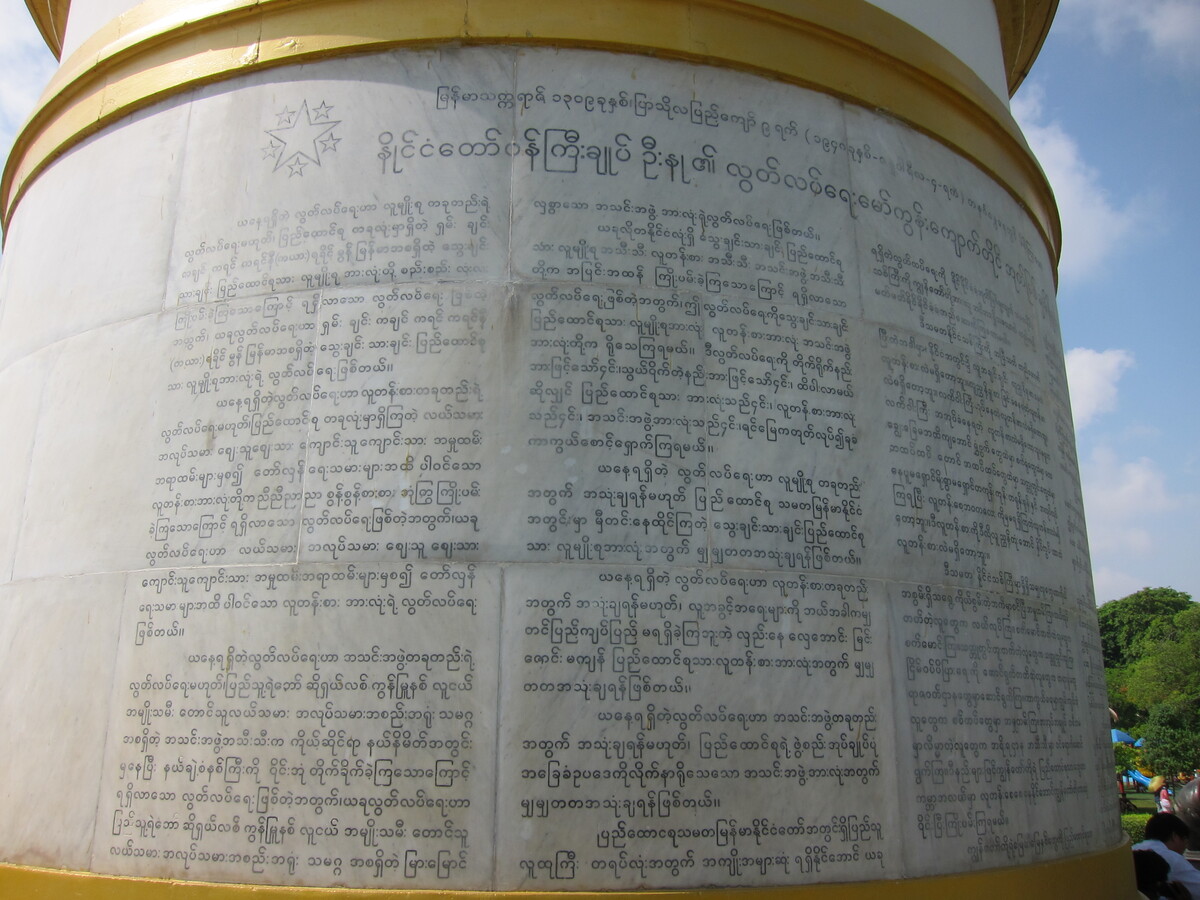
The beautiful Myanmar script
The rounded shapes of the Burmese script are among its most recognizable features. One explanation for this shape is related to the traditional writing material—palm leaves. The straight lines could tear the leaves apart along the fibers, while the rounded shapes were more suited to the surface of the palm.
Writing originated from older South Asian writing systems, and the earliest inscriptions on Burmese date from the XI century.
Myanmar remains in our memories not only with its temples and ancient monuments, but also with its people, their crafts and traditions. From the stone stupas of Bagan to the fine lotus threads near Lake Inle—every place reveals a different side of this extraordinary country.
Unfortunately, Katia Via's journey is over.
See more about the author Katia Via here