In the Western Rhodopes: small peaks with big views
Two hills of 1550 meters don't make one 3000-meter peak, right?
Two elevation gains of about 350 meters each cannot compare to that amazing trek that makes you conquer 1200 meters in altitude. But in the height of summer, to quickly walk through dense, cool forests towards these heights, to find yourself amidst silence, freshness, and an endless view of the Dospat Dam, is a real thrill.
Because a mountain isn't measured only in meters. Sometimes the strongest experiences come from those small climbs that reward you with... views.

Panoramas over Dospat Dam – peace, water, and the Rhodopes
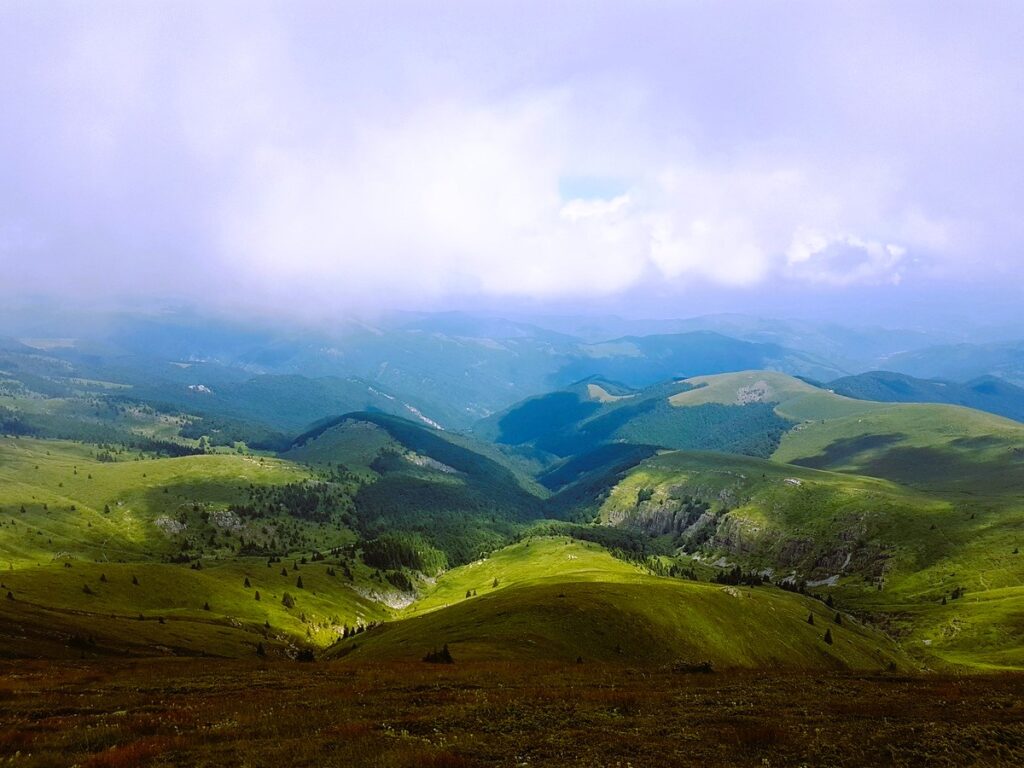
Near the Dospat dam, there are several impressive panoramic spots from which one can enjoy the beauty of the Western Rhodopes. Two of them caught our attention with their curious names and distinct character.
One is Relaxed pace (1513 m). The name itself sounds ancient and mysterious, like many Rhodope names, and contains a history of the local dialect. „Barchina“ in the Rhodope dialect means a high place, an elevation, a small peak, or a ridge. And „pochilya se“ or „pochil“ means to calm down, to subside, or to find rest. In a word – the Subdued Hill. Or a place for rest. Contemplation?!
VIDEO 🏔 Pochilena Brichina Peak
The other point is The Eye of Sarnitsa, a panoramic viewpoint reached by an eco-trail known as „The Wall.“ From there, the view opens wide over the dam and the small town nestled between the green slopes.
And Sarnitsa is especially beautiful from above.

Sarnitsa - the young town in the heart of the ancient Rhodopes
Sarnitsa, declared a town in 2006, looks like a carefully arranged picture from above: bright red roofs, snow-white buildings, and a sense of a new, modern place.
I was curious to visit this twenty-year-old town. I expected a small mountain village, but before my eyes unfolded a clean, tidy, and surprisingly modern town.
The streets were well-maintained, the asphalt smooth, and the sidewalks didn't „rattle“ like Sofia's. In the center, the square was impressive with its huge fountain with four spouts and beautifully designed landscaping. Everything was done with taste – not ostentatiously, but with that sense of care that makes a place look alive.
…..
(A lyrical digression, if the audience will allow me, about the fountains in this region. Four-sided fountains are characteristic of Ottoman architectural tradition and Islamic culture because water holds a particularly important place in Muslim tradition, linked to purity, hospitality, and grace. As part of the centuries-old culture of the Balkans, the fountain was also a social place. Yes, yes, like modern social networks, only visual and sensory: people meet, rest, and converse.)
….
But the atmosphere impressed me the most.
It was as if I had stepped into a forgotten black-and-white film, where someone had added modern splashes of color.
In the center of the small town, a confectionery entices with colorful pastries, tiramisu, crème caramel, and all those Eastern sweet delights: baklava, tulumba, saralie, and many other familiar sweets.
And across the way, the aroma of freshly baked doughy challenges left no one indifferent: banitsa, pizzas, and all sorts of pastries, which seem to taste even better in the mountains.
Small cafes, chatty groups, dapper uncles with a cup of aromatic coffee and the invariable water beside it. Life in Sarnitsa flows predictably and orderly.

The taste of the Rhodopes, when the journey also passes through the table
After the endless Rhodope freshness, after our eyes were full of beauty and clean air, as typical hungry tourists, we naturally headed for the local delicacies.
Our choice was the „Alicante“ hotel. The name amused me. Valencia is far away, and I didn't expect to find myself in something like a Spanish hacienda with a Rhodope carpet on the wall right in Sarnitsa.
VIDEO: Sarnitsa and the Dospat Reservoir as seen from the top floor of the Alicante Hotel
But the Rhodopes are like this: they know how to mix times, cultures, and influences in their own unique way.
The menu offered all sorts of things, but since I had read that the Sarnitsa region was famous for producing some of the tastiest potatoes, I trusted the local pride – patatnik.
The 40-minute wait was worth it.
I know a few variations of this Rhodope delicacy. Some are made with pastry, this one was without – generously mixed with potatoes, eggs, and kashkaval cheese. Aromatic, dense, and at the same time fluffy.
But after the baked pepper rolls, which I had already tried, the huge portion turned out to be a challenge even for my tourist appetite. 😊
And the Rhodopes are not just a "patatnik.".
Here, food is part of the mountain's memory:
yogurt in a clay pot, so thick it could easily withstand Murphy's Law;
• Klin - the Rhodopean rice specialty;
cornmeal mush;
• cheverme - lamb and mutton, accompanied by bagpipes at fairs and holidays;
fresh Rhodope trout;
• Various potato dishes, because they are unique in this region.
We also had a pleasant surprise – a strong youth group of future and current doctors from Germany, Pakistan, Ruse, and Varna. It was wonderful to see how a younger generation is already discovering the pleasure of walking in nature, of the mountains, and of exploring Bulgaria.
Millennials clearly also need a forest, silence, and honest conversations, abandoning the digital world... for a whole two days.

From strawberries and blueberries to the true taste of the mountains
The next day, we continued our search for Rhodope culinary delights.
Berries, blueberries, mushrooms…
The mountain was generous. But the strongest impression was made by an encounter near the Shiroka Polyana dam, where we stopped for a rest.
In a small tavern, I saw a man nimbly cutting meat.
My curiosity was immediately piqued:
What kind is it?
His wife immediately chimed in with an explanation.
This was a freshly slaughtered lamb — that special meat between a lamb and an already „grown-up“ sheep (I'm explaining for everyone who grew up without a village 😊).
It wasn't frozen like store-bought meat in the big city. It hadn't traveled thousands of kilometers. It didn't come from Argentina or who knows where.
The lady was truly proud of the local product. Her own, I presume.
Yeah, I couldn't argue with her. 😊
Although the world is big and one sometimes encounters other pure flavors. In Australia and New Zealand, I've seen what real eco-production looks like for some products.
But every place has its reasons for pride.
And the Rhodopes definitely have a lot


To Medeni Polyani: where the Rhodopes keep their secrets
The next day, a real summer heat awaited us, but that didn't stop us. We headed towards the picturesque Rhodope hamlets, hidden among the green slopes.
Did you know that there are several places in Bulgaria called Pobıt kamak?
One of them is located near the village of Medeni Polyani. There, in the middle of the field, alone and impressive, stands an ancient stone pillar - a menhir, a testament to human presence and beliefs from distant times.
Menhirs are vertically placed stone blocks erected by ancient people, likely for ritualistic or symbolic significance. They are part of that mysterious world of the past in which nature and human faith were much closer to each other.
It is believed that this unusual stone gave its name to the locality and the village.

Through the green forests of the Western Rhodopes towards hills with great views
From Medeni Polyani, we continued on a circular route through the neighborhoods of Sharentsi and GORELSKA.
Our path led us through lush green pine forests, along sandy cart tracks that were strange for a forest. These paths seemed to tell a different story—not of marked tourist routes, but of the old roads people used to travel between the hamlets.
I expected to see old Rhodope houses that have preserved the spirit of the past.
But instead, we were met with a different scene: new, bright houses with white facades and bright red roofs.
And here again I felt the big difference between the Western and Eastern Rhodopes. Different terrain, architecture, different standard of living.
And the views from the meadows were a real reward after climbing the steep slopes.
Before us unfolded the winding ridges of the Rhodopes, and in the distance, the still snow-capped peaks of Pirin were visible.

Rhodope Fountains – the Mountain's Gift
On the road, we met several carts with locals. Smiling and cheerful, they greeted us.
A simple human gesture: a greeting between strangers. Yes, the mountains have their own rules of etiquette.
Down the steep slope, we reached beautifully formed small oases with fountains and benches.
In the Rhodopes, you can find water wherever you want.
Here, a fountain is not just a place to fill a bottle. It is memory, gratitude, and respect for nature. Almost every settlement has its fountain, often built in honor of a person or event, with which the locals leave a trace of themselves.
Cold water, shade, and a bench by the road are small gifts for anyone passing by.

Last kilometers through the Rhodopes
Here we are again in Medeni Polyani.
The day was hot. We were hurrying to beat the rain and literally missed its first drops.
To Sofia: full speed ahead.
This time we chose the route through Velingrad. The road was wonderful. On the way there, we passed through Pazardzhik and Peshtera, but there a real ordeal awaited us – a dug-up road, prepared for future asphalt, but without machinery and without clear signs of when the repairs would end.
If you take this route, keep it in mind. Tested for tires, drivers, and passengers.
The photos, videos, and this story can hardly give even a vague idea of the beauty of the Western Rhodopes.
For panoramic views over the Dospat Dam.
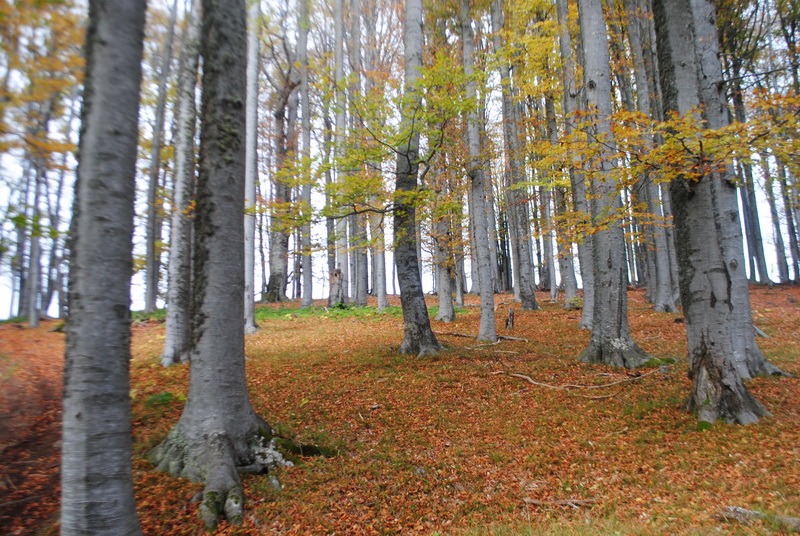
For beech and pine forests.
For the forest clearings, tall grasses, and fragrant herbs.
For the peace missing in the city.
Have I sparked even a little bit of curiosity and wanderlust in you?
See more for the author Maria Radeva here