Story from 2015.
When you hear Myanmar, what comes to your mind? Military rule? Aung San Suu Kyi? Burma?
Not very well known, extremely interesting and sometimes absurd, Myanmar is dotted with countless pogadi*, They make the landscape look like it was enchanted in some places. Time seems to have stopped at least 200 years ago, until you see even the poorest people with a modern mobile phone in their hands, although in many places there is no coverage.
People there have been allowed to buy cars only since five years ago, but what is surprising is that the traffic is like in Bulgaria, but the cars have a right-hand steering wheel.
Men and women wear long, knee-length „polies.“ What sets them apart is the way they tie their hair. People are poor, lacking a health and social care system. They have to pay for expensive healthcare and medicines themselves, and many people simply cannot afford it, and have to save for life after retirement. Therefore, very often parents live with their children, as they cannot meet their own needs on their own.
Anyone who can afford it makes donations: the elderly to monasteries and temples, the young to foundations that support the education of children in rural areas where people do not have the means to send their children to school. Very often, the poorest send one of their children to live in a monastery so that at least they can eat twice a day and learn to read and write.
In Myanmar, one must definitely see Lake Inle
The life there charms the passing travelers in its own way with its 20 stone-built villages, vegetable gardens suspended with long poles, and the beautiful water flowers. In some places, you can see terribly poor houses that seem abandoned, but in fact they consist of a single room housing entire families.
It's fun to fly on domestic flights that resemble shuttle buses because they often land at different places along the route from A to B.
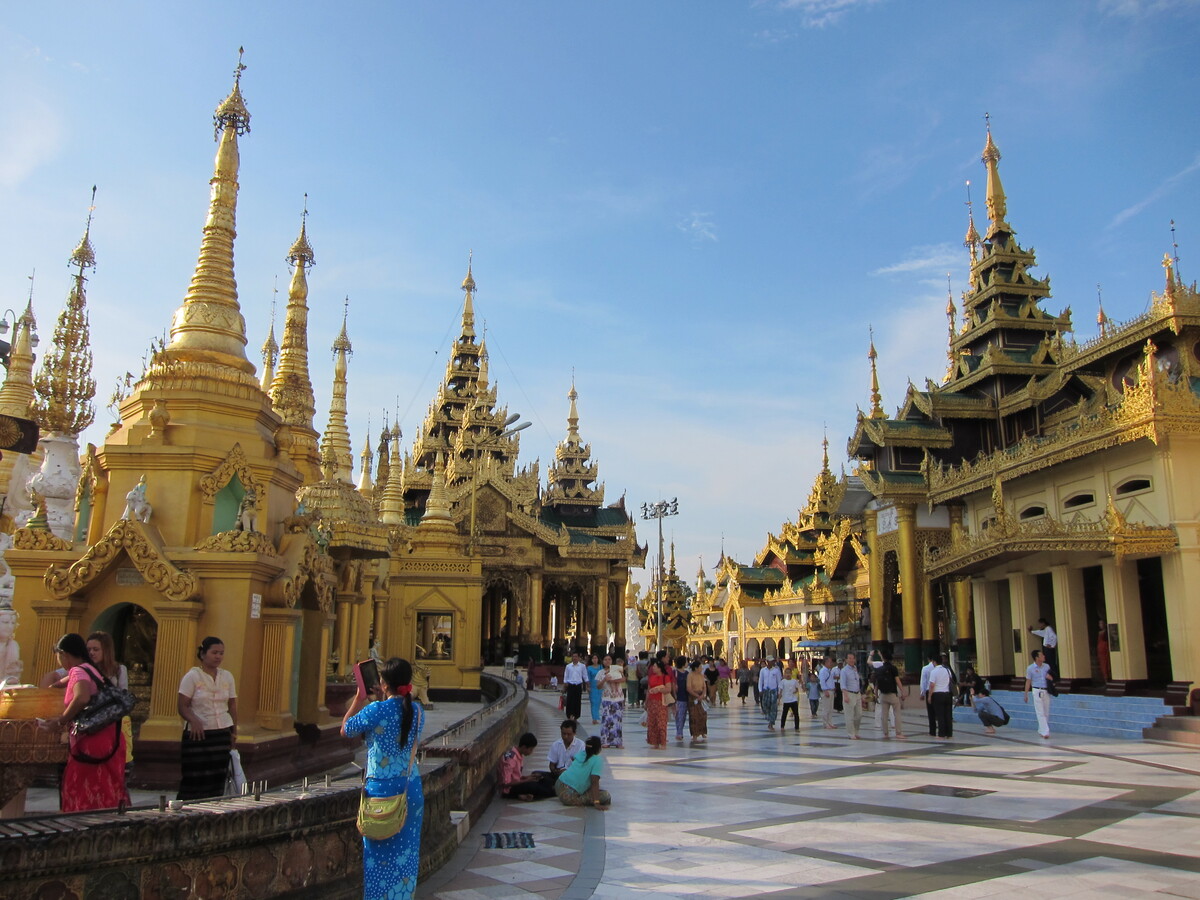
Every traveler finds charm in something different. For me, it was the scent of jasmine and frangipanis in the temples, the beautiful rounded Burmese letters, the beautifully maintained parks in Yangon, the terraced hills around Mandalay, the magical old Bagan, covered with pagodas as far as the eye can see, the Inle Lake with the water-growing tomatoes, Shwe In Daing with its alien landscape and the enchanting sound of the countless bells.
And most of all, the people who spend endless hours bent under the scorching sun, performing heavy physical labor, surviving in a different world, but somehow familiar and familiar because of the desire to have a mobile phone at any cost, due to the fact that they have no money for a doctor or dentist, smiling, even though they have no teeth, dissatisfied with the rulers, emigrating at the first convenient opportunity and most likely living with the secret hope that one day life in Myanmar will become better.
And if you find yourself in this charming country, be sure to try the green tea salad and the Myanmar tomato salad. I believe you won't regret it.
*Pagodi is a collective term for stupas and temples. The temples are pagodas that can be entered while the stupa is built as a monolithic monument.
Story in pictures
Yangon and Mandalay
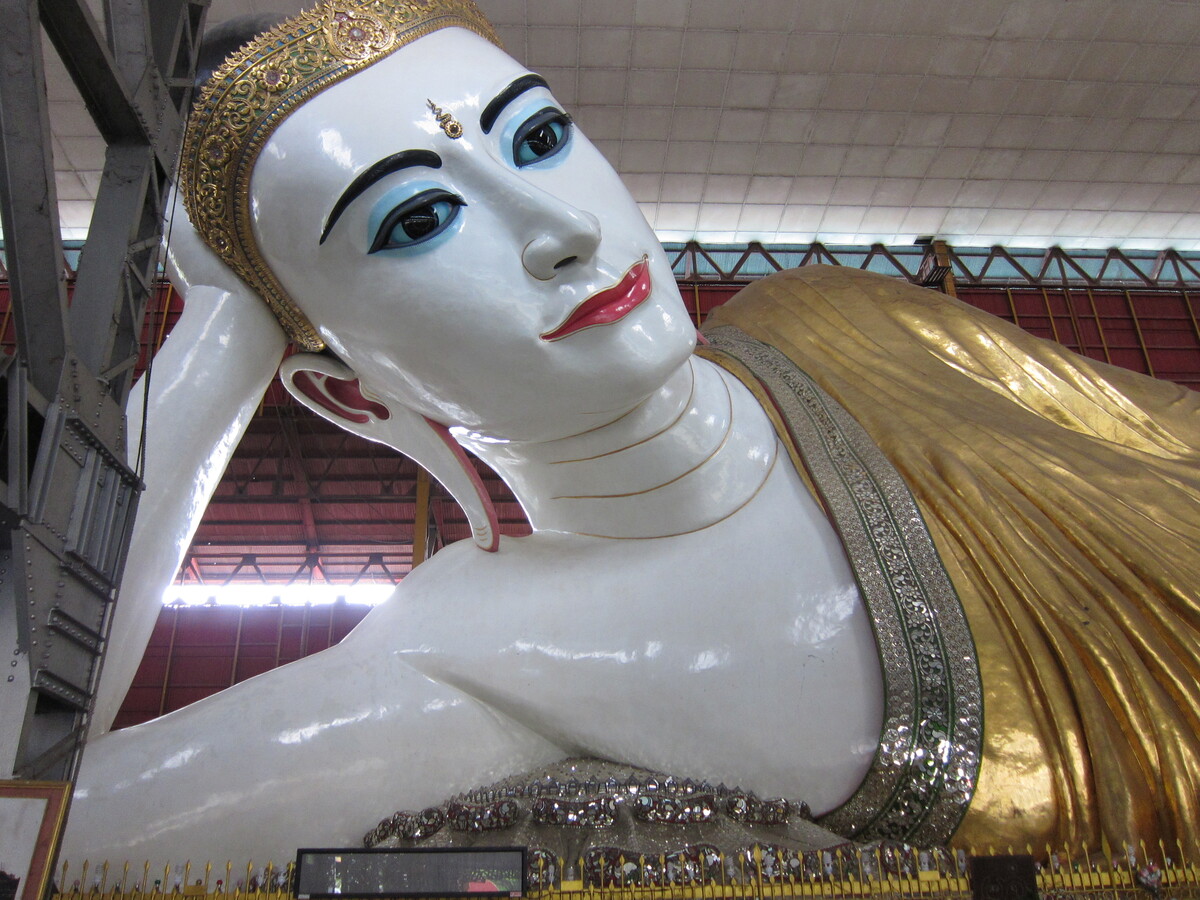
Yangon Kyaiktiyo, where a 67-meter statue of the reclining Buddha is located
Chauk Htat Gyi Pagoda in Yangon
It houses an impressive statue of the reclining Buddha, 67 meters long. The image impresses not only with its size but also with the expression on its face, the ornamentation, and the symbols on the steps. According to Buddhist tradition, they represent 108 auspicious signs associated with the Buddha.
This is one of the places that shows how closely intertwined religion, art, and everyday life are in Myanmar.
Yangon. Kandawagyi Park — one of the greenest places in the city center.
Kandawgyi Park and the eponymous lake offer green space amidst the bustling Yangon. From here, beautiful views of the city and the Shwedagon Pagoda open up.
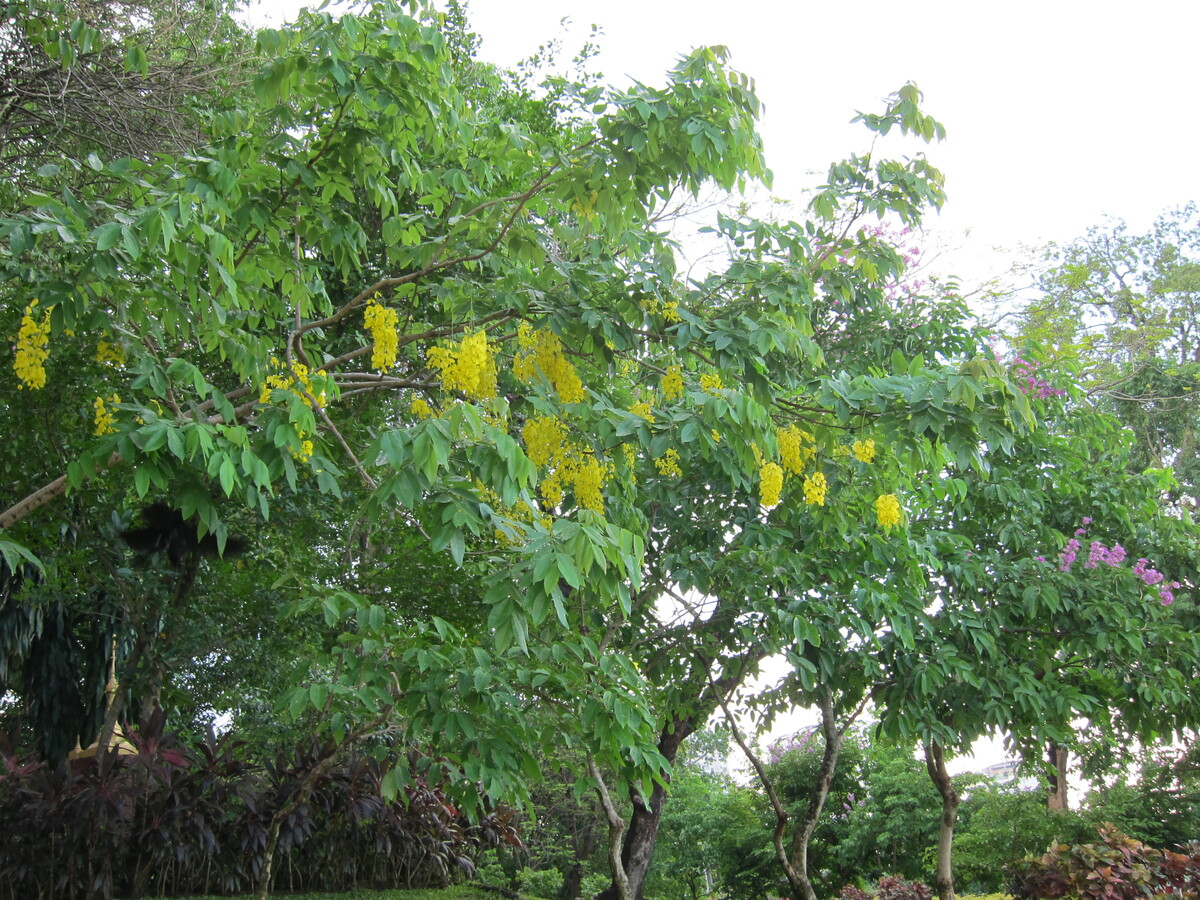
Wood Golden Rain
Golden rain (Cassia fistula) It is a tropical tree that attracts attention with its long clusters of bright yellow flowers. When it blooms profusely, its crown seems to turn into a golden waterfall—an impression that explains its popular name.
The tree is found in South and Southeast Asia and is often grown as a decorative plant in parks and gardens. It is a good example of how tropical vegetation contributes to the color of cities like Yangon.
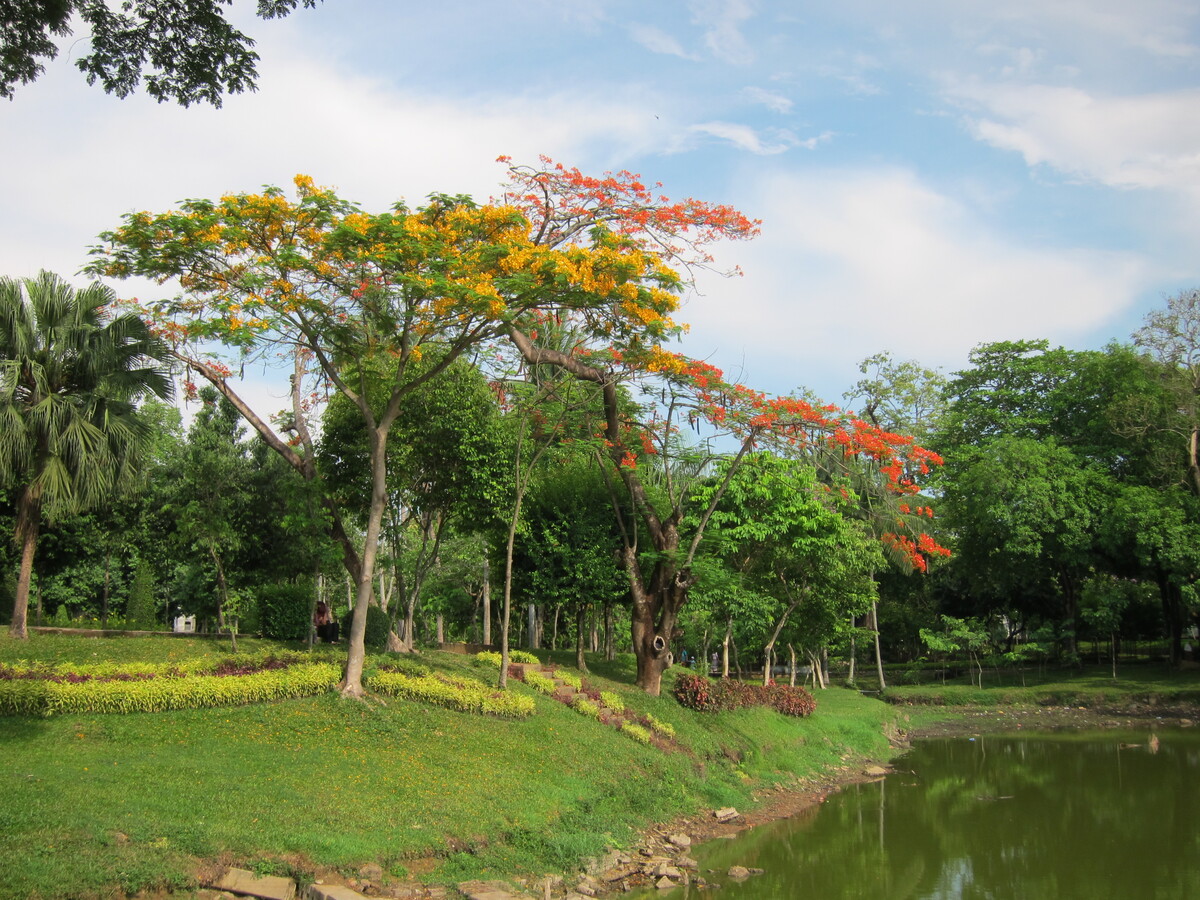
Fire wood
The fire tree (Delonix regia) It is known for its sprawling crown and bright red-orange colors. During flowering, it looks like a flame among the greenery and is among the most recognizable ornamental trees in tropical regions.
Although it is common in urban parks and on the streets of many warm countries, the species originates from Madagascar. His name describes the impression he leaves, not the place from which he comes.
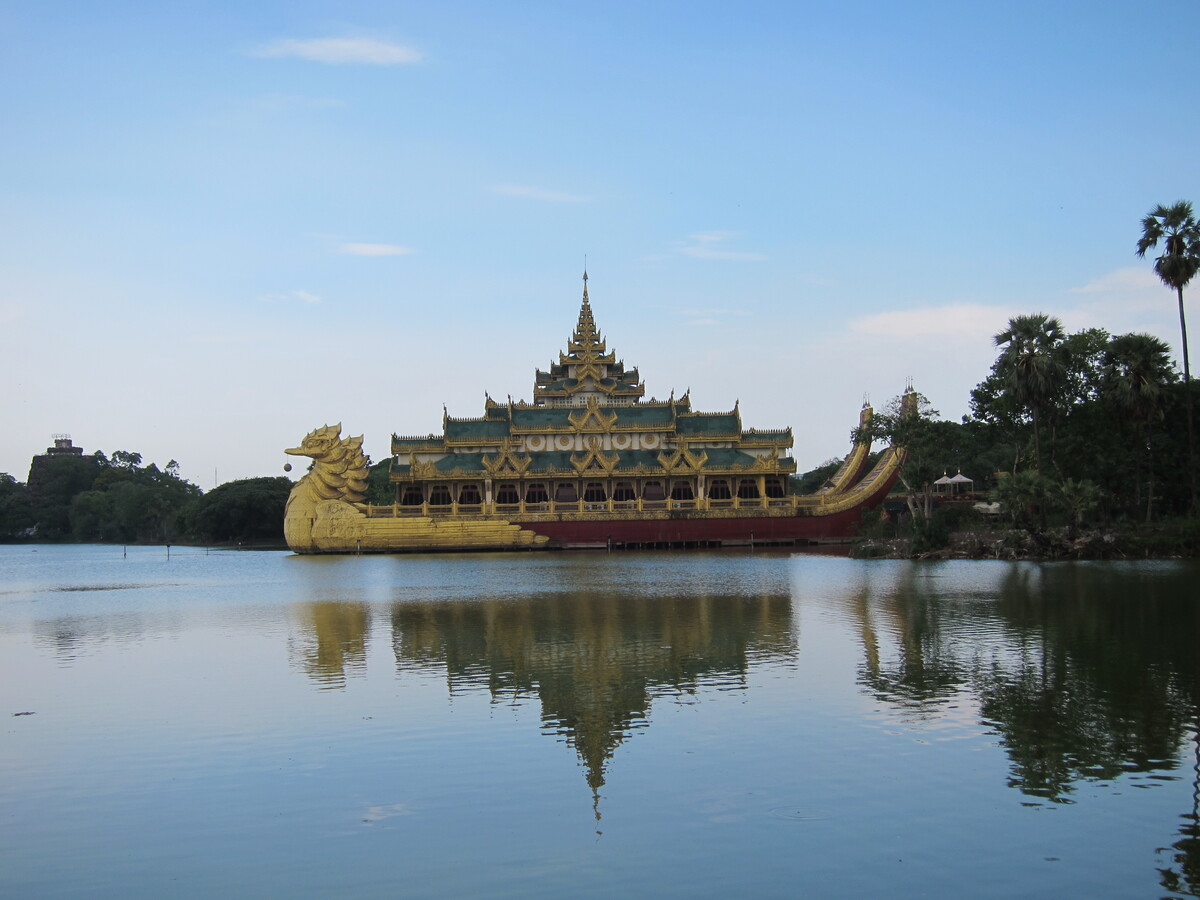
Yangon. Kandawagyi Park, where a copy of the famous Royal Barge is located
Near the lake Candauagi nature and urban history meet in one of Yangon’s characteristic sights. Karawaiq is modeled after royal barges and recalls the tradition of richly decorated vessels built to connect with power and ceremonial life.
This place is particularly interesting for the traveler because it shows how historical motifs continue to be present in the modern urban environment.
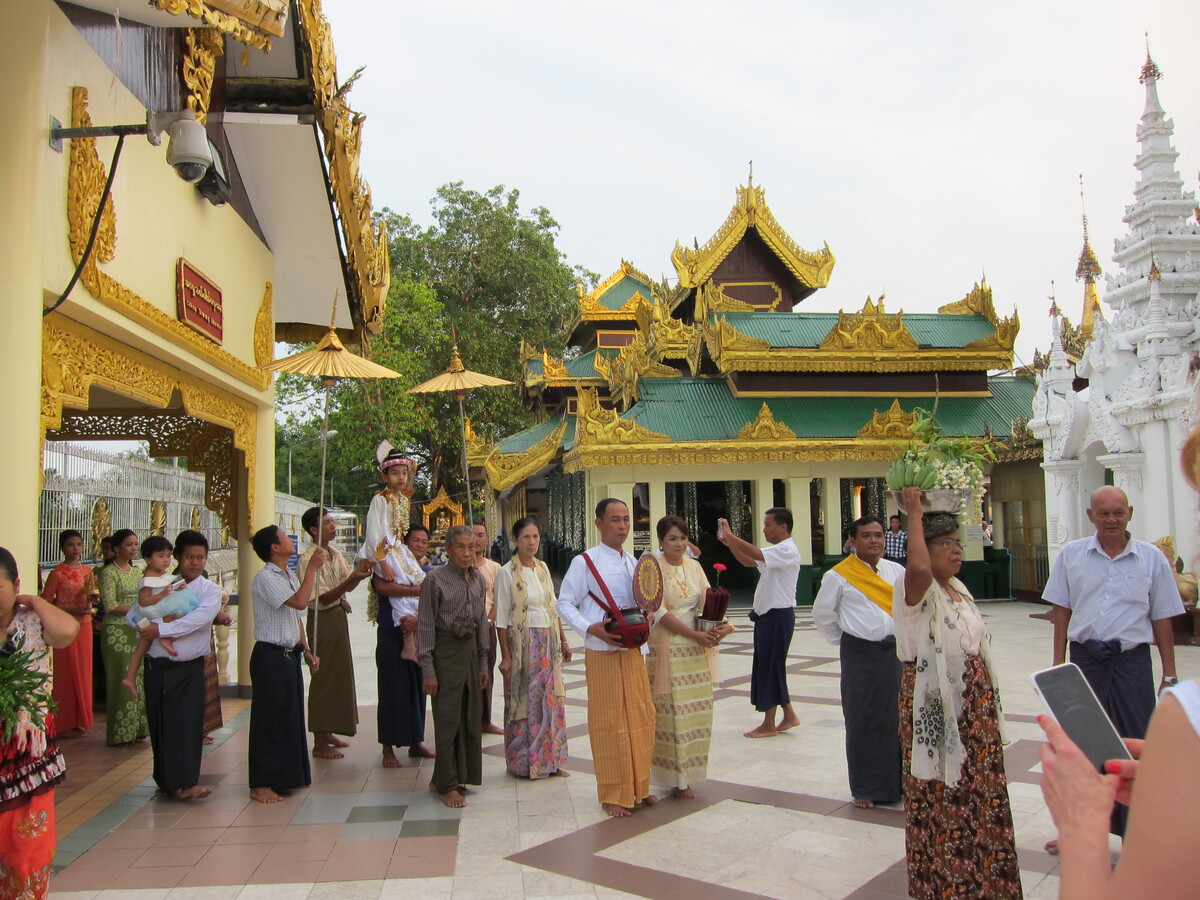
A ceremony that accompanies a little boy who will stay in the temple for 7 days to learn about religion
Katia Via describes a ceremony associated with the temporary consecration of a boy in the Buddhist community. In Myanmar this custom is known as shinbyu (shinbyu). It symbolizes the boy's initiation into monastic life and his introduction to the teachings of the Buddha.
During the ceremony, the boy can be dressed as a prince — a reference to the life of Sidhartha Gautama, Before giving up secular life, they undergo a transition to the monastic life and stay in a monastery. The duration varies: some children stay for a short period, others for a longer period.
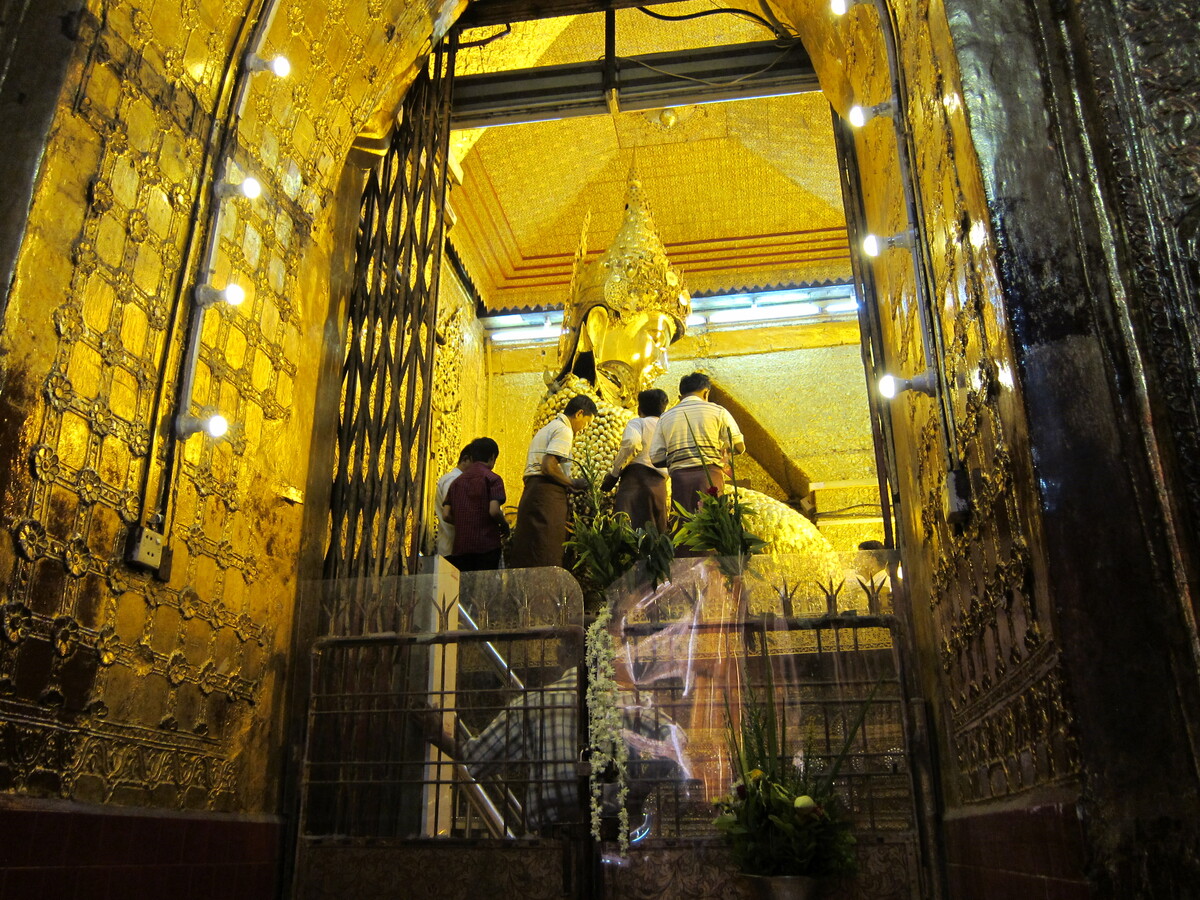
Men in Myanmar paste gold leaves on the statues of Buddha in many of the temples for health, good luck, etc.
As a result, the Buddha statues are deformed. Women are not allowed there.
Applying thin sheets of gold to images of Buddha is an important form of religious donation in Myanmar. For believers, it is an expression of respect and piety and is associated with the accumulation of merit.
With some statues, the multiple layers of gold over time change their original shapes. However, the access restrictions for women do not apply equally to all temples and statues. They depend on the specific sanctuary and local religious regulations.
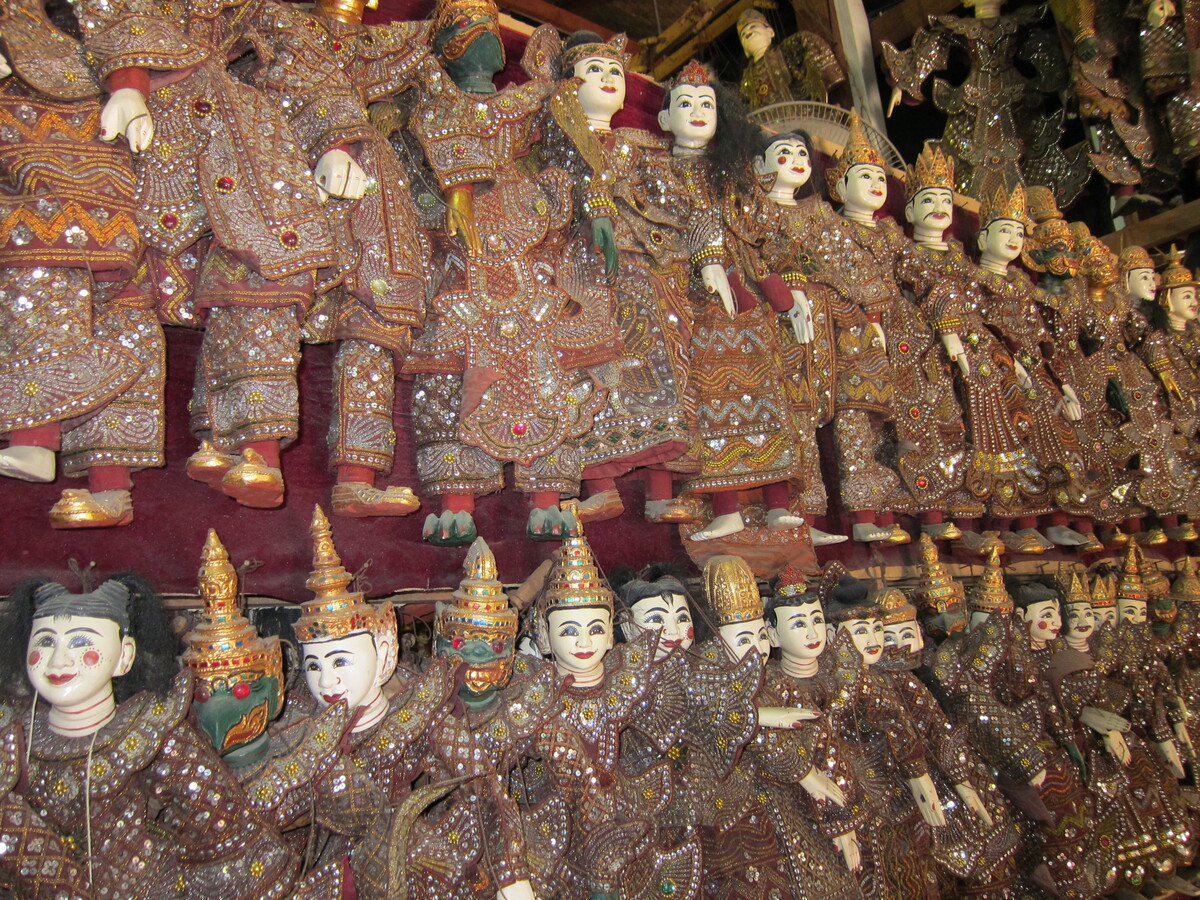
Traditional Myanmar wire puppets that are used for performances
The traditional Myanmar puppet theater, known as Yoke tea (yoke thé), Puppetry is a performing art with a long history. The puppets are controlled with many strings, and their movements require great skill and precision from the puppeteer.
These performances were once part of the court culture and later spread to a wider audience. They combine music, storytelling, and theatrical movement and preserve part of the country's traditional performing heritage.
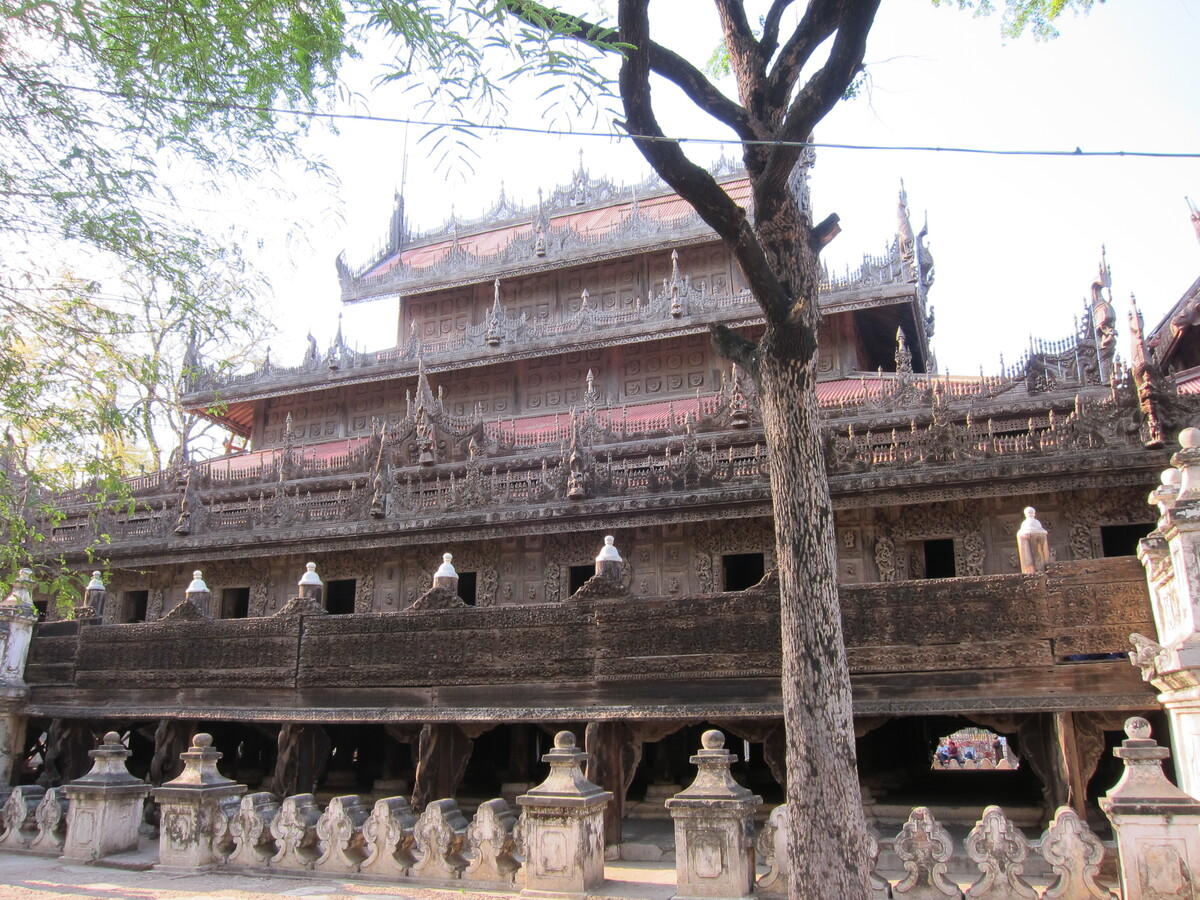
Mandalay
The Shvanendou Monastery with its beautiful wooden carvings made from teak wood, part of the former royal palace
Shwenandaw Monastery In Mandalay, it is famous for its extremely detailed carvings on a coconut tree. The ornaments depict figures, mythical creatures, and motifs from the Buddhist tradition.
The building is connected to Myanmar’s royal heritage and is particularly valuable because it allows one to see the craftsmanship of traditional woodcarvers. The teak wood used in the construction is a characteristic material for the region’s historical architecture.
Mandalay
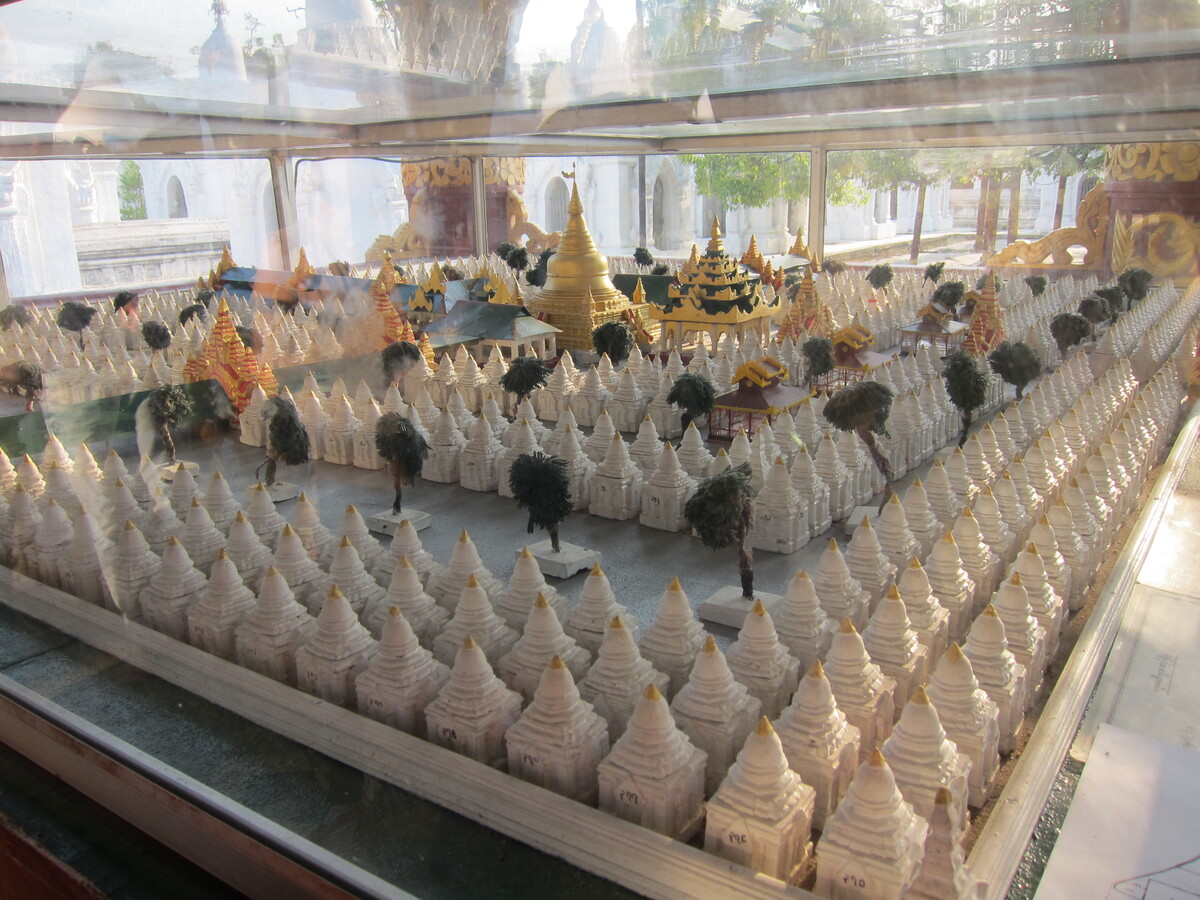
729 marble slabs, each located in a separate temple, form the „largest stone book in the world“ in the Kuto Doou pagoda.
Kuthodaw Pagoda In Mandalay, it is known for its complex of 729 marble tablets on which texts from the Buddhist canon are inscribed. Each tablet is placed in a separate small building within the temple complex.
Why it is called „the greatest book in the world“Due to the scale of the text carved in stone. The impressive size is an example of the Buddhist writings' desire to be preserved and handed down to future generations.
Katia Via's story about Myanmar continues. The next part will feature more photos, places and stories from the trip in 2015.
See more about the author Katia Via here