Ruaha Photo Safari, Tanzania, Part Two
If you missed the Photo Safari in Africa from Dora's engaging story, you can read it here
A little more about Ruaha National Park
Maybe it's time for a short break and a brief update regarding Ruaha National Park.
It is kept as a somewhat inaccessible park, thanks to which the landscape remains relatively untouched.
Ruaha is the second largest national park in Tanzania, covering a vast area of 20,226 sq. km. It is a bird paradise, with 574 species officially recorded. The Great Ruaha River, the spectacular gorges, and the majestic trees. The baobabs are particularly attractive to us photographers.
The park is inhabited by large herds of buffalo, elephants, and gazelles. The concentration of elephants is one of the largest in Tanzania. Ruaha is also particularly interesting because both the lesser kudu and the greater kudu can be seen here—the park marks the southern limit of the lesser kudu's range.
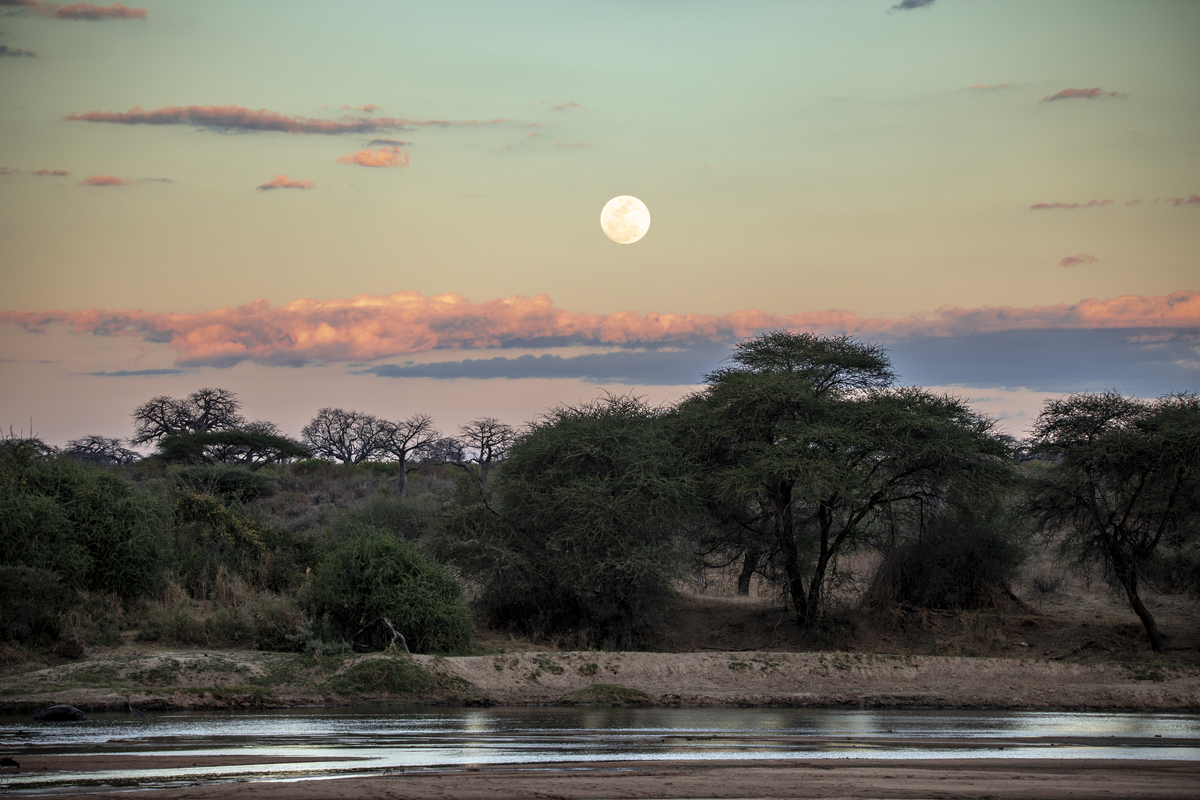
The Great Ruahá River is the main feature of the national park of the same name, providing magnificent views of wildlife along its banks.
And now let's follow the photographer's story through the photos.
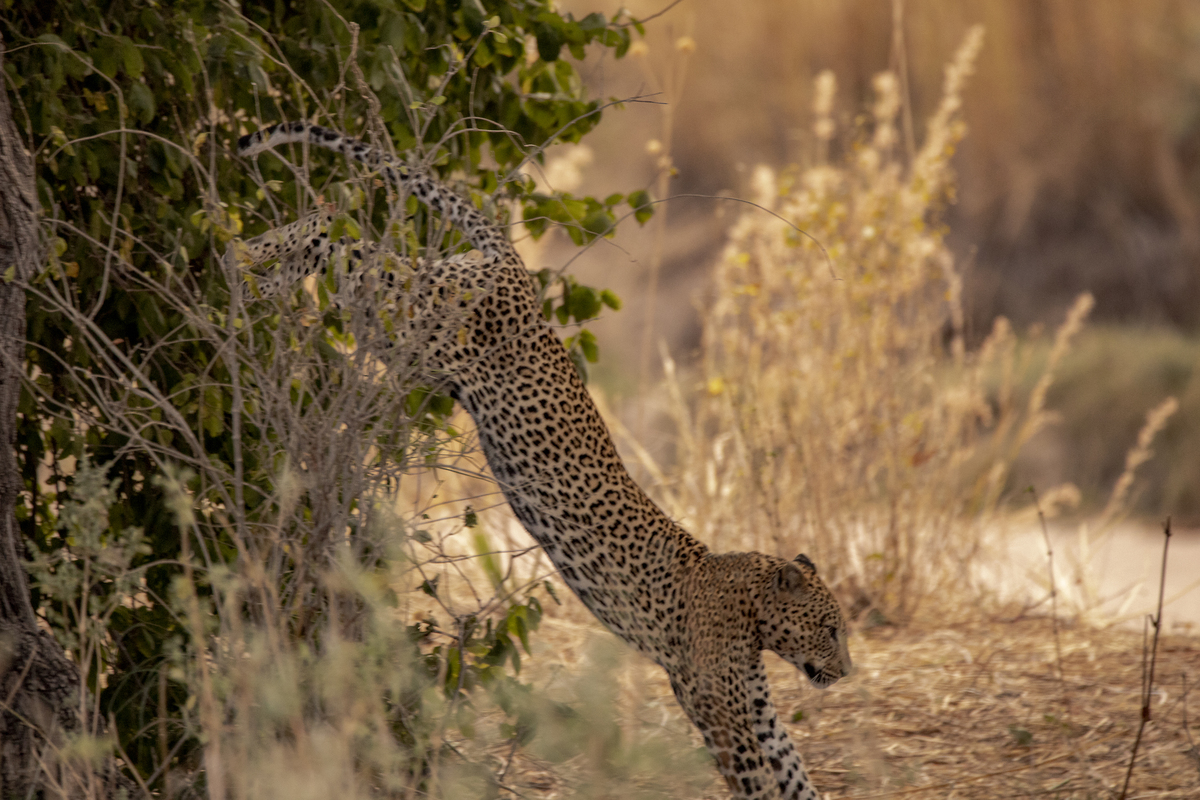
The Leopard
The leopard we waited for to come down from the tree
It's rare to see a leopard this close. We waited for over an hour before he decided to come down from the tree.
That's the upside of everyone in the car being a photographer. Any tourist would have gotten tired of watching the same animal long ago.
In my eagerness to get a close-up shot of him jumping from the tree, I failed to properly capture the landing moment—I cut off his front paws...
A total of over two hours, just so you can't take a good photo of a leopard coming down...
Gluttony.
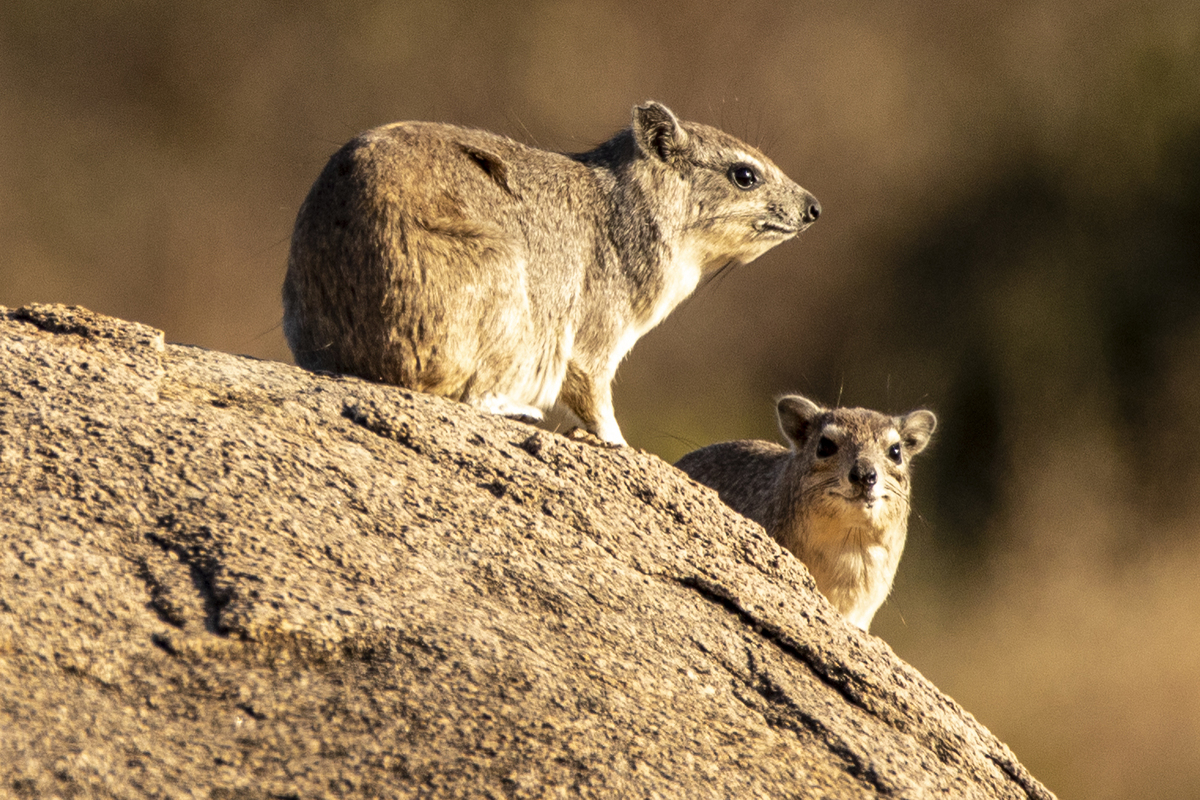
Residents, young and old
Hyraxes. Their closest relative is the elephant.
They are no more than 20–25 cm tall.
And that’s exactly one of the most fascinating things about them—despite their tiny size, hyraxes are among the closest living relatives of elephants. Nature sometimes creates incredible combinations.
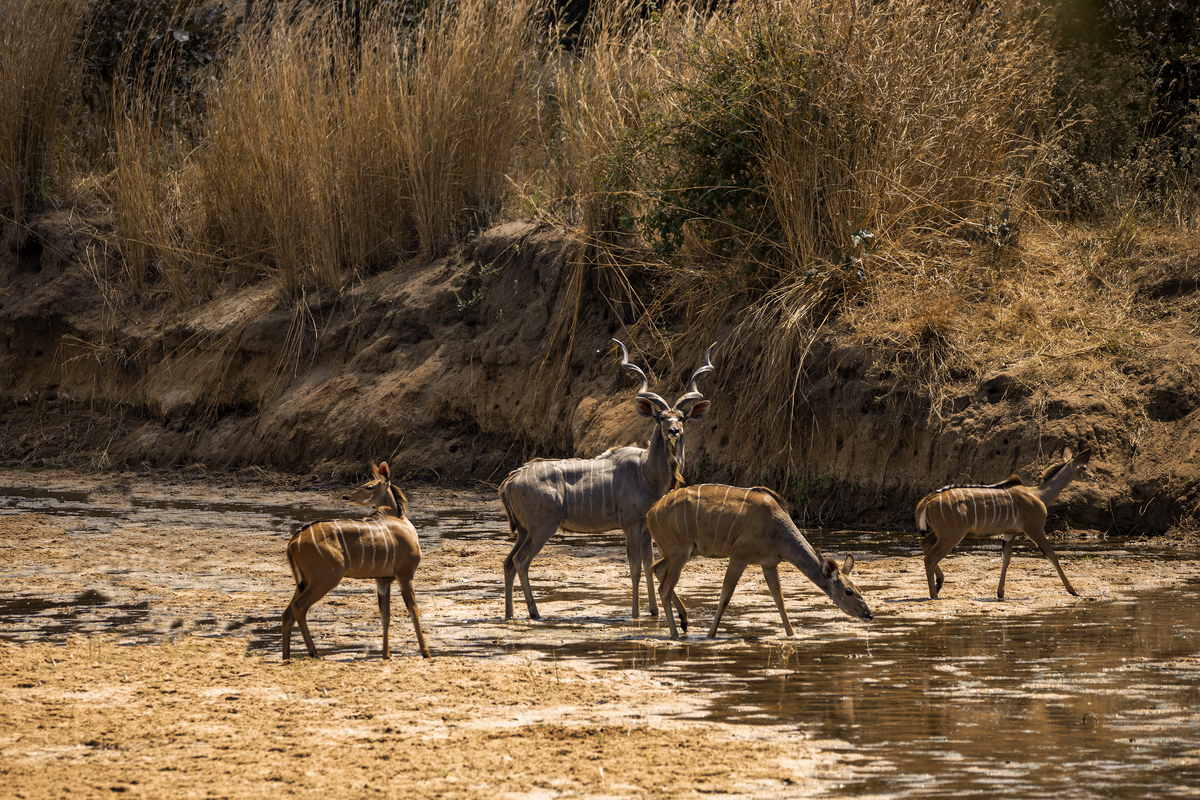
A male kudu with three females at a watering hole
The beautiful and majestic kudu is featured on Namibia's coat of arms.
The horns of a male kudu can have up to three coils. From the tip of the horn, the eye is clearly visible—that’s how it aims to strike…
Otherwise, the horn is coiled like a serpentine.
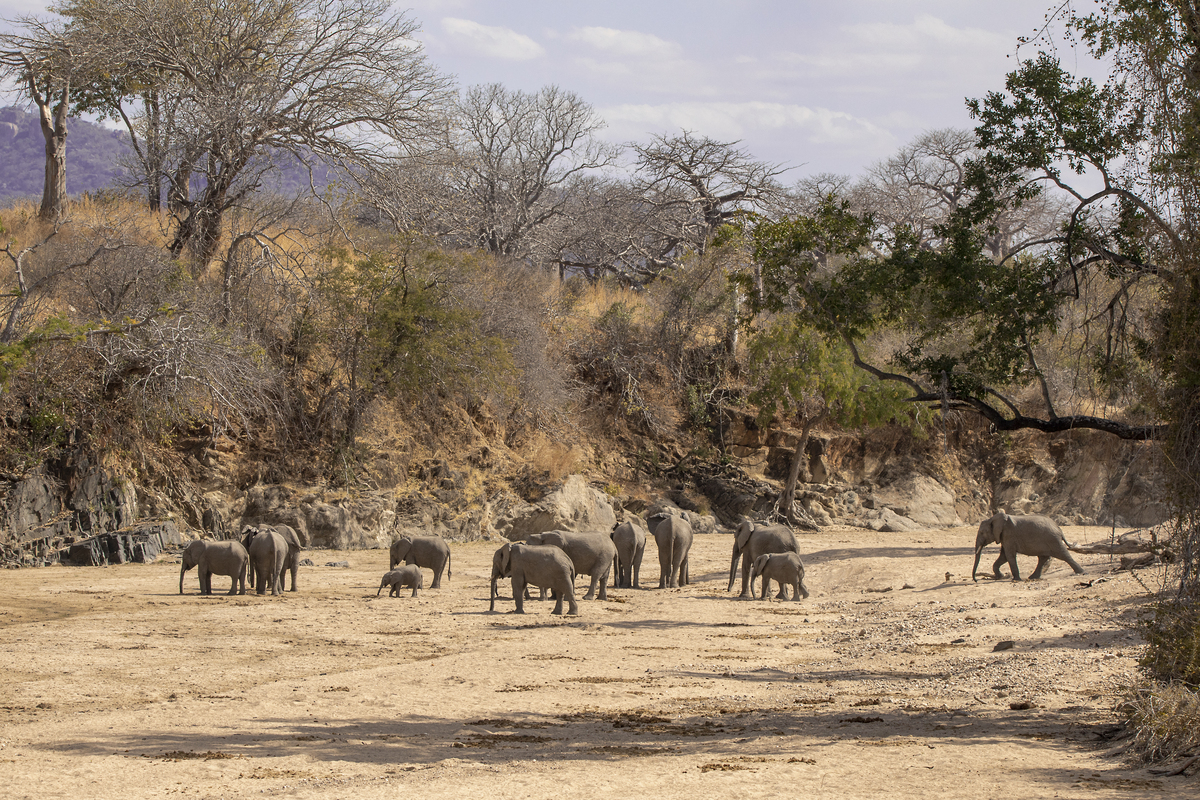
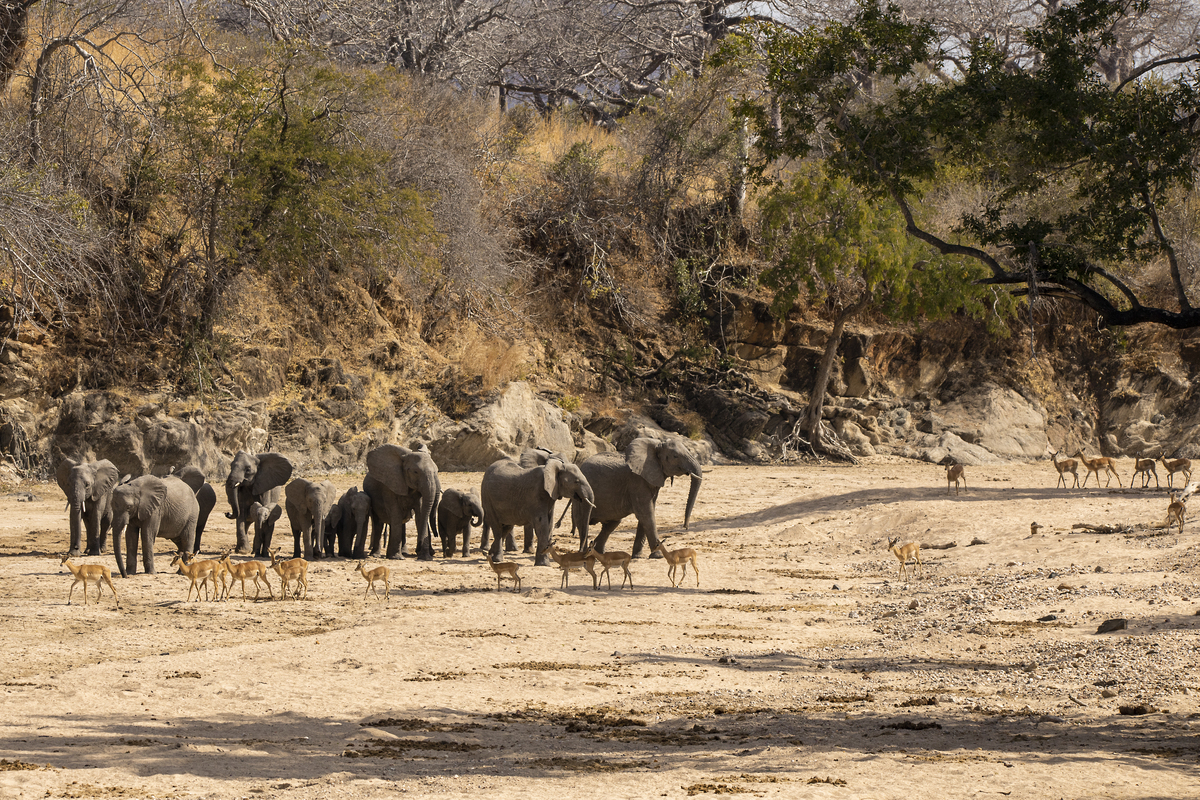
Elephants dig holes in the dried-up riverbed in search of water
When the water disappears from the surface, the elephants use their trunks and feet to reach the water beneath the sand. In this way, the dried-up riverbed becomes a sort of well for the animals.
The same goes for impalas.
After the elephants, they'll have a drink, too.
But you have to be careful around the elephants. They pass very close to the SUV and are nervous because you're so close to them.
They wag their ears menacingly.
And here, too, the photographer must remember that he is not at the zoo. He is on their territory.
The Lion at Sunset
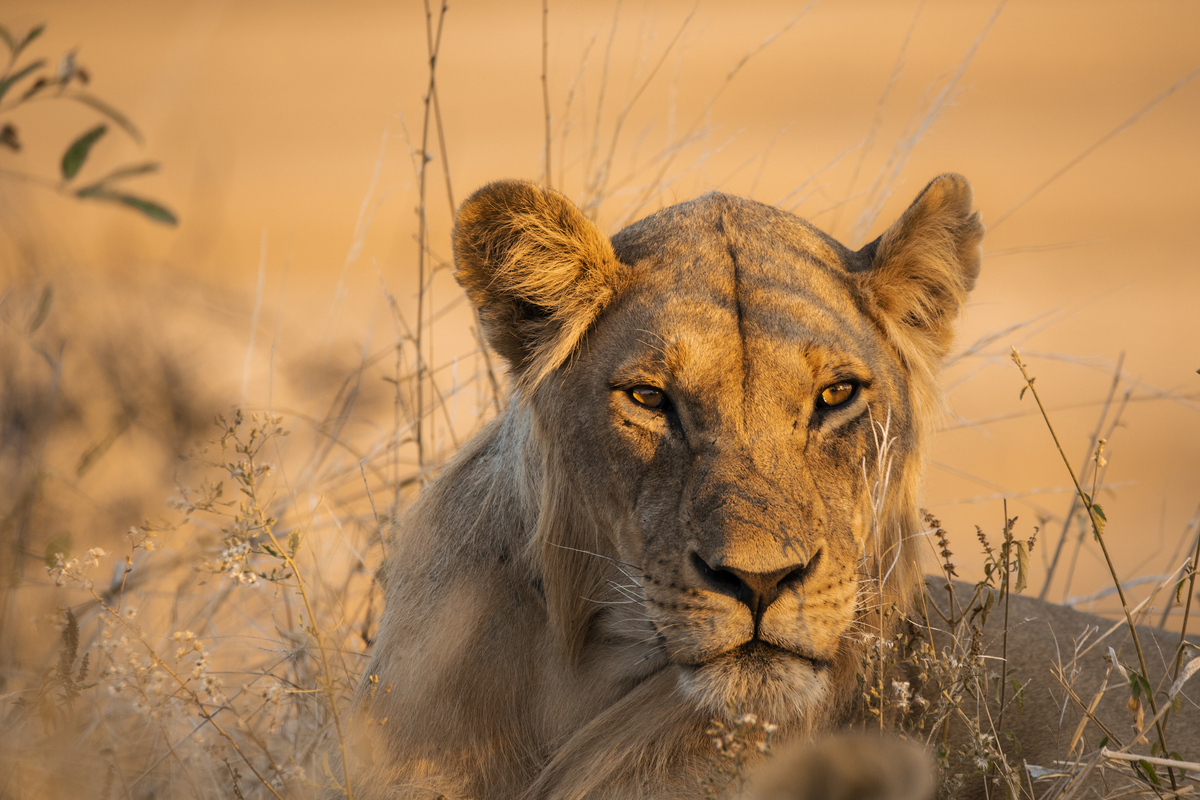
Roar: a male lion at sunset
Featured image for the article. (Editor's note).
Male lions, in particular, sleep during the day. They don't provide an opportunity for a good photo.
But the light is nice, and they glance over from time to time.
„"Aren't you afraid?"“ – I interject.
When you're in the jeep, they don't sense any aggression on your part. We're in a classic safari jeep—the kind with a pop-up roof.
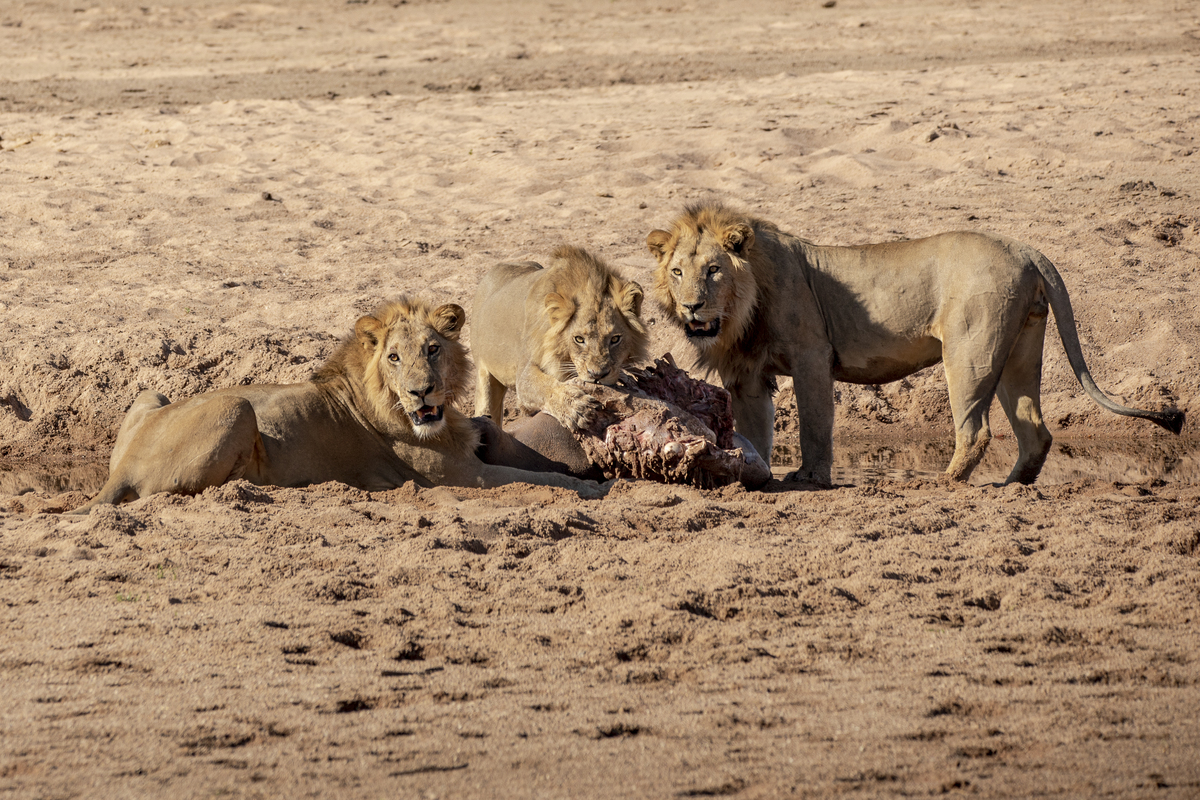
Feast
Brutal: three lions are eating a baby hippo. They caught it in the evening. They sat there for ages.
Close-up: three men.
The photo may seem gruesome to many nature lovers, but that's life.
This is how species survive here.
The Latest Footage from Ruaha
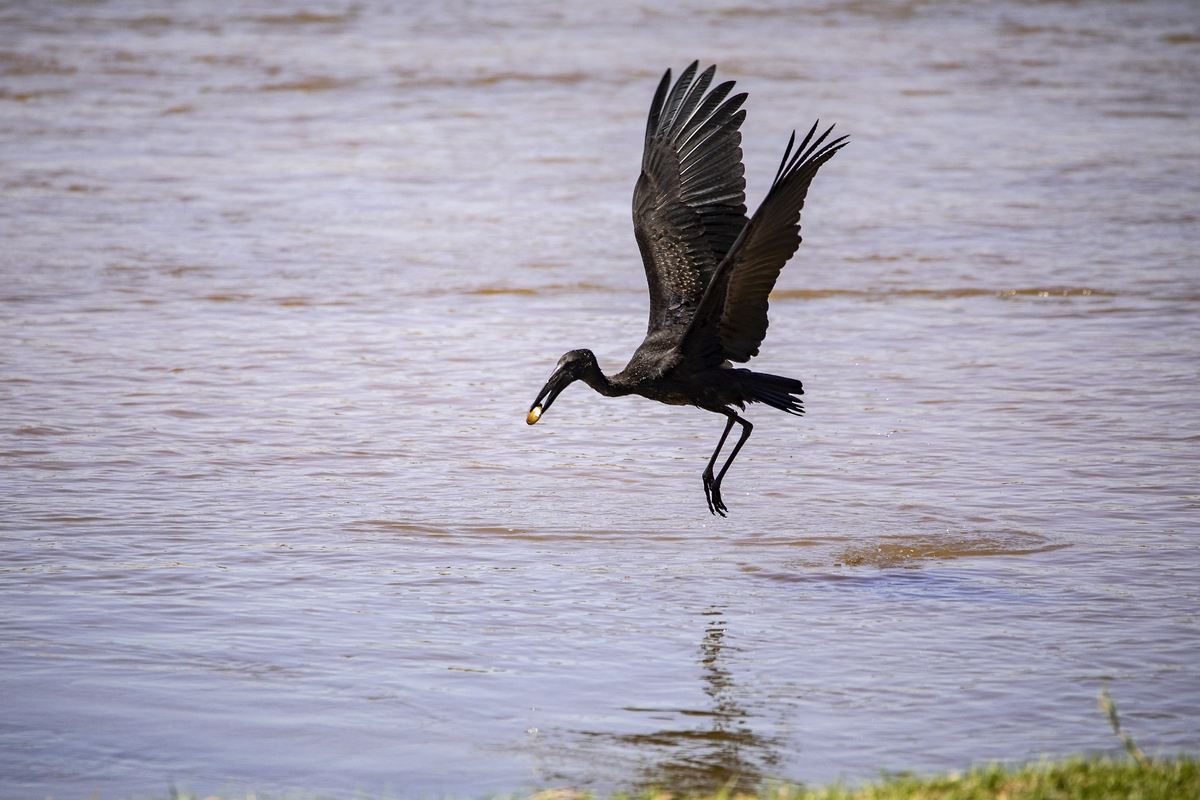
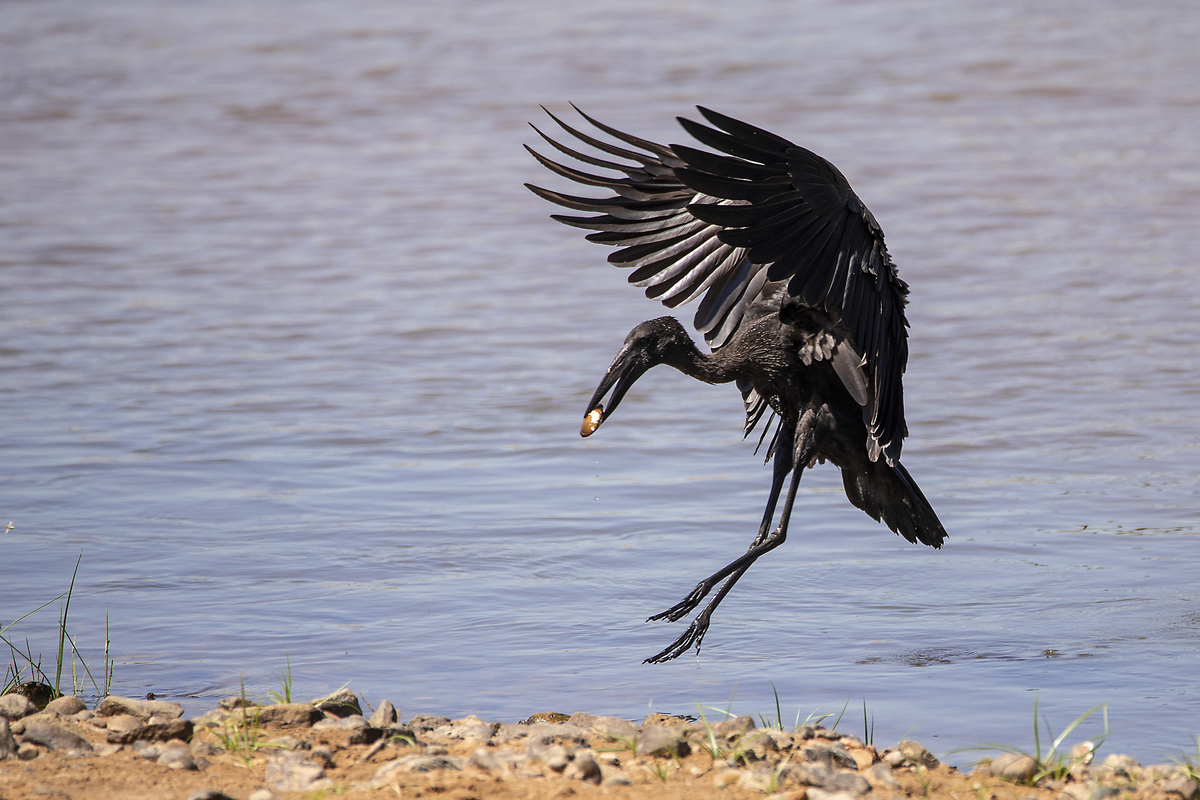
It comes ashore, cracks it open with its beak, and eats it for breakfast
Some of the most beautiful storks. Its shadow helps it see what's happening in the water, and it catches its prey instantly.
On the last day, we finally got to see what our camp looked like in daylight.
We knew we were above the river. There are gazebos above it. From there we filmed a black stork eating mussels.
And what have we been wasting time on all day from morning till evening? Who knows?!
That is typical!
It walks on the water in the shallows, finds a little clam, flies out of the water and goes to the shore, breaks it and eats it.
I didn't know she ate mussels…
We saw what a nice place our camp is in.
The end of the safari adventure
All good things come to an end sooner or later. Our safari has come to an end too.
It is time to say goodbye to Ruaha.
And while in the reserve everything flowed majestically and calmly, upon our return to the „civilization“ of humans, time abruptly sped up and began to gallop nervously, almost hysterically.
We are taking a flight from Iringa to Dar es Salaam. The arrangement is for the jeep to wait for us at the airport. The men traveled with the luggage.
Unfortunately, the small planes operating domestic flights only allow you to carry 12 kg of luggage. This is one of the inconveniences in Africa. It is not always possible to travel with so little luggage, and the other option – by car – wastes a lot of time on the road.
When we get together, we go to take another PCR test.
Katsame.
Our jeep is gone…
A young man is meeting us.
„Are you from Ruaha? I am a representative of your company. The Jeep has problems and will be about 3 hours late.“
The complication is that we have to take yet another PCR test and we are running out of time, because the next day at noon my girlfriend and I are flying to Botswana.
A PCR test costs about 120 dollars. But they don't accept dollars, only their currency. We want to go to a bank to exchange money into their currency.
And off we go through Dar es Salaam
Long journey. Low buildings…
Stupid African city.
And now imagine: we are crossing the city from the airport to a mall in the traffic jam of African traffic.
We have arrived.
We exchanged money.
And once again we cruise the city – we arrive at a gas station where we will meet a doctor.
In Tanzania, PCR results came out in 24 hours. And the doctor did it in a shorter time. He took us to something like a polyclinic.
There is a building – nurses in white aprons, an office, he is a GP...
Formal history.
At that moment, the jeep finally arrives.
We are all gathering.
„Where do we pay?“ – asks my female friend.
Complex transactions follow here. However, to get the valuable note from the doctor – pure illegal cash is paid to the local guide…
Not that I am dying to experience Tanzania's healthcare system.
They promise we'll have the results tomorrow at 8, supposedly.
We are concerned about this place, the way we had to take PCR tests, given that three of us are vaccinated.
Two weeks ago we took PCR tests at the airport and only had encounters with wild animals.
In the morning, the young tour operator representative comes to the hotel and announces that all four of our PCR tests are positive.
It's clear what we are talking about again – we have to be at the airport in 3 hours.
But we, the Bulgarians, have a clear position:
„Where are the tests? Where is the paper?“
On the other side, it is explained to us that the results have been entered into the system.
It is clear to us that we must pay.
How much?
Pointless argument.
But our driver doesn't want to give any money. And he is making a big scene in the lobby bar, arguing that we are vaccinated and that we cannot be positive since we only tested negative a week ago.
And maybe this commotion has an effect.
The tour operator is in a tight spot.
„For us, this is a matter of honor and dignity. Within an hour, you will have negative tests...“
There is no time for the airport anymore.
He showed up about an hour later with four negative tests.
There is a QR code and a signature, but no stamp on the slips.
They stamped it at the airport. But we don't know if that's the case and… we trust with hesitation.
The airport is close to the hotel. There is not even three hours until the flight.
At ten to twelve, our whole group tried to reach the tour operator by cell phone, but from the agency – „not a peep“...
And we call a taxi, deeply worried about whether they will stamp our PCR tests.
We ask the taxi driver. He quickly gave us directions.
At least something is the way they told us.
We are getting in line.
This is the end of July – at the airport in Tanzania there are card readers, and in Bulgaria there are none.
They read and certify.
We see what is happening in front of us in the queue and we are TREMBLING whether our PCR code is real.
Thank God!
Yes!
We passed…
End of the Tanzania adventure during COVID-19
This is how a safari ends, which started with the wildlife of Ruaha and ended with chasing a plane, PCR tests, QR codes, and quite a few frayed nerves.
But this is Africa.
Sometimes majestically calm.
Sometimes unpredictable.
And always ready to leave you with a story to tell long after you have returned home.