The series „Sofia Crossroads“ starts from the intersection of Moskovska Street and Georgi Rakovski Street„ and continues down Vasil Levski Boulevard.
The refined silence and tranquility of Moskovska Street are not the usual life of the big city. The true rhythm of Sofia can be found along the nearby Vasil Levski Boulevard, which combines almost everything that the crowded capital offers to its residents.
Vasil Levski Boulevard intersects Sofia
from the NDK area to Stochna Gara. Pedestrians rarely walk along it, perhaps because it does not host many small shops, cafes, and restaurants. Here and there, a group of hungry and cheerful high school students laugh at some jokes incomprehensible to adults. A worker from a nearby construction site passes by, carrying fragrant banitsas from the small bakery, or a young woman, wondering how to balance the tasks of a professional, mother, housewife, and lover in her life, dizzily crosses on a red light.
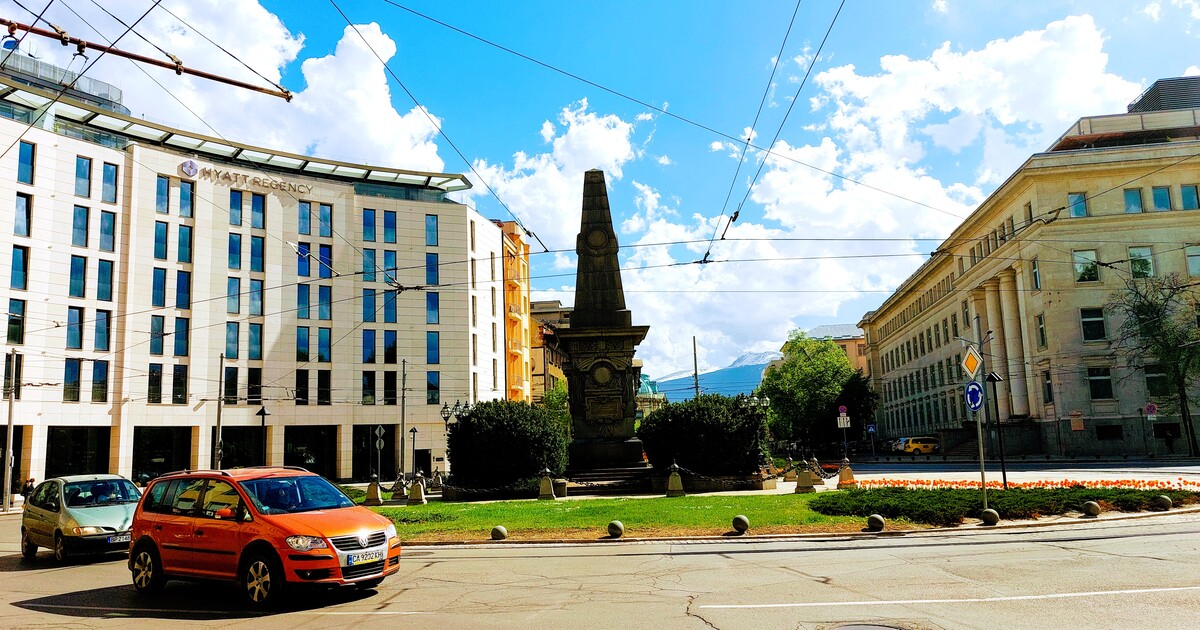
Under the Patriarch - the top figures of Sofia
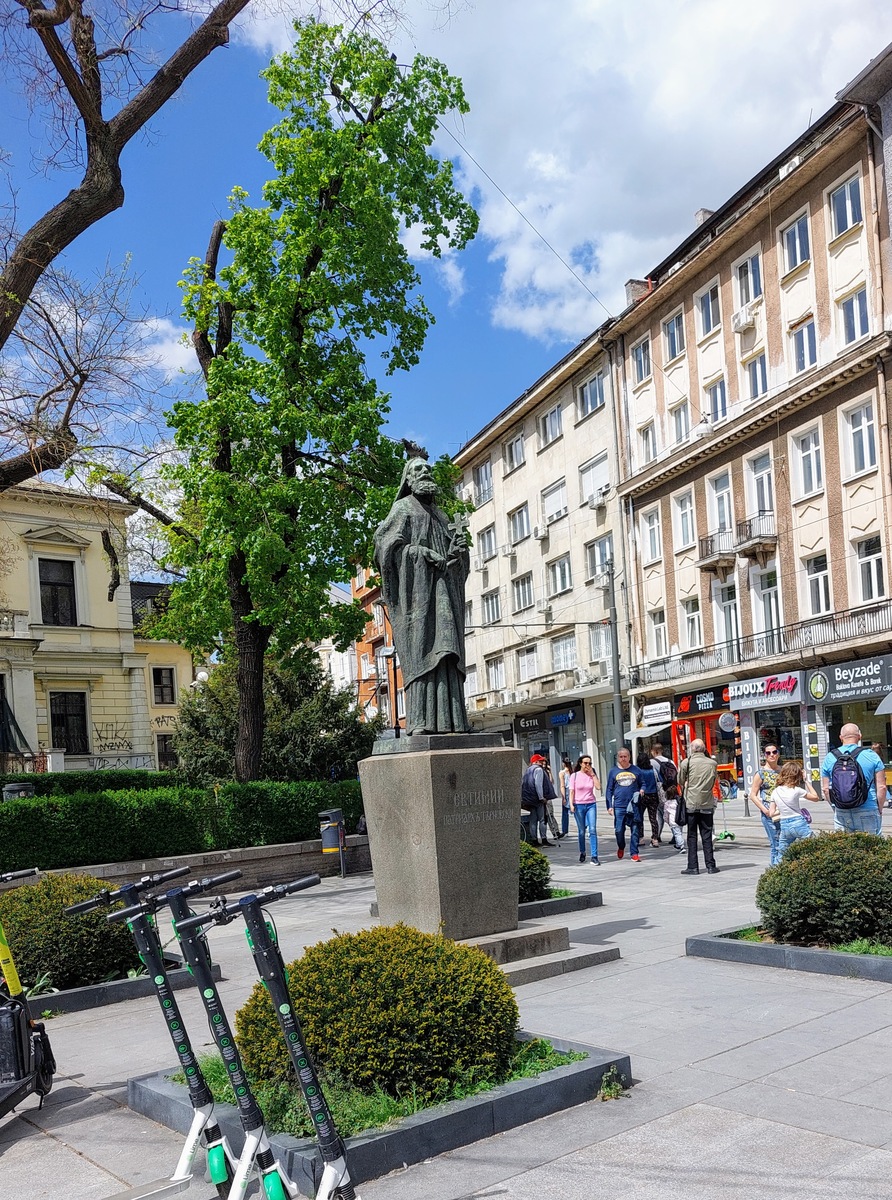
Only until the Patriarch Evtimiy monument It is crowded. Years ago, this was one of the favorite meeting places for lovers. Still in the evening, one can occasionally see a girl shifting from foot to foot, hesitating whether to leave or wait a little longer for her late boyfriend. And her boy, having missed the tram, is running along „Graf Ignatiev“ Street, bumping into the crowd of passersby.
During the day, the miniature garden behind the monument is inhabited by vagrants. These people obviously have their own secret society in which they communicate, exchange information, make friends, and part ways. Thus, by the statue of the Patriarch—or as the people of Sofia affectionately call him, Popa—we can see a few of those people in the world who exist without documents, without registration, without insurance, and without families, and who are immersed in their own dark and unknowable world.
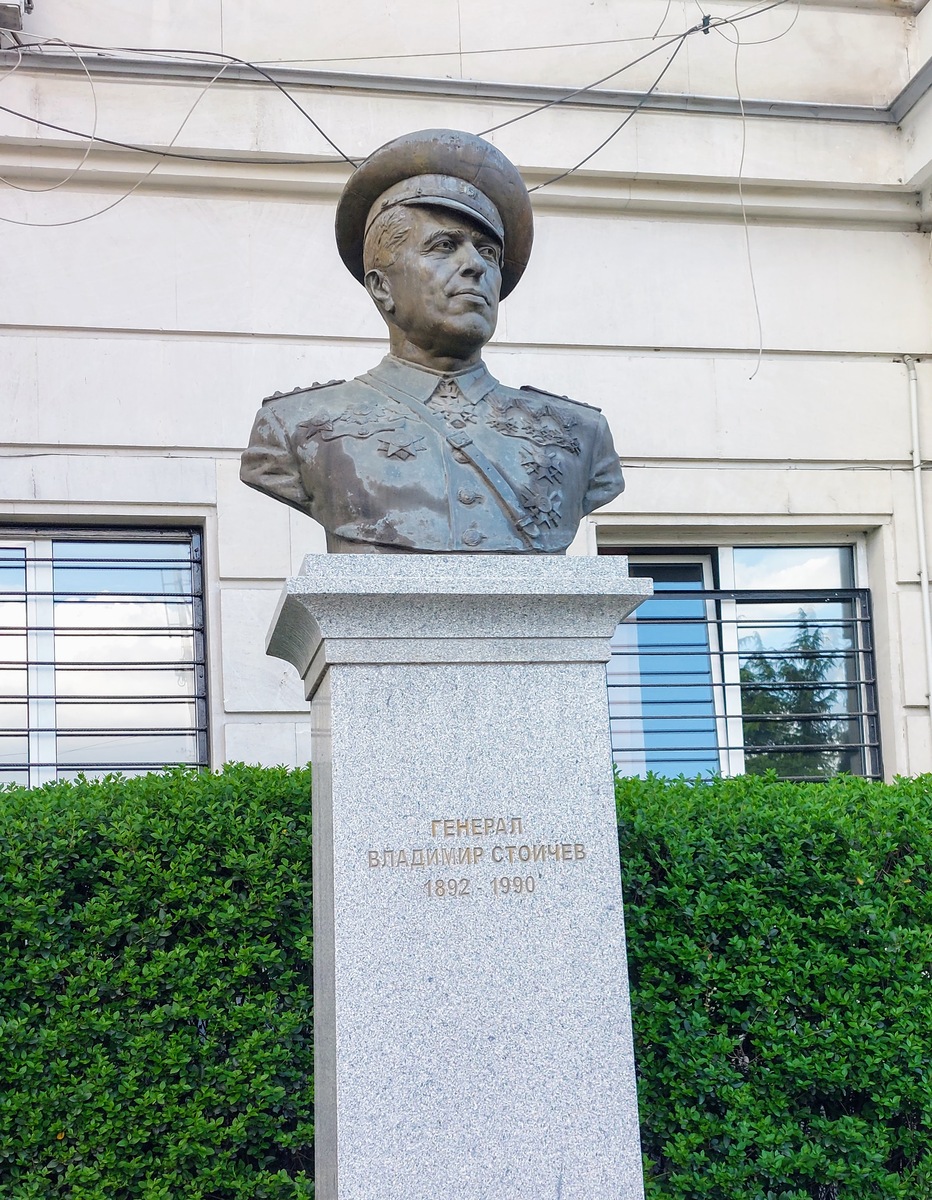
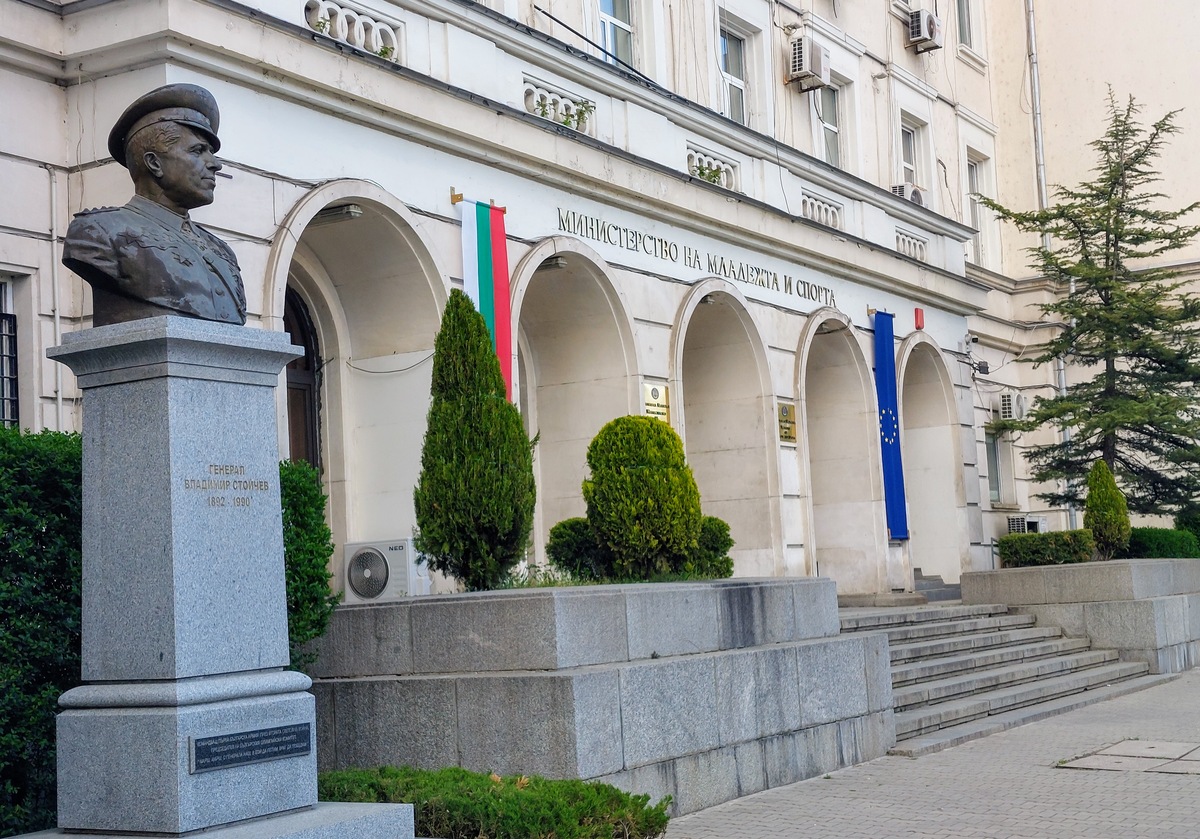
After crossing with Gurko Street„ the boulevard becomes much more festive.
To the right is the bulky building of the Ministry of Youth and Sports, cheered up by the bust of General Vladimir Stoychev, one of the founders of the Bulgarian Olympic Committee. His tilted cap is a wonderful memory from those times when officers were among the most prominent men in Bulgaria. Not only as politicians and military leaders, but also as thoroughbred representatives of the human species – handsome, proud and defiant, with a sense of humor and admirers of female beauty.
Let my female readers not dream in vain of this extinct species of gentlemen, however, but take a walk to the place where, until a few years ago, there rose
Monument to the Soviet Army. No comment. They can simply admire a few tall trees that have thrived on Sofia's not-so-clean air, sit on a bench, and enjoy the skateboarders whizzing and clattering around.
The university, the library, and youth
And the boulevard continues straight ahead towards the building of Sofia University. Its foundation and construction deserve a whole book, so we can simply bow to the two brothers Evlogi and Hristo Georgiev, whose figures are forever seated with dignity on both sides of the main entrance.
The colorful crowd of students bustles in wonderful contrast with the elegant building, and with their eccentric clothes, piercing laughter, and the scent of assertive youth, they move through the surrounding streets.
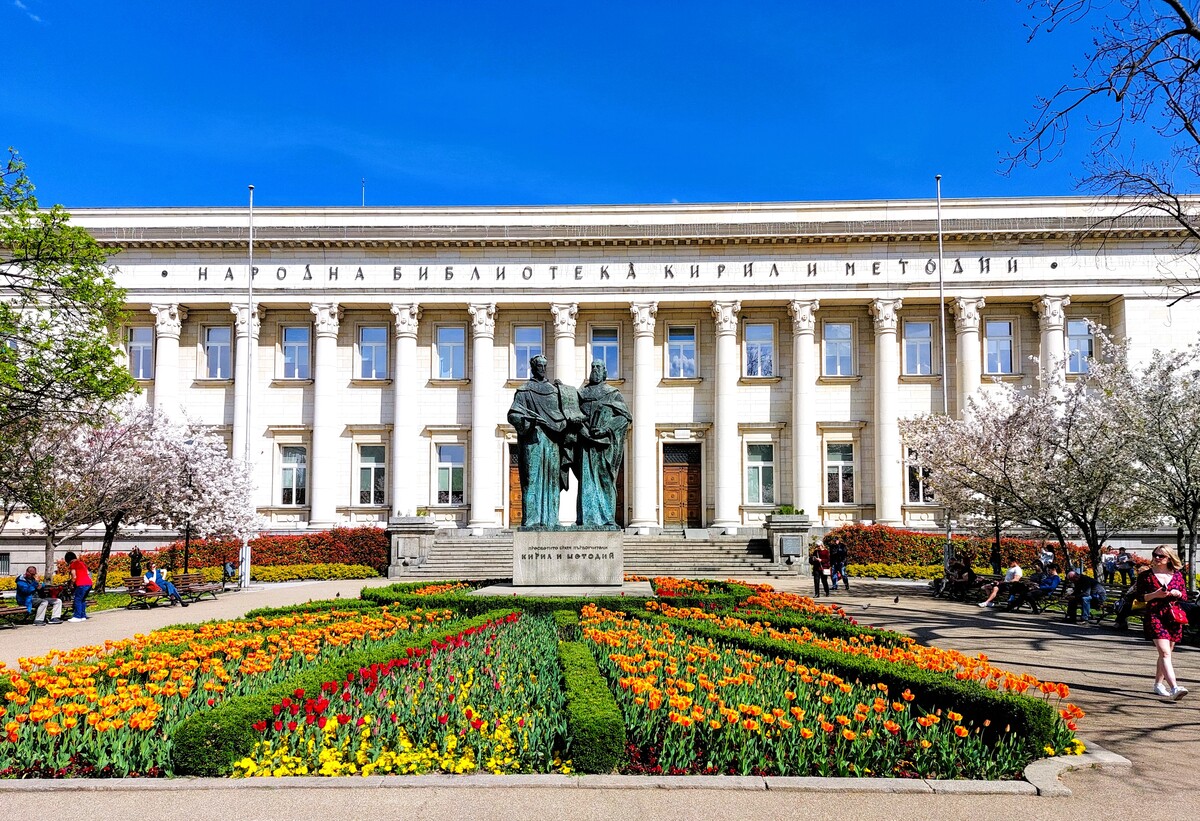
Following is the small one a small garden in front of the National Library. She is always festive and a little austere, as if hushed around the monument to Cyril and Methodius, before which someone has always placed a bunch of flowers. Years ago, when libraries were places visited by many people, this place was full of young people who would meet, flirt, and then hurriedly head off to the parks, cafes, and theaters.
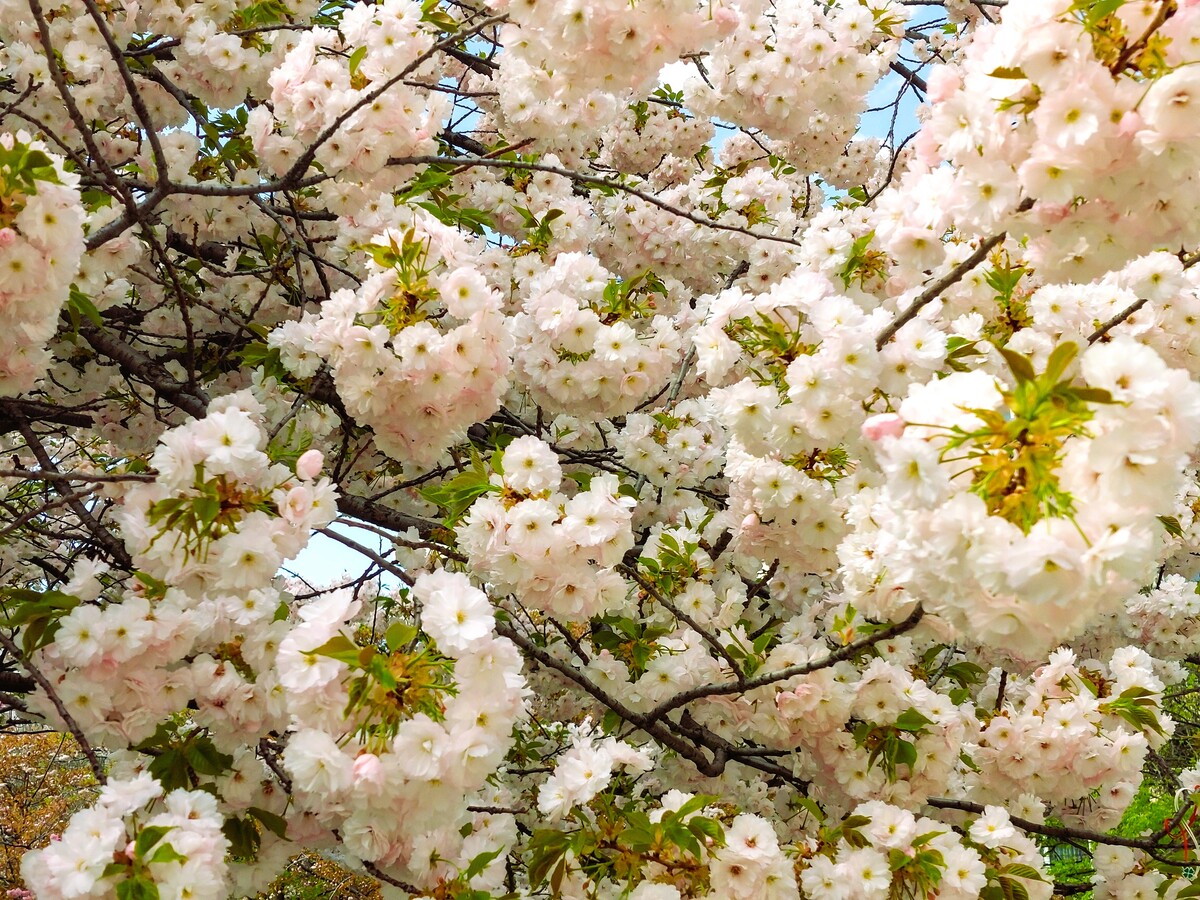
Today young people are almost nowhere to be seen; only the blooming Japanese cherry trees in spring shed pink petals on the grass and provoke vain girls to pose in front of them with pouty lips, while their friends enthusiastically snap away with their mobile phones. That is why it is somewhat tempting to think that as phones are getting smarter, our young people seem to be getting sillier.
From Levski to the Musical Theatre
Afterward, the boulevard nods to the rear facade of the Square 500 Museum„ and respectfully bypasses the monument of the Apostle, which proudly and sadly rises on the small square. This is a place with a special atmosphere, created by the entire affection and reverence of generations of Bulgarians for this figure from Bulgarian history, who is the subject of universal love.
It is no accident that not a single successful novel or feature film about Vasil Levski has appeared so far. In our national consciousness, he possesses the spiritual dimensions of a saint, something more than an ordinary man with his appearance, voice timbre, and often human actions. Just as there is no good novel or film about Jesus Christ in world culture, there will not be one for Levski either.
Mythological figures like him cannot be objectified through the performance of even the most perfect actor, under the direction of even the most brilliant director. They are always more than that.
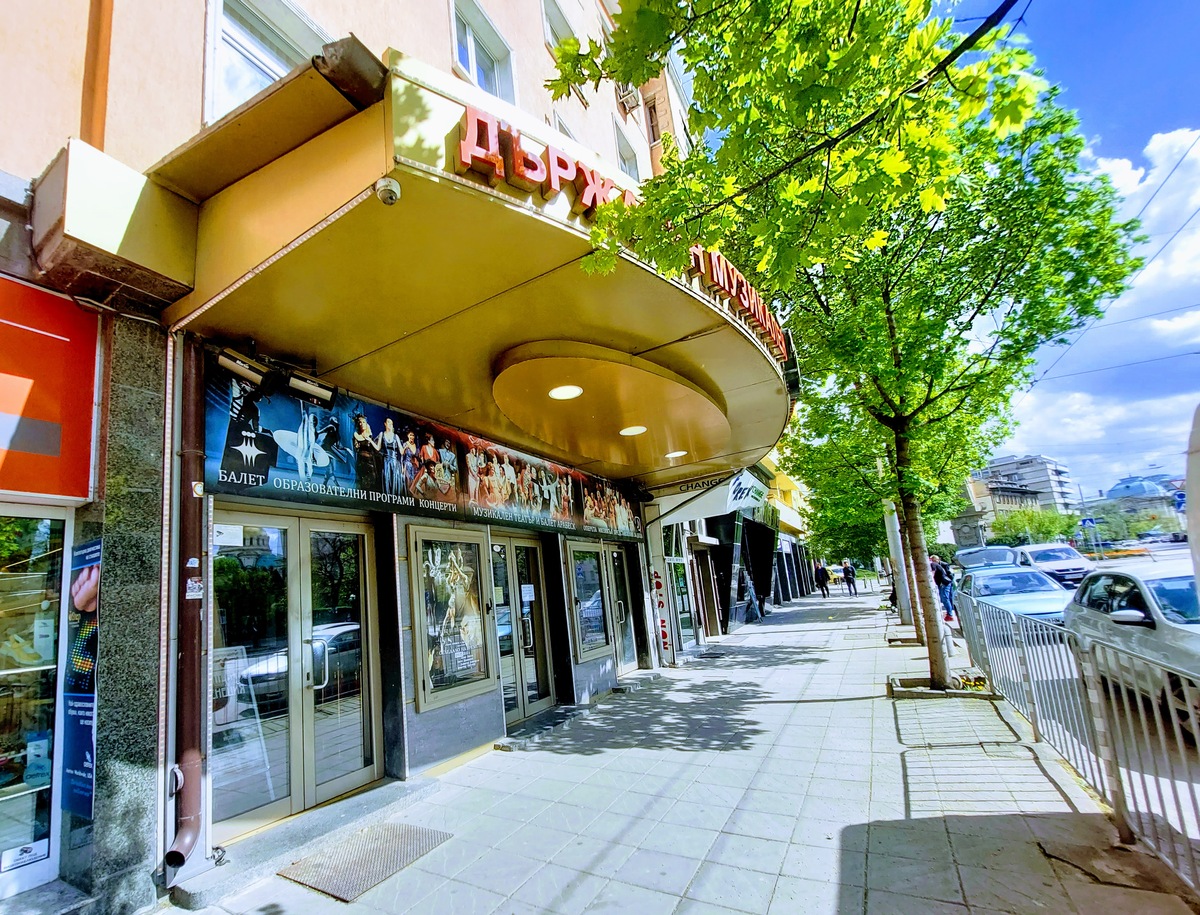
After bypassing the monument in its asphalt embrace, the boulevard looks at the new hotel with a slight bewilderment „Hayat“, but is grateful for its simple building, which does not contradict the atmosphere of the place. Afterwards, he passes by the entrance of the Musical Theatre.
Opera, musical and a few feathers
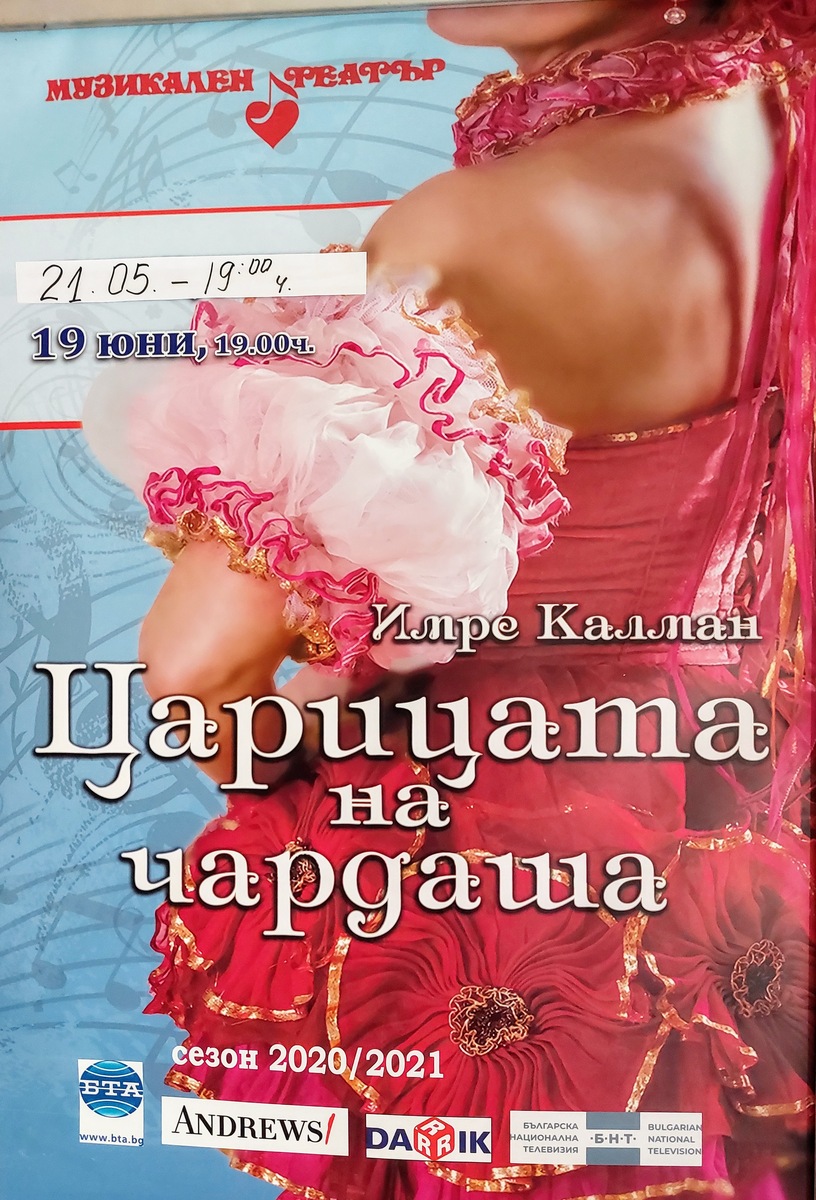
Posters for upcoming performances add color there. Operetta, musical, ballet, a bit of feathers, the occasional bare shoulder, shapely legs of dancers.
Sofia is, on the whole, a serious city where the joy of living, the exquisite pleasure of doing nothing, erotica, and squandering are somewhat guiltily hidden in the dark wombs of discos, clubs, and casinos. They are inhabited by the usual small crowd of idlers and gold-diggers, as well as by young people in that brief recess between their student days and the moment they feel the sharp teeth of that thing grandly called life.
In the Musical Theatre, all of this is transformed into art. Today, the plots of operettas seem naive and devoid of true drama, and the melodies exhale the scent of a grandmother's perfume, pleasant above all for the fond memory of a non-existent happy society of elegant banter and romantic relationships.
Today, the ambitious theater director Mariyana Arsenieva successfully attempts to brush the dust off the red velvet and sew the sequins back on in order to present to the grateful audience a modern interpretation of operetta and musical.
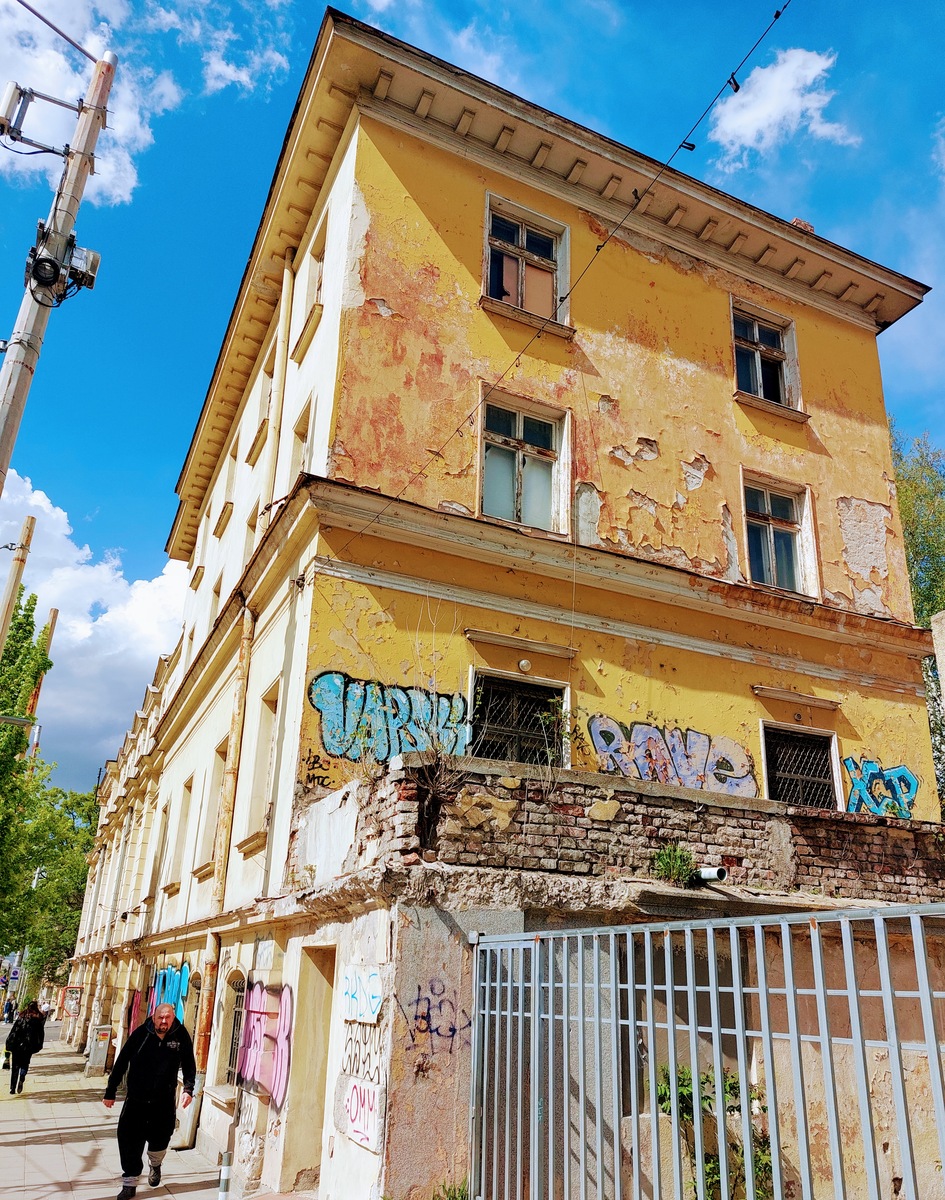
The modest entrance of the Musical Theatre is perhaps the last place on Levski Boulevard where it can catch its breath and smile. Next come the neglected former Royal Stables, waiting for another investor with greedy eyes to erect yet another business center. The boulevard can only hope that this person will have a little common sense or more architectural taste to fit their ambitions into the style of the surrounding space.
After the intersection with Dondukov Boulevard„, where trams ring, cars murmur, and traffic lights flash businesslike, Levski Boulevard„ It descends past a row of dreary apartment blocks and reaches Stochna Gara. There, the proximity of the railway is already felt, those two metal lines that largely created the modern industrial world.
The end of the boulevard – the beginning of other roads
The intersection of Vasil Levski and Slivnitsa boulevards is symbolic. This is the place from where we can set off in several directions to discover the different faces of Sofia.
Ahead of us to the north are the stations, railway and bus, the customs, the city's connections with the whole world. We can set off on a journey, welcome and send off loved ones, or simply turn right and visit another place, dedicated to the final journey. The Sofia Central Cemetery, sad and elegiac, neglected and peaceful, absorbs the tears of thousands of Sofia residents.
To the west is Lion's Bridge, which the capital's residents cross to get to the center, to the Women's Market, or to the concrete anthills of socialism – the prefabricated panel housing complexes.
Behind us, to the south, are the opera house, the theaters, the museums, and the city parks and gardens.
Wherever we head, it is still the capital city, lying in the Sofia Valley like a loudly breathing animal, huge, dangerous, and yet beautiful, living according to its survival instincts.
And this is just one of the Sofia intersections.
To be continued.
See more about the author Darina Vankova here