Sofia lives through her crossroads.
Some of them are bustling and breathless, bringing together growling cars, pedestrians, beggars, stray dogs, casually passing socialites, boisterous teenagers – the entire spectrum of people and colors that a capital city can offer.
It smells of burnt gasoline, dust, or wet sidewalks, and only sometimes can you catch the perfumes of hurried girls.
At night, they quiet down, dozing woozily, only the traffic lights tirelessly continue their monotonous work, flashing green for nonexistent pedestrians.
A vagrant will take the last sip from a plastic bottle, kick it angrily down the street, and look for a home on a bench.
And afterwards, the scent of blooming linden trees nearby can be caught, or the cooling coffee in a sleepy police officer's paper cup.

The noisy and quiet intersections of Sofia
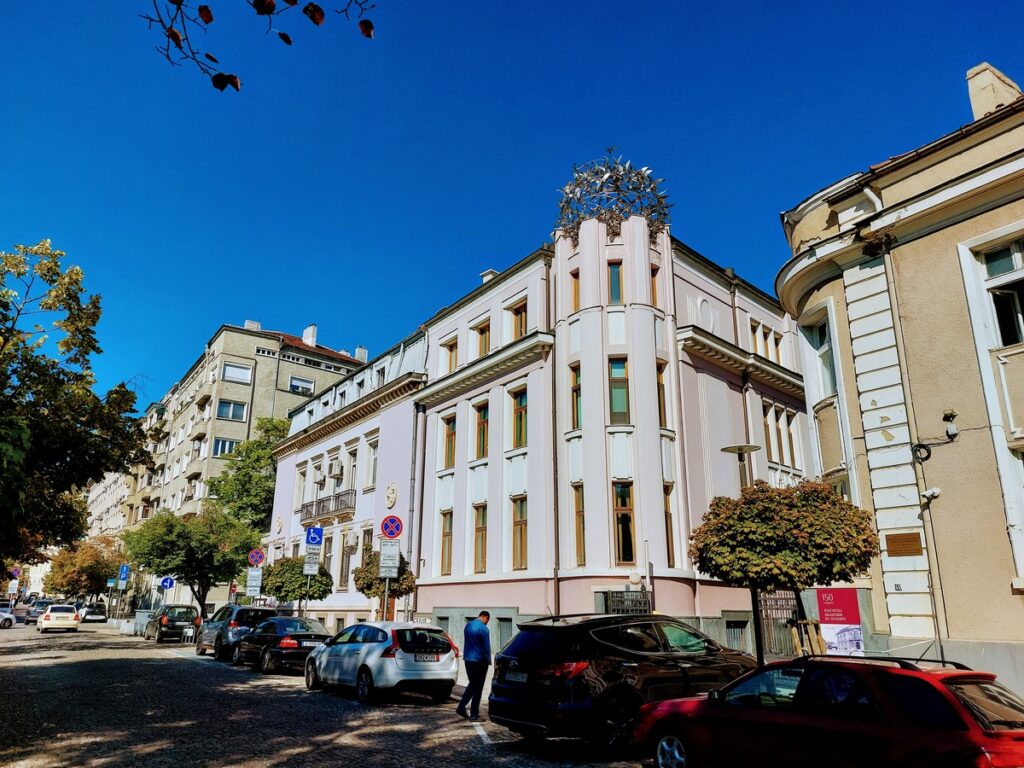
Other intersections are calm, as if transplanted from the deep countryside. Children grace them with the whistling of bicycles, proud mothers show their babies the world and provoke smiles on the weary faces of old women pulling their checkered trolleys as they leave the shops. These neighborhood intersections instill overconfidence in drivers, and they often break the rules.
The dusty cars, bored of traffic jams and road signs, forget to signal when turning or to stop where they should.

The small intersection creates an illusion of freedom, as if we are in the comfort of our own home and can relax, wander, exchange smiles or curses with others at home.

At night, they are deserted, as if they don't exist.
Silence gradually takes them over, granting them a few blessed hours of peace and tranquility. Lovers fill them with secret embraces and whispered words, and the rain falls softly, washing away the city's hustle and bustle.

Sofia's Crossroads – Between History and the Present
In Sofia, however, there is also a third type of intersection.
These are not just places where two streets intersect. They are those special nooks where the capital has sheltered the traces of historical eras, the imprints of its cultural and economic development, and it is precisely there that it unconsciously preserves memories of personalities, events, and ideas.

Sofia itself has always been at the crossroads between East and West, between North and South.
Geographically and civilizationally, the city seemed to be undecided about exactly what it should be: a capital or simply a large provincial city; a place honoring its rich historical heritage or a vibrant commercial and industrial center, or simply a chaotic, unmanageable, and constantly changing amalgam of all of the above.

These crossroads are a symbol of Sofia's complex journey to what it is today.

Wealth and poverty, history and modernity, culture and entrepreneurship, oriental manners and European aspirations, political passions and struggles, waving national flags or the blue-yellow silk of the currently prevailing geopolitical trend.
Let's not call them intersections.
Let them be Sofia's crossroads.

See more about Author Darina Vankova here