If you missed the series, we share it here.
The intersections of Sofia They start from here
Following „Moskovska“ and „Georgi Rakovski“ streets“
The walk continues „Down on Bul. Levski“
To get to „The Station and Love“
After that we will delve deeper into the topic of philanthropy – „Art and Money“

To get to the current story that you will unfold, dear reader:
It was snowing outside. At first it was light, almost imperceptible, but then it intensified. The wind picked up the snowflakes, embraced them and spun them, like in those glass spheres that she, as a child, tirelessly shook. Then the white fragments within them spun and that inexplicable magic happened, which brought the motionless figures inside to life.
The frame of the narrow window encompassed the night lights of the peaceful metropolis, the branch of the tree opposite it, and the snow falling on it. Just a little longer, just a little longer, and Katie might have stopped feeling lonely and desperate. Maybe she would even manage to fall asleep.
Soon she will be watching the snow at home, she thought. She will return to the small town, to the house with her elderly and somewhat taciturn parents, surrounded by curious and too chatty neighbors. The smart Katie, the ambitious girl from the countryside, the high school honors student, the scholarship holder who left years ago with her father's old car and her big dreams. She will return silent and defeated. Without a job, without a family and without friends.
There was no way she could continue. In the morning they had told her that this was her last chance. In the competitive world of advertising, a lost campaign for a large client meant only one thing.
Her proposal to the uncommunicative representatives of the giant in the pharmaceutical industry, dressed in gray suits and with frozen smiles, was not good. She herself realized that in her attempt to advertise their well-known drug, having already tried all the marketing tricks, she was banal, boring, and repeating well-known images and words. She quoted.
Damn it, how can you persuade people to buy more painkillers than they need? How can you make a pill appealing without promising a miraculous cure? Can you show a drug on screen without getting bogged down in explanations about its composition and action? There’s no way, she thought, I’m giving up. Let someone else work on these candies, and I’ll head home. Maybe it’s for the best.
Katie opened the window. It creaked and let in fresh air with the scent of snow and childhood. She stepped outside to take a deep breath and cool her burning face.
Then a snowflake fell on her glowing forehead. Then another.
This story didn't exactly happen that way. It is very likely that it is just one of the urban legends in marketing – the ingenious idea of an ad creator to show how not one painkiller falls into a glass of water, but two. In this way, people decided that this was actually the correct dosage.
And sales doubled as well.
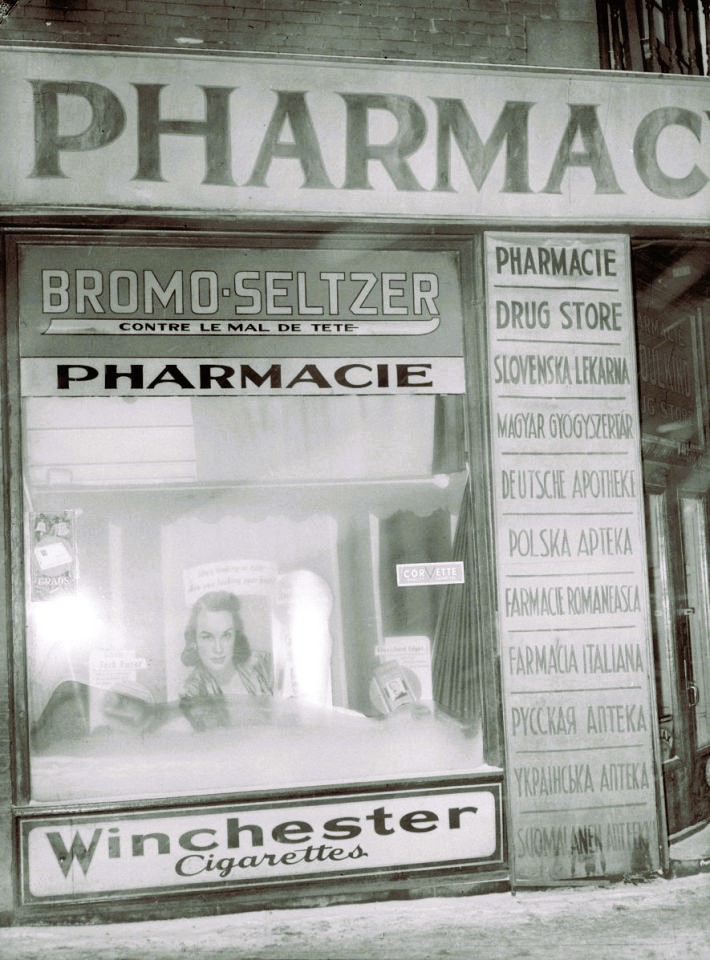
Science, Pharmacy and Commerce
Today, the question of the relationship between scientific achievements, the pharmaceutical industry, the trade in medicines, and public perception of commercialization in this field is particularly pressing. Many people are asking whether human health should be subject to trade at all, and to what extent is advertising for medicines and medical services justified?!
On the other hand, is it possible for the development of science itself, not only in pharmacy and biomedicine, without the involvement of the industry and the marketing associated with it, and therefore without the commercial interest in scientific achievements?!
Do the creators of advertisements like Katie and the countless specialists in the trade of medicine and healthcare, nevertheless, not somehow support the progress of society?
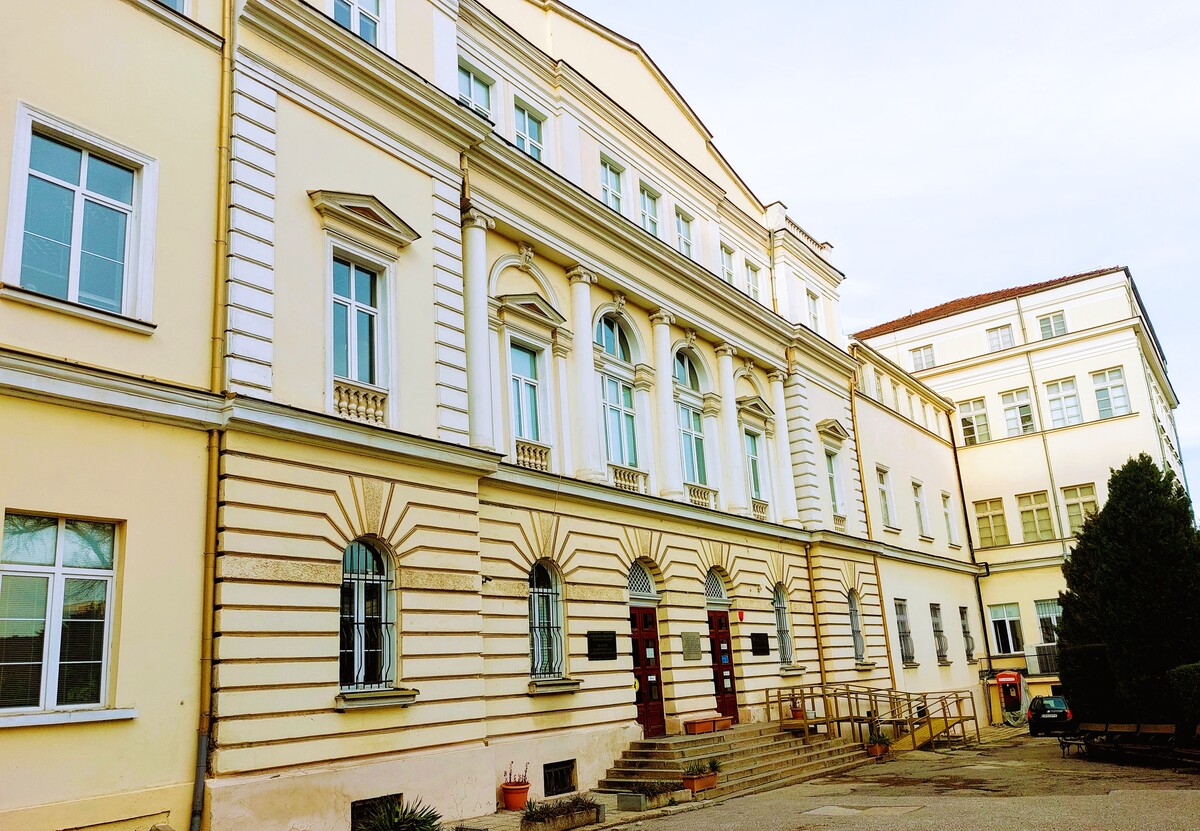
These questions can be asked at two special places in Sofia. The Faculty of Pharmacy at the Medical University is located at 2 Dunav Str., while the Faculty of Journalism and Mass Communication at the Sofia University is located at 49 Moskovska Str., in close proximity to the Botanical Garden. It is as if it were not a coincidence that these two educational institutions are part of the same thought.
This is a special crossroads, symbolizing the intersection where the world of capital meets two of the most essential achievements of the human spirit – Word and Science.
The Faculty of Pharmacy in Bulgaria
Faculty of Pharmacy Its history began in 1942, when the decision was made to establish a Pharmaceutical Department within the Faculty of Physics and Mathematics at Sofia University. By Decree of June 30, 1950, the department was separated into a separate faculty within the newly established Medical Academy, and in 1951 it began its independent activities.
Today, the faculty has six departments that cover both fundamental and specialized pharmaceutical disciplines. Among them are chemistry, pharmacognosy and pharmaceutical botany, pharmaceutical chemistry, pharmacology, pharmacotherapy and toxicology, the technology of medicinal products, as well as the organization and economics of pharmacy.
In addition to the training, a number of scientific programs and projects are also developed, as well as international activities. In 2017, 75 years were marked since the beginning of pharmaceutical education in Bulgaria and 66 years since the founding of the faculty itself.
Who funds science?
Scientific research in the field of pharmacy and biomedical sciences in general is a good indicator of the development of science in any country. However, it should be emphasized that significant capital is required to carry out these activities.
We will not discuss here the provision of funds for science in general, especially for basic academic sciences. However, according to Eurostat data for 2023, more than half of the costs for research and development in the European Union are funded by business – 56.7%. Governments provide 30.1%, while the remaining funds come from foreign sources, higher education, and other sectors. These proportions naturally vary depending on the different countries.
This structure of scientific support has its obvious advantages and disadvantages. In general, the main benefit is the generation of significant capital for the development of research. On the other hand, corporations are primarily interested in commercial opportunities in the short term, rather than in fundamental sciences for which it is not certain that they would even have a long-term effect on business.
The history of systematic funding of science is not long. The institutionalization of research began timidly from agriculture and the related agricultural chemistry. Later, inventors raised their own funds and, in order to ensure the return on capital, developed the patent system, which in an advanced form exists to this day.
It was only at the beginning of the 20th century that corporations accumulated some experience in investing in scientific and technological research and discovered that this could be a crucial condition for success in competition.
Interests conflicts gradually arise, especially in biomedical and food-related research, as it is generously funded by the companies involved. Often, data on improper manipulation or disclosure of results from long-standing scientific work are revealed.
From Aunt Olga's pharmacy to the pharmaceutical industry
These objective processes are invisible to the ordinary citizen, and not particularly interesting either. Especially when it comes to health, people do not expect scientific facts, commercial accounts, and funding data, but help supported by care and compassion.
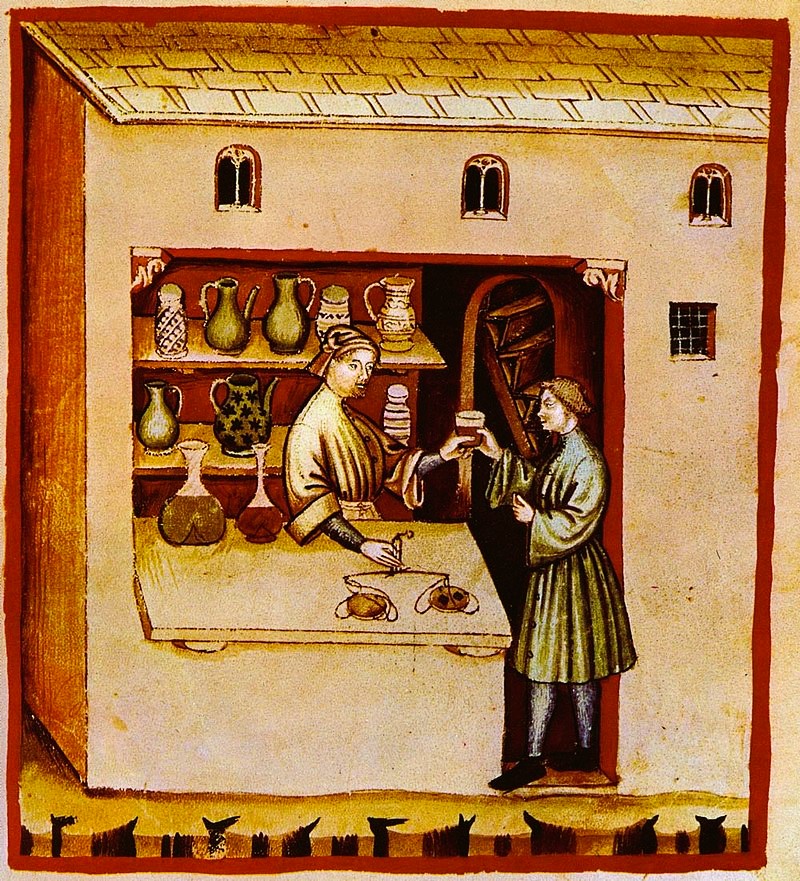
Many of us remember the old pharmacies that were like little mysterious secret caves of wonders. They were filled with colorful jars, smelled especially pleasant, and at the same time had the coziness of a neighborhood shop.
Inside them stood some Aunt Vanya or Aunt Olga, who smiled with her rosy face over a clean white tablecloth. She knew everyone and called them by name, generously gave advice and herself trimmed something in a porcelain jar. At night this was often the only illuminated place around, and the narrow window of the pharmacy opened, ready to let in an urgent medicine and a kind word for the worried customers.
Today, pharmacies resemble supermarkets. In them, there seems to be more cosmetics than medicines. Their walls are cluttered with nutritional supplements with questionable effects and high prices. Pharmacists are busy, overworked, and probably have no right to advise people on prescribed medications. When we leave the modern pharmacy, we do not feel comforted, cared for, or pampered; we simply feel like an object of commercial interest.
Then we will proceed
We choose to stay at home, turn on the TV, go online, read newspapers, listen to the radio. Everywhere we are constantly and compulsively being told to buy some medicine to solve our health problems, to look prettier and younger, now and forever.
All of this very much resembles a trap for the naive, doesn't it?
Thus is born the specter of the big bad pharmaceutical industry. A global Hydra that plots sinister plans to subjugate everyone to its corporate interests. To deceive us with promises and then enslave us.
Human health and the boundary of corporate interest
The author of this text has been vaccinated with all the recommended vaccines and is ready to try some non-recommended ones. I am simply absolutely convinced that prevention is the best treatment and firmly believe in the progress of science and technology.
But I can also understand the other side. These are the millions of people who refuse to get vaccinated under the pandemic conditions because they have lost faith in the human face of medicine and pharmacy, science and industry.
The reason is probably that human beings think through their emotions. If we have a choice between dry facts and stories, between knowledge and myths, we always choose the latter. It’s just our nature and the way the human brain works.
The progress of science and technology does not tell us a beautiful fairy tale; rather, it feeds our fears. It touches some mysterious strings in our minds and makes us retreat back to the safe and familiar place of the unspoken, of guesses and rumors. Who knows, if vaccines had been recommended to us by some kind-hearted and plump Aunt Olga in a white apron, wouldn’t it have been easier to accept the facts and agree with them?
After all, there has to be a boundary somewhere between corporate interest and human health. Even if that interest provides the funding for the next scientific discoveries, inventions and technologies, and a longer and probably better human life. And that boundary is surely there, in Katie’s attempt to trick people into doubling the dose of their medication without needing to do so.
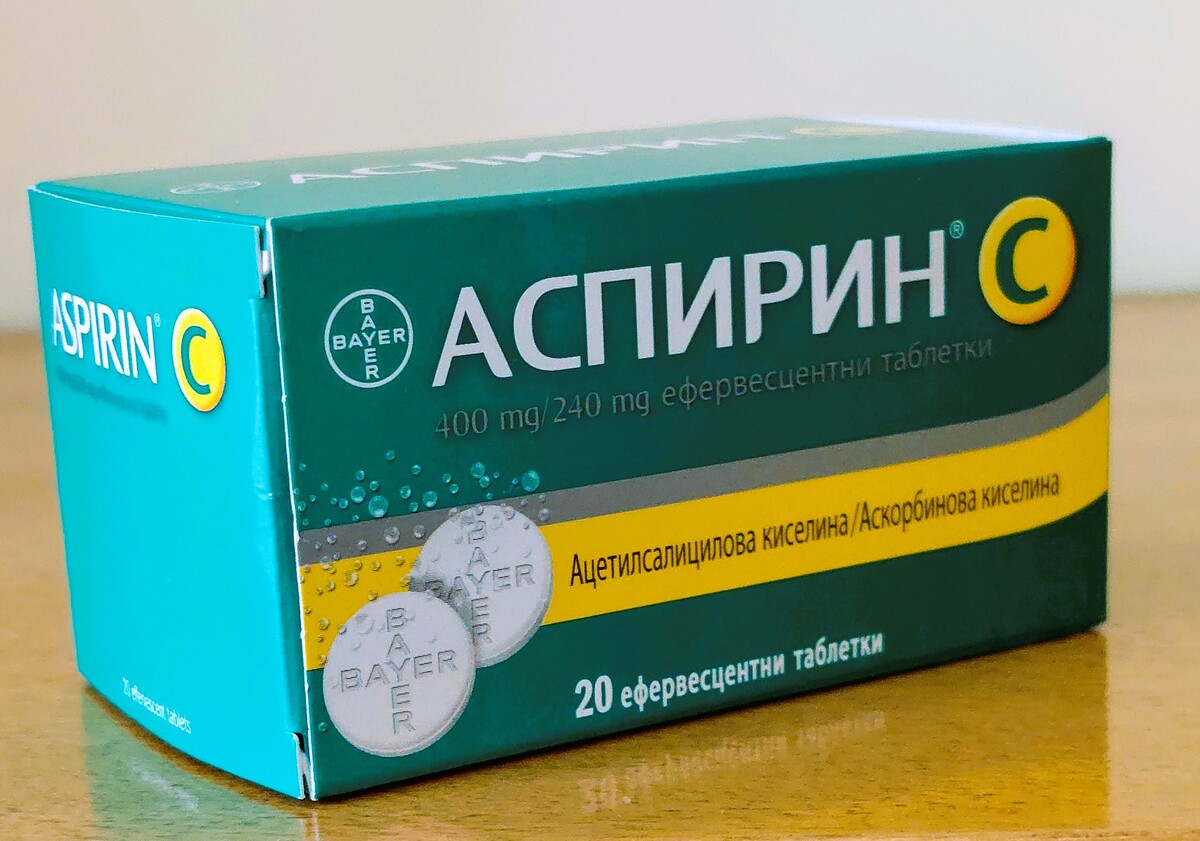
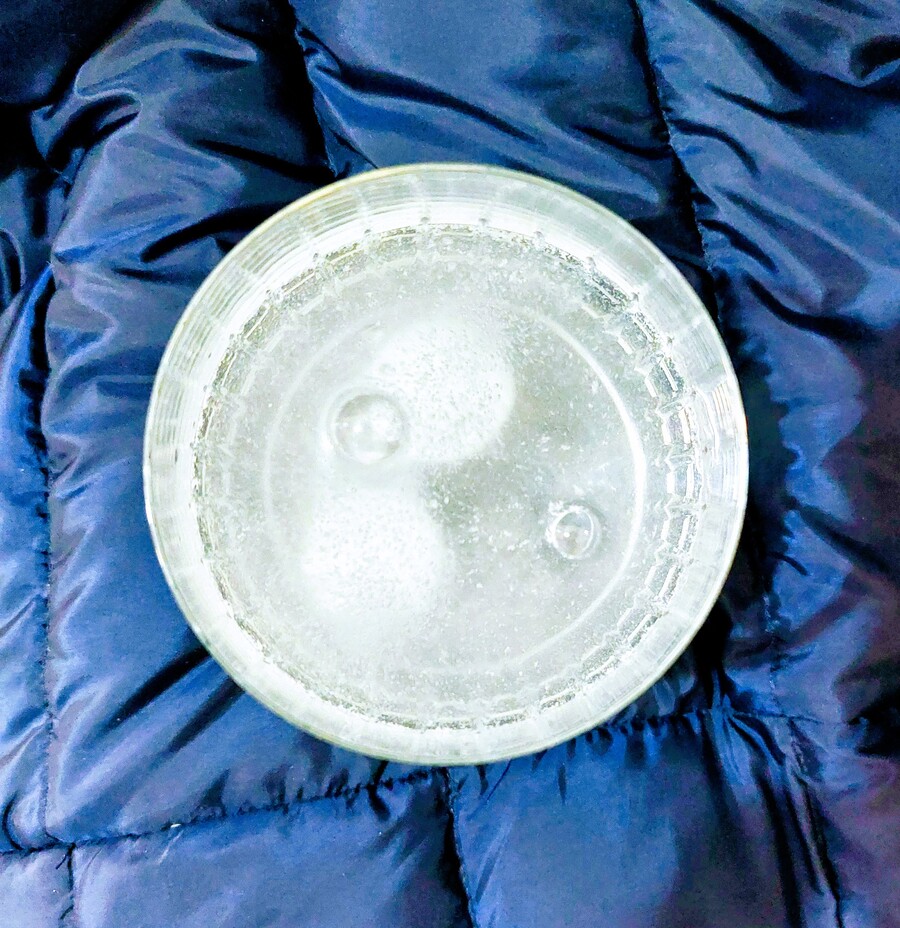
Even today, on the packaging of soluble aspirin, we can see not one, but two pills, trailing a tail of bubbling bubbles that seem to be happily falling into a glass of water. Like snowflakes, like a memory from childhood or the result of commercial calculations.
I dedicate this text to my friends who work honestly and selflessly in the field of pharmacy.
So that we can all be healthier.
See more about the author Darina Vankova here